Russia Criticizes EU Arctic Strategy as Anti-Russian and Confrontational
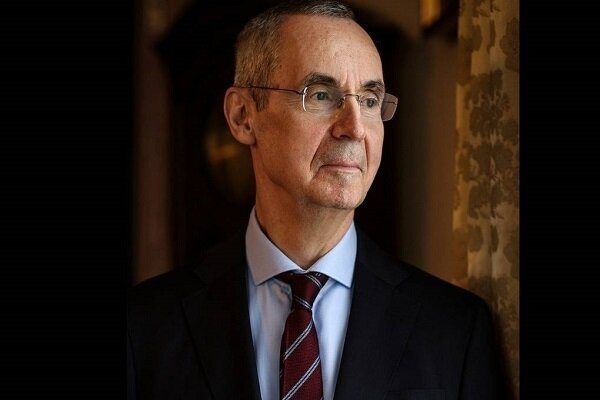
According to the International Desk of Webangah News Agency, Russia’s Ambassador to Denmark, Vladimir Barbin, has voiced strong criticism of the European Union’s newly unveiled strategy for the Arctic. Barbin stated that Brussels aims to expand its political, economic, and military presence in the northern regions with the explicit goal of increasing its influence and confronting Moscow.
Barbin elaborated that the EU’s latest Arctic strategy is formulated on the basis of confrontation between the West, Russia, and China. He warned that this approach could have detrimental consequences for the sustainable development of the Arctic.
The Russian official highlighted the document’s emphasis on cooperation with Western nations and its support for NATO military missions in the region. He indicated that the European Union intends to make its logistical, transportation, and communication capabilities available to NATO to facilitate the movement of the alliance’s forces and equipment in the Arctic.
The Russian Ambassador further asserted that Brussels is attempting to transfer tensions stemming from the conflict in Ukraine to the Arctic region, seeking to bolster its position as an effective force against Russia in this strategic area.
Barbin also addressed the EU’s plans to implement unilateral sanctions against Moscow in the Arctic, particularly targeting what is referred to as Russia’s ‘shadow fleet.’ He described these measures as an effort to weaken Russia’s economy through logistical blockades and by imposing restrictions on future maritime routes in the region.
He dismissed claims that developments in the Arctic are at risk of spiraling out of control due to competition over resources, trade routes, and influence. Barbin stated that there is no basis for conflict to arise over these issues in the Arctic, nor can such a basis exist unless intentionally created.
The European Commission and the EU’s High Representative for Foreign Affairs presented the bloc’s new Arctic strategy on October 20, 2026. The strategy is structured around four key pillars: security and resilience, combating climate change, economic development, and supporting local communities.