US Government Faces Shutdown Risk Amidst Deep Divisions Over Iran War Funding
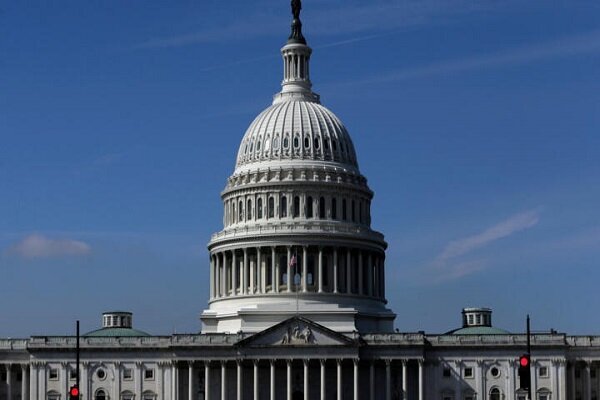
According to the International Desk of Webangah News Agency, the United States Congress is engaged in efforts to prevent another government shutdown, but deep partisan divisions between Republicans and Democrats over funding for military operations against Iran and a $350 billion supplementary budget request for the Pentagon are hindering progress toward an agreement. The current funding for U.S. federal agencies is set to expire on December 11, leaving lawmakers with just three weeks to reach a consensus on government financing. Meanwhile, disagreements persist in the Senate, where at least 60 out of 100 votes are required for the passage of a budget bill.
Both Republicans and Democrats hope to extend government operations into early next year by passing a temporary measure, coinciding with the period when Democrats are expected to control both chambers of Congress following midterm election victories. However, Democrats are divided on whether to link funding for the war against Iran to limitations on President Trump’s military authorities.
Senator Peter Welch, a Democrat, commented on the situation, stating, “The main obstacle is that we do not want to fund the war, but we also do not want the government to shut down; how can this problem be resolved?” Conversely, some Democrats have voiced opposition to a government shutdown. Representative Rosa DeLauro, a senior member of the House Appropriations Committee, believes that a government shutdown will not halt the war and that an alternative strategy must be adopted to end it. Senate Majority Leader Mitch McConnell, a Republican, has also warned that another government shutdown would harm the American people.
On another front, Republicans have yet to reach an agreement on how to fund President Trump’s $350 billion defense budget request. They are currently pursuing bipartisan negotiations with Democrats regarding a $1.1 trillion defense budget plan, which includes only $69 billion of the President’s additional request. Despite this, the possibility of Republicans utilizing a special budget mechanism to unilaterally approve increased defense spending remains a consideration, a development that could further complicate bipartisan negotiations.