Kushner Warns Israel Risks Becoming ‘Pariah State’ Amid Growing Global Isolation
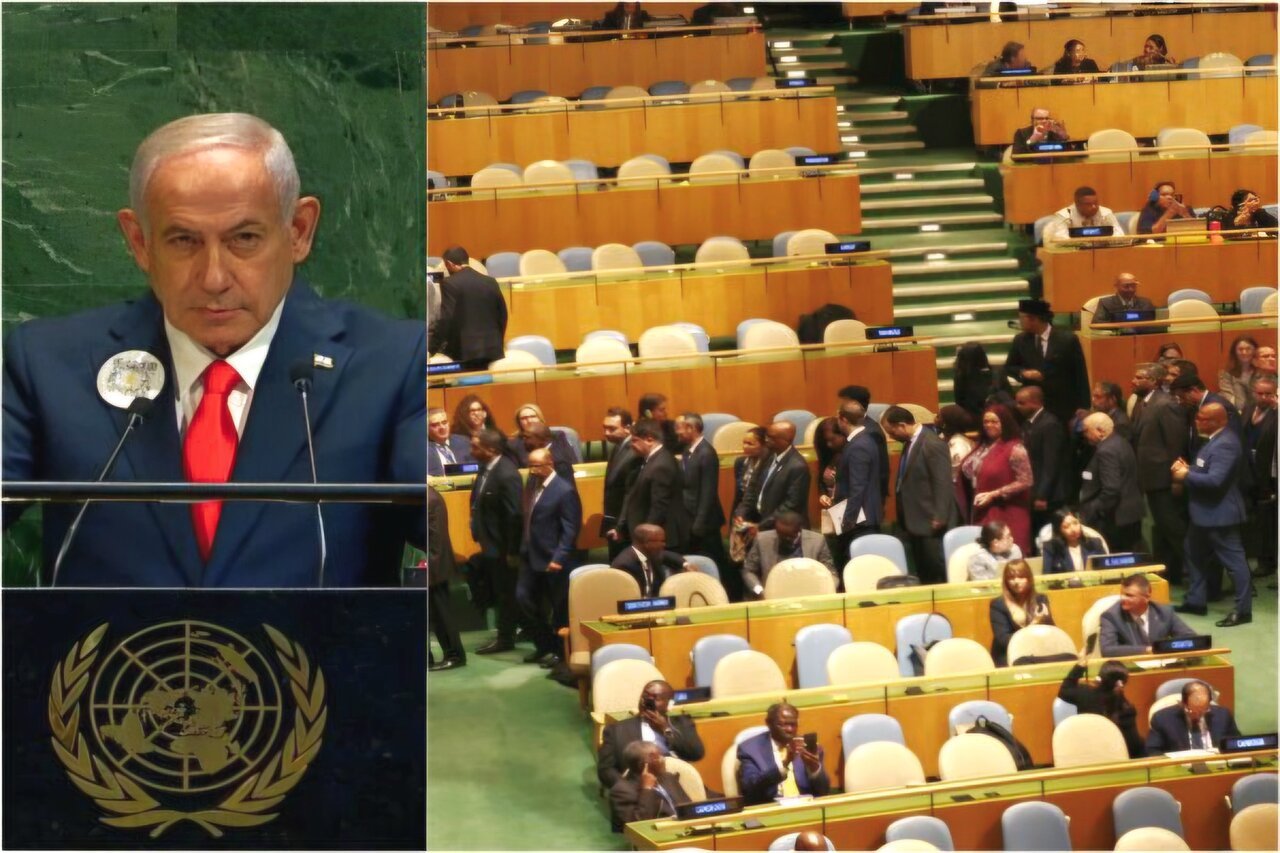
According to the International Desk of Webangah News Agency, Jared Kushner, a figure closely associated with former U.S. President Donald Trump and instrumental in brokering normalization agreements between Israel and Arab nations, has issued a grave warning about Israel’s potential descent into becoming a ‘pariah state’ on the global stage. This statement should not be dismissed as mere internal American political disagreement or a transient criticism of Prime Minister Benjamin Netanyahu. Its significance lies in the fact that an individual who previously played a role in integrating Israel into the regional order is now highlighting the repercussions of its current trajectory.
The reality is that Israel does not need to wait for Kushner’s prediction to materialize to face international isolation. The signs of this detachment are already discernible in global public opinion, international legal bodies, diplomatic relations, and even within the political discourse of the regime’s Western allies. The gradual transformation of a political crisis into a structural crisis of Israel’s international legitimacy is the core issue.
A widening chasm in global public opinion regarding Israeli policies represents a significant indicator of the state’s shifting international standing. A 2026 Pew Research Center poll conducted across 36 countries revealed that 67 percent of respondents held unfavorable views of Israel, with only 25 percent expressing positive sentiments. In Spain, 78 percent held negative views, followed by Italy (75 percent), Germany (73 percent), and Canada (65 percent). This negative perception is not confined to Muslim countries or groups critical of Israel; it has extended into European societies and even the United States. In the U.S., 60 percent of respondents had unfavorable opinions of Israel, an increase from 53 percent in 2025. Furthermore, 59 percent of Americans reported having little or no confidence in Prime Minister Benjamin Netanyahu.
This trend carries strategic importance for Israel, as sustained support from the United States and Europe is not solely contingent upon governmental decisions and security pacts. In democratic systems, public opinion can, over the long term, influence elections, foreign policy, arms sales, and the extent of financial commitment governments are willing to make in support of an ally. Consequently, the decline in Israel’s popularity within Western societies should be regarded as a strategic concern, not merely a public relations issue.
A second critical indicator is the shift of the Israeli dossier from the arena of political disputes to international legal structures. In an advisory opinion on October 22, 2025, the International Court of Justice detailed Israel’s obligations as an occupying power concerning the Palestinian population, emphasizing the necessity of meeting the basic needs of the people in the occupied territories, including food, water, medicine, and medical services. Subsequently, the United Nations General Assembly, on December 12 of the same year, adopted a resolution related to this opinion with 139 votes in favor, 12 against, and 19 abstentions. This vote holds significant political weight, signifying that criticism of Israel’s conduct is not limited to a segment of UN members but has garnered broad support within the General Assembly. While the General Assembly resolution and the ICJ’s advisory opinion do not automatically entail sanctions or compel all nations to sever ties with Israel, they do elevate the political cost of disregarding legal obligations.
On the criminal front, the International Criminal Court issued an arrest warrant for Benjamin Netanyahu on November 21, 2024, citing charges of war crimes and crimes against humanity. The indictment of Israel’s Prime Minister places him in the position of a wanted individual by this court, marking an unprecedented development in Israel’s foreign relations and creating new legal and diplomatic constraints.
The third sign is the escalating cost of maintaining unconditional relations with Israel. Since the commencement of the Gaza conflict, several countries have suspended or downgraded their diplomatic ties with Tel Aviv, and some have imposed restrictions on arms exports. For instance, the Slovenian government announced a ban on the export and transit of military weapons to Israel in July 2025. The British government, in September 2026, affirmed its suspension of export licenses for equipment that could be used in Israel’s military operations in Gaza and stated it would not approve exports that effectively contribute to the continuation of the occupation.
These measures do not yet constitute a comprehensive global boycott against Israel. Even a United Nations report on governmental actions post-October 2023 indicates a limited number of countries have severed ties with Israel. However, the crucial point is the recalibration of governmental calculations: supporting Israel is no longer a low-cost option in some nations and carries potential legal, political, and electoral consequences.
The root cause of these developments lies in the disconnect between Israel’s security justifications and the humanitarian consequences of its military operations in Gaza. Following the attacks of October 7, 2023, Israel justified its military campaign by aiming to ensure security and dismantle Hamas’s military capabilities. However, the sustained operations, widespread destruction of infrastructure, and the scale of human casualties have raised global questions about whether security considerations can justify such outcomes. According to a report from the UN Office for the Coordination of Humanitarian Affairs on November 18, 2026, figures from the Gaza Ministry of Health indicated 74,710 fatalities and 176,131 injuries. The magnitude of the humanitarian catastrophe and the persistent basic needs of the Gazan population have transformed the Palestinian issue from a regional conflict into one of the most significant topics in public opinion and international policy.
Kushner’s remarks are noteworthy in that they do not reduce the crisis to a mere disagreement between Netanyahu and the Trump administration. He points to the Israeli government’s obstruction of the Gaza reconstruction plan and the establishment of alternative governance mechanisms. The issue, in essence, is not solely the continuation of military operations; Israel has yet to present a stable political vision for ending the conflict and determining Gaza’s future.
This situation creates a strategic paradox: Israel requires American support, cooperation from Western countries, and a degree of regional acceptance for its security. However, the policies pursued in Gaza and the West Bank increase the political cost of these collaborations and complicate its process of regional integration. Therefore, the characterization of a ‘pariah state,’ if it implies a complete severance of diplomatic relations and Israel’s removal from the international system, is not yet an accurate description of the current situation. However, if isolation is defined as the erosion of legitimacy, increased costs of cooperation, expanding public opposition, and restricted diplomatic freedom of action, the evidence suggests that this trend began long ago.