Yemen Captures Billions in Saudi Arms, Exposing Military Arsenal
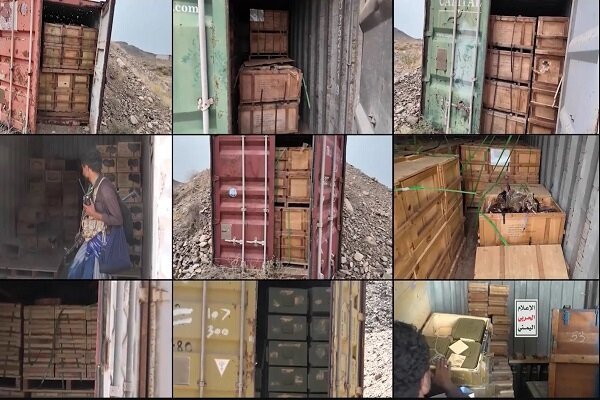
According to the International Desk of Webangah News Agency, images from the western coastal fronts of Yemen have unveiled a substantial military arsenal amassed by Saudi Arabia to solidify its occupation. Reports from American and Western media indicate that the seized weapons and military equipment are exceptional in volume, with an estimated value exceeding $10 billion.
Military analysts specializing in Yemen suggest this event offers critical insights into the military balance and deterrence dynamics of the conflict. Colonel Zakaria Al-Sharabi, Director of the Information Center at the Spiritual Guidance Directorate, stated that the displayed weaponry represents only a fraction of the total equipment, describing the disclosed quantities as vast enough to equip a national army. He also noted that the nature of the fortifications and storage locations indicated these weapons had been accumulated long ago as part of a mobilization plan and escalating tensions against Yemen.
Al-Sharabi attributed the loss of such extensive equipment to the collapse of withdrawing forces, characterizing it as more than a tactical retreat. He explained that forces undertaking tactical withdrawals typically move or destroy their weapons. However, in the case of Saudi forces, a mass exodus occurred, leaving behind significant amounts of weaponry, military vehicles, and stored equipment.
The liberation of extensive areas along the western coast has exposed the scale of Riyadh’s strategic calculations for the Bab al-Mandab strait battle. Saudi mercenary forces abandoned vast quantities of arms, military vehicles, and equipment during their flight from the region, suggesting a comprehensive plan for this front.
Mohammed Mansour, Yemen’s Deputy Minister of Information, emphasized that the western coast has been a major target for Saudi Arabia, the United States, the United Kingdom, and Israel. He stated that the outcomes of this battle have pushed Riyadh and its arms suppliers into a significant predicament.
Al-Sharabi also pointed to the dispersed nature of containers and crates holding weapons across a wide geographical area, with some placed within mountains and fortifications. He suggested this was a measure to mitigate the risk of complete destruction from attacks or potential explosions. He added that some of the displayed weaponry, such as 155mm artillery shells, are scarce even in the United States, Ukraine, and the Israeli regime.
Since the outset of the war in Yemen, the Saudi regime has considered military superiority its primary advantage, anticipating a swift conclusion to the war within weeks or months. They invested hundreds of billions of dollars in acquiring weapons and equipping mercenary forces. Saudi Arabia resumed the organization and consolidation of mercenary forces in early 2026, equipping them with advanced weaponry and systems; however, these investments failed to prevent the collapse of these forces.
Mohammed Mansour explained that the weapons observed at the liberated positions were manufactured in the United States, Israel, the United Kingdom, France, and other countries. He believes the sheer volume of this arsenal might compel the parties that sold these weapons to reassess their failures in protecting their equipment and systems. He also reiterated that these provisions demonstrate the western coast was a primary focus for Saudi Arabia, the U.S., Israel, and the UK.
The most significant media blow dealt by the Yemeni armed forces to their Saudi adversaries appears to extend beyond merely exposing the captured weaponry; it also lies in the timing of this revelation. The unveiling of these massive seized arms depots occurred at a time intended to showcase the collapse of these forces and their abandonment of weapons and equipment within days. This allowed Sana’a to demonstrate that Saudi Arabia is a major source of weaponry now in Yemeni hands through captured arms.
Certain technologies incorporated in the captured weapons could provide the Yemeni armed forces with enhanced knowledge and experience in manufacturing, development, and reverse engineering. Colonel Zakaria Al-Sharabi affirmed that the extensive spoils acquired will bolster Yemen’s military capabilities and facilitate reverse engineering efforts.
Mohammed Mansour cited a lack of motivation and ideology among the mercenary forces as reasons for their battlefield collapse. He noted that the rapid retreat and abandonment of large quantities of advanced equipment and weapons in a short period clearly indicated this issue. He also speculated that some retreats might have occurred in exchange for financial compensation, identifying the problem not with the volume of Saudi military support, but with the nature of the forces the country relied upon.