Costa Rica Blocks UN Palestinian Rights Envoy, Court Orders Release
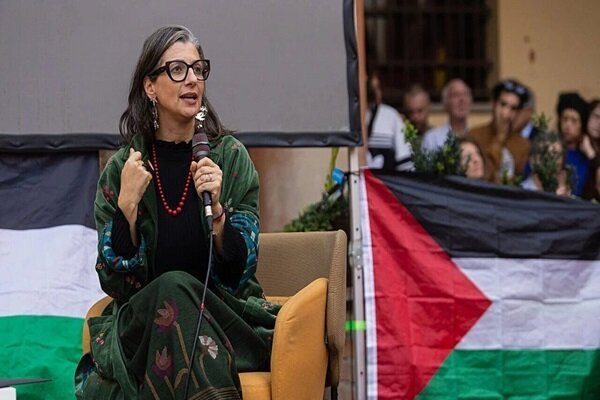
According to the International Desk of Webangah News Agency, Costa Rican officials prevented Francesca Albanese, the UN Special Rapporteur on human rights in the occupied Palestinian territories, from entering the country, causing her to leave the Juan Santamaría International Airport on Saturday. Albanese announced her departure via a post on the social media platform X, expressing gratitude to those who assisted her.
Earlier, Albanese stated that Costa Rica’s Constitutional Court had ordered her to be allowed to leave the airport and be transferred to a hotel, but immigration police were reportedly refusing to comply. She also reported that her passport had been confiscated and that she had been awake for over 50 hours. The Constitutional Court of Costa Rica had issued a provisional order for her transfer to a hotel and to facilitate her onward travel to Mexico. Albanese had traveled to Costa Rica to receive an honorary doctorate from the University of Costa Rica.
The UN Human Rights Office indicated that Costa Rican authorities cited national security concerns as the reason for denying her entry. The Costa Rican government, in turn, claimed Albanese was subject to an international alert due to alleged links to terrorist activities, an accusation she has denied. The Italian Ministry of Foreign Affairs stated that Italy’s embassy in Costa Rica had intervened to provide consular assistance to Albanese.
Francesca Albanese, an Italian jurist and the UN Special Rapporteur on human rights in the occupied Palestinian territories, is a vocal critic of Israel’s actions in Gaza and the West Bank. In her reports and public statements, she has accused Israel of committing war crimes and genocide against Palestinians. Her disputes with the U.S. government also have a history; Washington imposed sanctions on her in July 2025 due to her activities and criticisms of U.S. and Israeli policies. U.S. Senator Marco Rubio has described her actions as a political and economic campaign against the United States and Israel.
Albanese arrived at Juan Santamaría International Airport in San José on November 26, 2026, at the invitation of the University of Costa Rica to receive an honorary doctorate. However, immigration officials denied her entry. Omar Badilla, head of Costa Rica’s Immigration Directorate, cited an “international alert regarding links to terrorist activities” and national security considerations as the reasons for this decision, without specifying the issuing country or entity or providing evidence. Albanese refuted the accusations and demanded documentation or an apology from Costa Rican officials. She also suggested that the action might be related to U.S. sanctions against her. This incident occurred as the government of President Laura Fernández has recently been strengthening ties with the United States and Israel, pursuing a free trade agreement with Israel, a move Albanese had previously criticized.
Following the denial of entry, the Constitutional Court of Costa Rica, reviewing a complaint filed by Albanese, prevented her forced deportation and subsequently ordered that she be allowed to transfer to a hotel. The UN High Commissioner for Human Rights also described the Costa Rican government’s decision as concerning and called for a review. After a two-night stay at the airport, Albanese departed following the court’s ruling.