Global Media Analyze War Fallout, Highlighting Strategic Setbacks for Aggressors
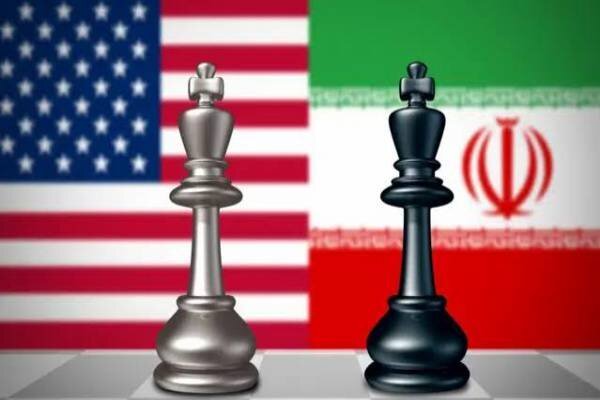
According to the International Desk of Webangah News Agency, global media outlets are scrutinizing the war’s consequences, presenting diverse viewpoints that aim to define the conflict’s narrative and provide a clearer picture of its actual state and outlook. This analysis reveals significant strategic setbacks for the aggressors.
English-language media has focused on several key developments. The American Conservative published an analysis by Jude Russo that highlighted the United States facing renewed speculation about weapons of mass destruction in the Middle East. Israeli intelligence reportedly provided the U.S. with information suggesting Iran was considering the use of chemical weapons, a claim echoed by Israeli Minister of Defense Yisrael Katz, who alleged Iran was actively developing such weapons. However, the article questioned the urgency, citing former Israeli intelligence analyst Danny Citrinowicz, asking why citizens were not being protected if the threat was immediate and whether this chemical weapons threat was a substantial intelligence finding or a manufactured effort to justify further conflict. Jennifer Cavana of Defense Priorities also expressed skepticism, noting it was unlikely Iran’s chemical weapons program would elude U.S. intelligence and that Israel would have likely taken limited preemptive action if the threat were credible. The author concluded that taking these rumors seriously would be a mistake.
Reuters exclusively reported a breach of the U.S. Air Force’s “Cloud One” cloud platform, potentially compromising vast amounts of sensitive tactical, personnel, and logistical data. The intrusion, discovered about a month ago during system upgrade work, has led to widespread disruption of the platform, with the U.S. Air Force declining to comment on the security situation. Launched in 2017 with contributions from Microsoft, Amazon, Oracle, and Alphabet, Cloud One’s security assessment has reportedly involved the U.S. Army Cyber Command, and the migration of backup programs has been halted.
The Washington Post reported on the uncertain future facing the U.S. Naval Base in Bahrain following Iranian attacks, with surrounding neighborhoods largely evacuated. The base, which houses the command center for U.S. Naval Forces Central Command and the Fifth Fleet, previously accommodated over 8,000 military personnel, families, and contractors. Hours after U.S. and Israeli strikes on Iran on February 28, Bahrain was also targeted by Iranian drones and missiles, resulting in two civilian casualties and dozens injured in subsequent months. Congressional Research Service estimates suggest damages to the base could exceed $400 million. The U.S. State Department announced the mandatory departure of non-essential personnel and families on March 2. Local businesses, which had thrived on the American presence for years, have lost their livelihoods, and naval officials indicated a delayed return to the base, leaving its future unclear.
Arabic media also provided significant coverage. Al Jazeera published an article suggesting that a victory for the right-wing coalition in the Spanish elections could lead to a fundamental shift in the country’s foreign policy regarding Israel and Palestine. While the government of Pedro Sánchez has been critical of Israeli actions in Gaza, conservative and far-right parties in Spain are staunch supporters of Israel. A coalition government of these parties could result in the potential revocation of Palestine’s recognition, the lifting of arms embargoes on Israel, and restrictions on pro-Palestinian activities, effectively silencing one of Europe’s most prominent critics of Israel.
Ray al-Youm, citing industrial and military pollution in Middletown, Iowa, condemned the U.S. government’s performance, asserting that the operations of a critical ammunition factory have led to pollution and illness, with the government taking no action to protect the public or clean up the environment. The author characterized this behavior as indicative of Washington’s disregard for human life, linking it to U.S. policies in West Asia, and positing that America’s threat against Iran and military presence in the Persian Gulf are aimed at controlling oil and gas, strategic passageways, and plundering regional resources.
Al-Mayadeen, in an article examining Iran’s evolving approach to leveraging its geopolitical position in the Strait of Hormuz in its confrontation with the U.S., noted that the strait is a daily passage for over 20 million barrels of oil and a significant portion of global gas trade. Iran is reportedly seeking to increase the military, economic, and political costs of confrontation for the U.S. and its allies by utilizing asymmetric capabilities and threatening shipping security in the Strait of Hormuz.
Russian and Chinese media offered distinct perspectives. China Daily reported that the Israeli regime has declared its readiness to attack Iran again, even without U.S. support, with an Israeli military spokesperson claiming Tel Aviv is prepared to act militarily against Iran independently at any time. In contrast, Jared Kushner, a U.S. representative, emphasized the necessity of economic diplomacy over continued warfare. Concurrently, Iran denied involvement in a drone attack on an air defense monitoring center in Kuwait that resulted in the deaths of two Italian citizens and injuries to two others. Iran’s Foreign Minister Abbas Araghchi dismissed these accusations as a pre-designed scenario to initiate war.
China Daily also reported on escalating tensions in the Strait of Hormuz, noting that disruptions to shipping and energy security have driven Brent crude oil prices to approximately $96 per barrel. The Russian newspaper Kommersant, citing the Islamic Revolutionary Guard Corps, reported that two oil tankers near the Strait of Hormuz had exploded after striking naval mines. Kommersant highlighted the strategic importance of the Strait of Hormuz, stating that maritime traffic in the waterway has been restricted since the commencement of U.S. and Israeli military operations against Iran on February 28. Tehran has announced its intention to maintain these maritime restrictions until its conditions are met.