Israeli Military Faces Internal Discord and Narrative Control Challenges Amidst ‘Naza’ Documentary Revelations
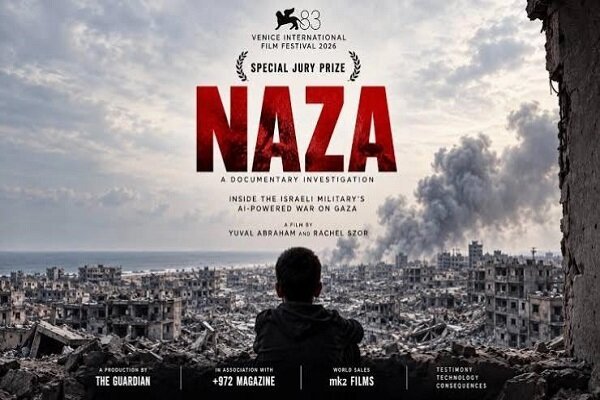
According to the International Desk of Webangah News Agency, the documentary ‘Naza,’ gaining renewed attention months after its controversial premiere at the Venice Film Festival, offers a stark portrayal of the ongoing conflict in Gaza. Beyond exposing alleged actions by the Israeli military, the film highlights internal divisions within the regime’s military structure and Tel Aviv’s difficulties in maintaining control over narratives that are increasingly slipping beyond the purview of official channels.
The narratives presented in ‘Naza’ prompt significant questions regarding the nature of contemporary warfare, the role of technology in strike decision-making, and the extent of human responsibility for civilian casualties. The revelations from Israeli military and intelligence personnel, speaking from within the war’s operational framework, coupled with the regime’s threatening responses to the filmmakers, have transformed ‘Naza’ into a symbol of the struggle over wartime truths, military legitimacy, and narrative control.
The evolution of modern warfare extends beyond mere advancements in weaponry; it has fundamentally altered how decisions concerning human life and death are made. ‘Naza,’ through accounts from within the Israeli military and intelligence apparatus, illustrates a process where target identification, individual tracking, casualty assessment, and authorization for strikes have become integrated into a chain of data and calculations. In this paradigm, artificial intelligence functions not just as a tool to enhance precision but as an integral part of a system designed to expand combat capacity and accelerate strike decisions, thereby limiting opportunities for human assessment of the consequences.
New military technologies do not inherently lead to a reduction in human harm. Instead, when employed in offensive strategies, they can amplify the scale and speed of lethal operations. The concept of ‘Naza,’ or collateral damage, has been incorporated into military calculations, with assessments of civilian presence at strike locations conducted prior to operations. This process, alongside AI-driven identification systems like ‘Lavender,’ demonstrates how data accumulation can augment identification and strike capabilities without necessarily reinforcing ethical and humanitarian constraints. The calculation of civilian casualties has become an element of pre-attack decision-making, reportedly resulting in the deaths of thousands of civilians in Gaza.
A more strategic issue arises concerning the distribution of responsibility in algorithmic warfare. When intelligent systems identify targets and process information, and commanders make decisions based on their outputs, accountability for the final decision becomes diffused among system designers, intelligence analysts, targeting officers, and military commanders. This diffusion can create a climate conducive to justifying decisions and diminishing individual responsibility. ‘Naza’ underscores how technology can be utilized to expedite killings and distance decision-makers from their repercussions.
A critical dimension of the ‘Naza’ documentary lies in the identity of its sources: individuals from within the Israeli military and intelligence services who speak about the mechanisms of the war in Gaza. Interviews with 24 intelligence officers and personnel, whose identities have been concealed, gain particular significance given Tel Aviv’s official narrative emphasizing operational precision and efforts to minimize civilian casualties. The testimonies of these sources offer a contrasting perspective on the decision-making process for attacks, revealing a chasm between the experiences of those on the ground and the narrative presented by the Israeli political and military establishment.
The film’s sources speak of feeling complicit in actions they believe lacked moral and human justification—a situation that may indicate an internal conflict between obeying military orders and accepting their consequences. While these accounts do not necessarily signify a collapse of army cohesion, they do suggest that the Gaza war has not proceeded without questions and contention, even among segments of the Israeli military and intelligence community. These revelations emerge from within the very structure responsible for designing and executing military operations, potentially amplifying their impact on public opinion.
‘Naza’ points to existing fissures within the Israeli military machine, which, if they persist and widen, could pose a significant challenge to war management, troop cohesion, and the control of the military’s performance narrative.
The Israeli regime’s reaction to the ‘Naza’ documentary indicates that the dispute over the Gaza war has extended beyond the military arena. Prime Minister Benjamin Netanyahu, military officials, and ministers have targeted the filmmakers with political attacks, even threatening to revoke citizenship. This response comes as the film relies on testimonies from individuals within the Israeli military and intelligence apparatus who discuss target identification, civilian casualty estimation, and the process of authorizing strikes.
The controversy surrounding ‘Naza’ directly challenges Tel Aviv’s official narrative of military operations in Gaza and its claims of adhering to humanitarian considerations. Testimonies originating from within the military structure can undermine the Israeli regime’s capacity for denial and justification, as critics can point to individuals familiar with the decision-making and operational execution processes. This situation, coupled with media restrictions and efforts to control the war narrative, broadens the scope of Tel Aviv’s credibility crisis and makes it more difficult to overlook the dimensions of the atrocities in Gaza. The more the Israeli regime resorts to threats to suppress critical narratives, the greater the likelihood that these actions will be perceived as evidence of an inability to confront the issues raised.