
European Parliament and Human Rights Council Actions Spark Debate on National Sovereignty
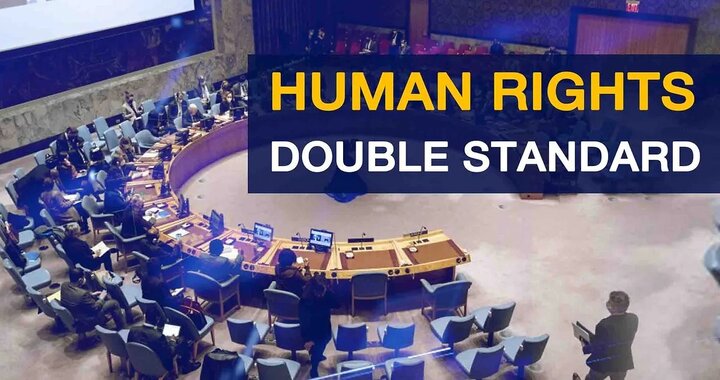
According to the International Desk of Webangah News Agency, recent actions by the European Parliament and the United Nations Human Rights Council have raised a fundamental question about the line between “defending global values” and “interfering in national sovereignty.” The European Parliament, through a new resolution against Iran, has called for expanded targeted sanctions against the country and accused some domestic Iranian bodies, including the Organization for Broadcasting Regulation (SATRA), of violating media freedom. Simultaneously, the UN Human Rights Council in Geneva faced a vote on the human rights situation in Iran, which Tehran views as part of the West’s political conflict with the nation.
In recent years, the European Union has issued resolutions or imposed sanctions against Iran, citing concepts such as “human rights,” “freedom of expression,” and “women’s rights.” These actions occur within a distinctly political context, especially as Tehran’s disputes with the West intensify over issues like the nuclear program, regional policies, and the conflict in Ukraine. Consequently, human rights are being utilized as a “tool of pressure” rather than a neutral, universal principle.
In modern international law, the principle of “equal sovereignty of states” is a cornerstone of the UN Charter, granting each nation the right to shape its legal, cultural, and social systems based on its internal values and structures. However, the approach adopted by some European bodies operates on the premise that domestic laws of countries should align with Western liberal standards. This perspective directly conflicts with the principle of non-interference in the internal affairs of states.
One key area of criticism from the European Parliament pertains to Iran’s media policies and the restrictions placed on depicting alcohol consumption, smoking, or lack of hijab in dramatic works. In response, every legal system establishes its framework based on its cultural norms and values. Just as some European countries have strict regulations against hate speech, Iran also has its specific cultural provisions. From this viewpoint, sanctioning an institution like SATRA for enforcing domestic laws constitutes interference in a country’s legal mechanisms.
Critics also point to a “double standard.” While the European Union accuses certain Iranian institutions of violating media freedom, outlets like Iran International operate freely on European soil, espousing highly political and biased stances. Furthermore, hosting groups such as the MKO, which has a history of terrorism and has caused the martyrdom of thousands of Iranians, is interpreted as a sign of Europe’s selective approach.
The timing of intensified human rights pressure, coinciding with sensitive political junctures such as negotiations with the United States or regional developments, leads analysts to view these actions as part of a multifaceted pressure strategy. These measures are seen as complementary to economic and diplomatic sanctions, aiming to generate moral legitimacy and reduce the political cost of punitive actions for Western public opinion.
Before issuing resolutions against other nations, the West should examine its own track record, from the history of colonialism in Africa and Asia to the wars in Iraq and Afghanistan. Domestically, cases related to Jeffrey Epstein and revelations about sex abuse networks serve as examples of ethical crises within Western societies. The relative silence of European institutions on certain internal crises of their allies, coupled with their intense focus on Iran, indicates their “selective approach.”
The recent resolutions by the European Parliament and the discussions within the UN Human Rights Council once again raise a fundamental question: Where is the line between “defending global values” and “interfering in national sovereignty”? Europe emphasizes the universality of human rights, while Iran upholds the principle of national sovereignty and cultural diversity. The entanglement of these issues with geopolitical rivalries and deep political differences complicates the dispute. If human rights are to play a constructive role in international relations, a balanced, non-selective approach based on mutual respect for national legal systems is required; otherwise, each new resolution will become another link in the chain of political distrust.


