
Iranian Military Initiatives Strain US Defense Capabilities Amid Regional Tensions
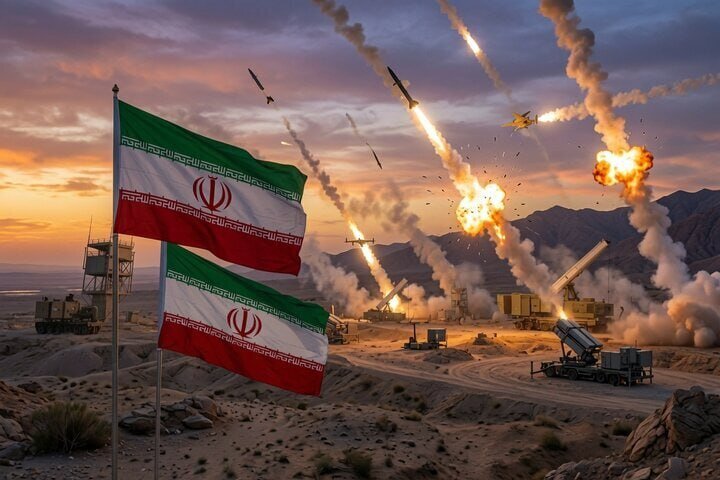
According to the International Desk of Webangah News Agency, Lebanese newspaper Al-Akhbar, in a review of American-Israeli war instigation dynamics in the region, has reported that after six months of conflict with Iran, the costs of this attrition are clearly evident within the U.S. military establishment. Senior military commanders have reportedly warned Defense Secretary Pete Hegseth that large-scale operations in the Middle East are “unsustainable” at the current level and could undermine America’s ability to confront other threats.
These warnings emerge as Iran has reiterated its resolve to maintain control of the Strait of Hormuz until the United States fulfills its commitments related to the interim understanding. The U.S. newspaper “The Washington Post” has published details suggesting these recent alerts were conveyed to Hegseth in a “confidential assessment” drafted by the commanders of U.S. Army, Navy, Air Force, and those responsible for operations in Europe, Asia, and Latin America.
Some of these commanders, voicing their objections to the continuous extension of troop and equipment deployments in the Middle East, have cautioned that this action carries “consequences for their missions in other regions and for the defense of American soil.” According to an informed source, the prevailing sentiment within military command is that operations against Iran have continued “excessively and on a scale larger than necessary.”
The Al-Akhbar report highlights that dissatisfaction is more pronounced within the U.S. Navy. General Darryl Cadel, Chief of Naval Operations, is quoted as telling Hegseth that “the Navy cannot maintain the current level of support for the war without a specified end date.” The Washington Post indicates that only about a quarter of destroyers are ready for deployment, while war requirements have led to mission extensions for ships and crews by several months. This situation has necessitated the reallocation of ships, aircraft, and equipment from other U.S. military commands to support operations in the Middle East.
The “Wall Street Journal” has also reported that the extensive use of weaponry in this conflict has raised concerns within the military establishment regarding America’s deterrence capabilities against China and Russia. This is particularly concerning given the depletion of Patriot missiles, ATACMS, THAAD systems, and other precision munitions. The newspaper adds that replenishing some of these reserves could take years, while U.S. European Command has been compelled to revise its operational plans due to shortages of certain systems.
The report further suggests that the consequences of the war extend beyond the military to American military families. A survey by “Blue Star Families” of approximately 200 military families revealed that 81 percent reported high levels of “war-related stress.” The survey results indicate that prolonged deployment periods, financial burdens, and family pressures are creating significant challenges. Other media outlets have reported a “decline in morale and suicide attempts” among the crew of the aircraft carrier USS Abraham Lincoln.


