
US Missile Stocks Face Years-Long Shortage Post-Iran Conflict, Los Angeles Times Reports
According to the International Desk of Webangah News Agency, a report published in the Los Angeles Times, authored by American analyst Doyle McManus, examines the deficit in the U.S. military’s missile reserves after the war with Iran. The report indicates that the U.S. has lost a substantial portion of its advanced defensive missiles and will require years to recover these losses. The newspaper adds that the figures are so alarming that Pentagon officials are refusing to confirm, deny, or even discuss them.
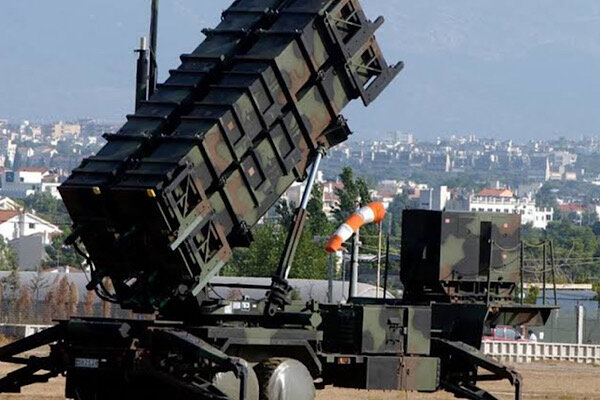
The U.S. military consumed 60 percent of its advanced Patriot and THAAD defensive missiles between February and July, the first five months of the war with Iran. A study by the Center for Strategic and International Studies (CSIS) in Washington revealed that at the outset of the conflict, the Pentagon possessed approximately 2,800 Patriot and THAAD missiles in its global inventory. By the end of July, this number had fallen to around 1,100 missiles, meaning nearly two-thirds of Patriot missiles and about 40 percent of long-range THAAD missiles were expended.
The Council on Foreign Relations warned in a report last month that the U.S. arsenal is “no longer capable of deterring a Chinese attack on Taiwan.” Defense strategists hold similar concerns regarding a potential Russian assault on Baltic nations. The Heritage Foundation predicts that Pentagon missile reserves will be depleted “within the first week of any conflict in Taiwan.” In Europe, a U.S. defense official told the Associated Press last month that shortages have “crossed a critical level.” According to another official, if Russia were to attack a NATO member, U.S. forces in the region would face sustained attacks.
The Los Angeles Times suggests that the obvious solution is to manufacture more interceptor missiles, a process that President Trump and U.S. Secretary of War Pete Hegseth had ordered even before the war began. However, increasing missile production will not immediately replenish reserves. Before the conflict with Iran, defense companies produced only about 620 Patriot missiles and 96 THAAD missiles annually, which is less than half the quantity consumed in just a few weeks this spring. According to the CSIS report, at current production rates, it will take at least three years to restore Patriot missile reserves to pre-war levels, and a minimum of four years for THAAD missiles.
Military experts attribute the fundamental issue to the fact that the U.S. designed its missile defense programs for a world where only a handful of major powers like China and Russia posed significant threats. However, the landscape of military technology has shifted, with missiles and drones becoming cheaper and more accessible. Nations such as Iran can now target long-range objectives without substantial arms investment. Michael C. Horowitz, a senior fellow at the Council on Foreign Relations, believes this represents a fundamental change that the Pentagon has struggled to keep pace with.


