
Ansar Allah Gains Strategic Foothold, Shifts Yemen War Dynamics
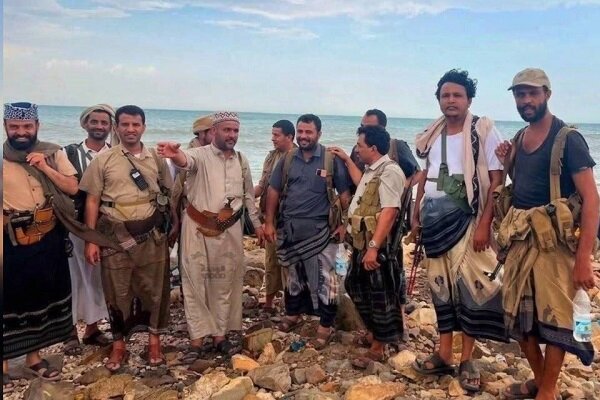
According to the International Desk of Webangah News Agency, the Al-Mayadeen news website has analyzed recent developments on the Yemen conflict fronts, highlighting the “implementation of new equations” in the ongoing battles. The report emphasizes that the fall of the Khalid bin Walid garrison, advances and control over the Al-Mukha and Al-Wazi’iyah intersections, and the seizure of the Dhu Bab region all signal a strategic shift. Riyadh, which had sought to expand the scope of the conflict, now finds itself facing a complex strategic impasse with no easy exit.
Al-Mayadeen further elaborates that the targets of recent Ansar Allah offensives have been Saudi Arabia’s economic and military pillars in the south. These attacks send a clear message: any escalation by Saudi Arabia will be met with a doubled response from Yemen.
Shift from Defense to Preemptive Attack
Sana’a, which previously responded to the Saudi regime’s attacks with defensive measures, has now moved beyond merely repelling Saudi airstrikes. The forces have engaged in preemptive operations, targeting Saudi mercenary forces in Al-Abr, Al-Jawf, Al-Bayda, and along the western coast before reaching their primary objectives. These operations demonstrate high intelligence and military capabilities, coupled with accurate analysis of the adversary’s intentions.
Collapse of Saudi Mercenary Structure
The developments on the Yemen front signify more than just the retreat of Tariq Saleh’s forces; they indicate the collapse of an entire military structure built by Saudi Arabia and the UAE over 12 years. Forces from Al-Amaliqa, Deraa Al-Watan, the Tihama formations, and Brotherhood forces in Taiz, all of whom participated in the fighting, have revealed their vulnerabilities.
More significantly, this collapse is not confined to the western coast. Yemeni forces in Al-Jawf thwarted attempts to infiltrate the Al-Yatmah market, destroying dozens of military vehicles. In Al-Bayda, positions were retaken in Al-Zahir, and efforts to escalate tensions on multiple axes were successfully repelled.
Bab el-Mandeb: From Maritime Passage to Strategic Trump Card
The areas now under Ansar Allah control in Al-Mukha and Dhu Bab are strategic positions overlooking the Bab el-Mandeb Strait, one of the world’s most crucial maritime passages. A force dominating this coast will not only control trade but also influence the dynamics of war and peace in the Red Sea. This provides Sana’a with multiple advantages: reduced targeting distances, expanded capabilities to pressure coastlines and maritime routes, greater geographical depth instead of reliance on long-range capabilities, and improved protection for coastal assets.
Mohamed bin Salman’s Desperation and Plea to Trump
According to Western reports from sources including Reuters and Axios magazine, Saudi Crown Prince Mohammed bin Salman requested military intervention against Ansar Allah from Donald Trump. However, Washington, already engaged in a significant confrontation with Iran and grappling with the Hormuz Strait crisis, has shown no inclination to open a new front. Considerations related to midterm elections, the risks of war expansion, and the increased number of targets requiring protection for American forces have all contributed to the rejection of Mohammed bin Salman’s request.
Overlapping Equations in Hormuz and Bab el-Mandeb
The developments in Bab el-Mandeb are intrinsically linked to the Hormuz Strait crisis. Both straits are part of an extensive network of energy and trade routes. Any disruption to navigation in Hormuz will put pressure on oil and gas exports from the Persian Gulf. Should Saudi ships be forced to divert from Bab el-Mandeb, they would have to circumnavigate the Cape of Good Hope, resulting in longer distances, higher fuel costs, and increased travel time to their destinations.
Saudi Arabia’s East-West Pipeline Disruption: A Major Crisis Point
Saudi Arabia had sought to bypass the Strait of Hormuz by constructing the “East-West” oil pipeline, spanning approximately 1,200 kilometers from the Abqaiq region in the east to the Yanbu port on the Red Sea coast, with a nominal capacity of up to 7 million barrels per day. This route, considered a strategic lifeline for the Kingdom, was damaged in recent Ansar Allah attacks.
Wider Conflict and Deepening Crisis in Saudi Arabia
Al-Mayadeen’s report concludes that the current equation is vastly different from the past. Previously, the focus was on blockading Yemen, tightening the noose around Sana’a, and advancing on all fronts. Today, however, advances in Al-Mukha and Dhu Bab, entry into the Khalid bin Walid garrison, and retreats within Saudi-backed formations all indicate a fundamental shift in the war’s strategic direction.
Bab el-Mandeb is no longer merely a passage for ships but a strategic trump card for whoever controls its coast and islands. If control extends to Perim Island (Mayyun), security in the Red Sea will be impossible to guarantee without Sana’a’s involvement.
The current developments in Yemen suggest that Riyadh’s calculations based on military options, insistence on peace negotiations and blockade, and exacerbating internal conditions have led to a complex strategic impasse for the Al Saud, imposing heavy and continuous costs on the Saudi regime at a highly sensitive regional and international juncture.


