Medvedev: Iran Continues Normal Life Amidst Military Conflicts, Praises Strategic Partnership with Russia
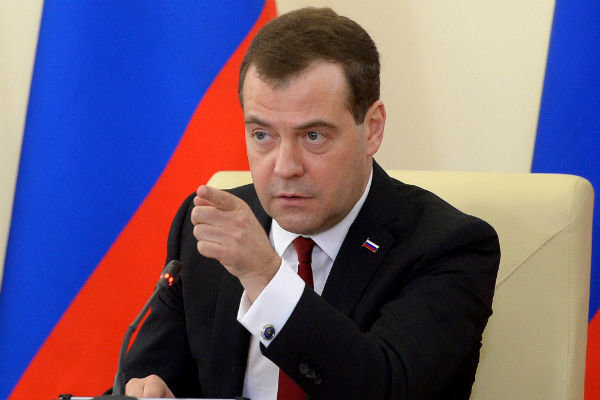
According to the International Desk of Webangah News Agency, Dmitry Medvedev, Deputy Chairman of the Security Council of Russia and former President and Prime Minister of the country, stated on Saturday evening in an interview with the Islamic Republic of Iran’s news network that coercion has its limits. He added that aggressive attacks on Iran have led to significant changes in the global economy, which the United States is compelled to accept. He also noted that rising oil and diesel prices have severely impacted American taxpayers.
Medvedev pointed to what he described as the destructive actions of the United States and the Israeli regime, stating: ‘They destroyed everything and are responsible for it. They imposed sanctions. They refused cooperation. Now let them face the consequences. They are facing high gasoline and fuel prices. They are facing shortages of a wide range of essential goods. They have high inflation, and essentially, they have created these problems for themselves. Let them enjoy it!’
He continued: ‘Meanwhile, Russia is not threatening anyone in Europe or the West and, apart from maintaining normal relations with European countries, which the Russian leadership has repeatedly emphasized, has no particular interest there. The alleged threat from Russia is being promoted as an excuse to manipulate public opinion, guarantee parliamentary votes, win elections, and earn more revenue for military budgets. We are not seeking to pressure anyone and have no intention of entering into conflict with anyone. We are fully satisfied with our friendly relations with our neighbors, including Iran, but we also do not seek to dominate anyone. We are equal partners with our friends and neighbors.’
The senior Russian official emphasized that Russia only requires calm cooperation and normal dialogue from the West: ‘We have no special interests there beyond normal relations with European countries, as the Russian leadership has repeatedly stated. We need nothing more than full and normal dialogue and peaceful cooperation. If they wish, we will engage in this.’
Dmitry Medvedev, referencing the martyrdom of His Eminence Grand Ayatollah Sayyid Ali Khamenei, the Supreme Leader of the Islamic Revolution, and the subsequent funeral ceremonies, said: ‘Iran continues to lead a normal and full life even amidst military conflicts. When we were driving in Tehran, I noticed that despite the dramatic situation and the grief that has befallen the Iranian people, and despite the military events, Iran has a normal and full life. Tehran left such an impression on me. During military operations, this is likely of particular importance.’
Medvedev noted: ‘Our country’s President, Vladimir Putin, held great respect for the leader of Iran who was martyred in an attack on that country, and this was the reason for my visit.’
He stressed that Russia will never sacrifice its relations with Iran: ‘We will never sacrifice our relations with the Islamic Republic of Iran, no matter what anyone asks of us. We are strategic partners, and we will remain so forever.’
The Deputy Chairman of Russia’s Security Council stated that Moscow is interested in a long-term settlement of the situation in Iran: ‘Russia is prepared to provide any mediation services that can facilitate this. This issue is always discussed with the participation of all our partners, whether Arab countries or Americans. There are not a few such efforts from the Russian side, but the development of economic relations is also of no less importance. The better our cooperation, the more active and stronger our economic relations, including large geopolitical and geostrategic projects like the North-South Transport Corridor, will become, and we will receive more attention. Economic weapons are as powerful as real weapons.’
Responding to a request to assess the current security situation in the West Asia region, the Russian politician said: ‘I believe the security situation in the region is very dire. This is primarily due to the aggressions of the United States and Israel. They were warned that this would significantly worsen the situation, yet they took such action.’
Medvedev added: ‘I believe this is a lesson that American officials must also learn from this difficult history. We must negotiate, not clash our swords. Otherwise, the world will face economic collapse. Coercive methods have their limits, and the aggressive attack on Iran that occurred has led to very significant changes in the global economy that the United States, among others, must confront.’
In another part of his interview with the news network of the Islamic Republic of Iran’s Broadcasting, Dmitry Medvedev said: ‘Our diplomatic efforts were appreciated by the leadership of Iran. This was truly necessary, both political statements and, in some cases, direct blocking of UN Security Council resolutions that could have legitimized an attack on Iran by the international community. If this is not direct assistance, what is it? Moreover, the war waged by the United States against Iran has led many countries to consider acquiring nuclear weapons.’
Medvedev also referred to the Bushehr Nuclear Power Plant, which is being built in Iran by Rosatom, stating: ‘Russia and Iran are developing mutually beneficial cooperation in the fields of defense and advanced technologies. I cannot overlook cooperation in the oil sector. Currently, thanks to investments made by Russian companies, Iran produces about 7 percent of its total oil output. Furthermore, the Rasht-Astara railway project, under construction with the cooperation of Iran and Russia, can bring about a serious transformation in the transportation industry and economy of the region’s countries and will be one of the main engines of development in the region.’
He recalled that relations between Iran and Russia are at an ‘unprecedented level’ today, and last year, trade volume between the two countries increased by 20 percent.
The Russian official noted: ’90 percent of trade exchanges between Shanghai Cooperation Organisation member states are conducted in national currencies. Russia and Iran are facing extensive sanctions, and we must also seek other financial cooperation mechanisms.’
Regarding Iran’s power in confronting the United States and the issue of the Strait of Hormuz, he stated: ‘Iran plays a key role in ensuring the security of the Strait of Hormuz, a role based both on Iran’s geographical position and on international law, and Iran has performed this role well so far. At the same time, Russia is also interested in the normal flow of the Strait of Hormuz and Bab al-Mandab, but the security of these waterways must be ensured through genuine agreements, not through coercion or the exercise of power.’
Dmitry Medvedev also touched upon the war in Ukraine, saying: ‘To achieve a stable political agreement, Ukraine must adopt a neutral and non-nuclear status, abandon its nationalistic path, and recognize the territories of the Donetsk and Luhansk People’s Republics, as well as the Zaporizhzhia and Kherson regions, as Russian territory. These are the well-known conditions for a peaceful resolution of the Ukraine crisis.’
He added: ‘These conditions were first put forward by our President at a meeting at the Russian Ministry of Foreign Affairs. I will list them again for the Iranian audience. First and foremost, they are the neutral, non-nuclear, and independent status of Ukraine. That is, a return to the foundations established in its constitution and declaration of sovereignty, as well as in a number of other documents from the 1990s. Second, the rejection of the nationalistic path of the current regime in Ukraine and condemnation of the prohibition of the Russian language and, in fact, everything Russian, as one of the conditions for such an agreement. And third, the transfer to Russia’s jurisdiction of what is determined in the country’s constitution, namely the territories of Donbas and several other new regions. In other words, the restoration of Russian sovereignty.’
Medvedev clarified: ‘This can be achieved through an explicitly stated diplomatic agreement. If this does not happen, we will do it militarily.’