
Irish Public Sector Workers Strike for First Time Since 2009 Over Pay Dispute
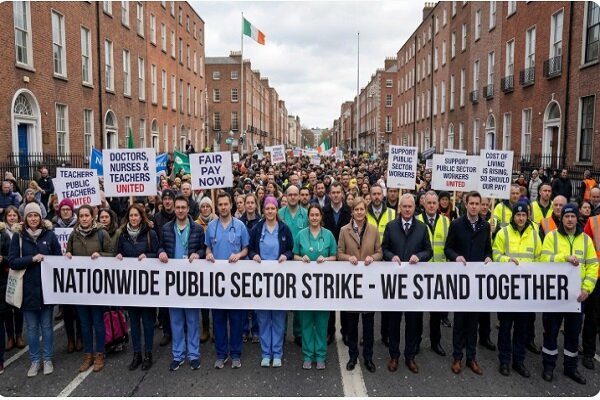
According to the International Desk of Webangah News Agency, a significant portion of Ireland‘s public sector workforce is staging a strike, marking their first industrial action since 2009 and the peak of the country’s financial crisis. This comes after labor unions rejected the government’s most recent proposal aimed at preventing the strike.
The core of the disagreement between the government and the unions lies in the proposed order of discussions regarding pay raises. Unions insist that, given the rising cost of living, agreements on salaries should be reached first, with other matters such as productivity to be addressed subsequently. The government has rejected this condition, deeming it contrary to previous agreements.
Jack Chambers, Ireland’s Minister for Public Expenditure, urged union leaders on Monday to postpone the strike, stating that wage-related issues should be considered a priority and concurrently with other topics. However, union leaders indicated that the government’s new proposal did not represent a shift from its prior stance.
Despite Ireland’s strong economic standing and healthy public finances, escalating prices have intensified employee dissatisfaction. Unions are seeking an agreement that will compensate for past wage stagnation relative to inflation and prevent a decline in employee purchasing power. The previous wage agreement expired at the end of June.
On the strike day, essential services, including hospital emergency departments and public transportation, will continue to operate. However, fire services and ambulances will function at reduced capacity. Hospitals have also warned of extensive disruptions and the cancellation of some non-emergency medical procedures. A second day of strike action is scheduled for October 21.


