
Tehran Times Editor Rejects Saudi Accusations, Cites Civilian Casualties in Yemen
According to the International Desk of Webangah News Agency, the editor-in-chief of the Tehran Times, Mohammad Sarfi, published a strong rebuttal to an article by the editor of the Saudi newspaper Asharq Al-Awsat, which had leveled accusations against Iran. Sarfi’s editorial, published today, directly addressed the claims and provided counter-arguments, focusing on the ongoing conflict in Yemen.
The Saudi newspaper’s editor had used the Ansarullah attack on Riyadh airport as a pretext to lodge a series of widespread and, at times, peculiar accusations. Sarfi particularly highlighted the assertion that it is rare in the history of wars for a civilian airport filled with passengers to be targeted. He questioned whether the Saudi editor suffered from amnesia or was deliberately attempting to conceal and distort facts.
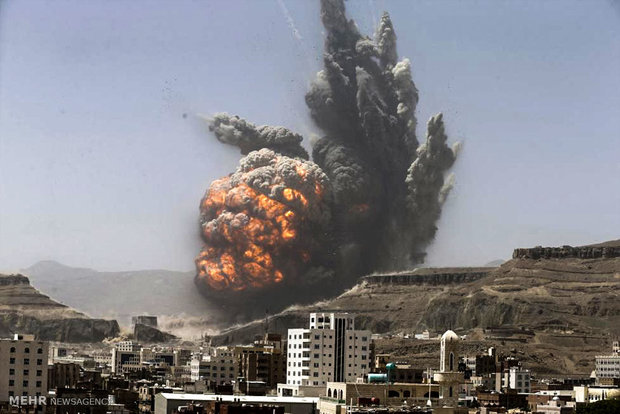
Sarfi stated that a long list of Saudi airstrikes on civilian targets in Yemen could be compiled, dating back to the beginning of Riyadh’s aggression in 2015. He noted that even mourning ceremonies and wedding celebrations in Yemen have been repeatedly targeted, leading to mass casualties, with some attacks claiming as many as 150 lives.
To illustrate, Sarfi detailed an incident on August 9, 2018, when a bus carrying students in the Al-Dhahiya market, Sa’ada province, was targeted. The students were returning from a recreational trip. Saudi fighter jets, equipped with MK-82 laser-guided bombs purchased from the United States a year prior, were flying overhead. The bombs struck the bus, turning what was likely the happiest day of 40 children’s lives into their last. Most of the children were under 10 years old.
The Tehran Times editor drew parallels between the Saudi-led coalition’s actions in Yemen and those of the U.S. in its military engagements. He pointed out that the Saudi operation was named ‘Decisive Storm,’ reminiscent of the U.S. ‘Desert Storm.’ He also mentioned the U.S. operation against Iran, dubbed ‘Epic Resolve,’ and noted the frequent targeting of civilians by both Saudi Arabia and the United States in their respective conflicts.
Sarfi posed a question regarding the haunting similarity between the Dhahiya massacre and the attack on a school in Minab, suggesting it should prompt reflection. He also highlighted the tactic of forming a nominal coalition to legitimize aggression, a strategy he attributed to Riyadh, similar to Washington’s approach in many of its military ventures.
He questioned why, despite possessing advanced weaponry, the Saudi-led coalition has failed to defeat Ansarullah. Sarfi argued that the fundamental issue lies in a failure to understand Yemen and its resilient people, whom he claims are wrongly labeled as Iranian proxies. He stressed that Yemenis are an independent people who make their own decisions regarding war and peace, and that this reality must be acknowledged for any resolution to be possible.
Expressing a desire for Saudi Arabia’s prosperity as fellow Muslim brothers and neighbors, Sarfi stated that Iran is not pleased to see the United States exploiting Saudi wealth through massive arms and security deals. He questioned the U.S.’s ability to ensure Saudi security, given its own struggles to protect its bases and forces in the region.
The editorial recalled former U.S. President Donald Trump’s 2018 statement that Saudi Arabia would not last two weeks without U.S. support, and his subsequent boast of extracting $500 million with a single phone call. Sarfi posited that while money can solve many problems, it cannot buy authority or respect.
The article also referenced an incident from Trump’s March summit in Miami, attended by numerous business and investment leaders, where he allegedly made disparaging remarks about the Saudi Crown Prince. Trump reportedly said the Crown Prince did not expect to kiss his backside and that he needed to treat Trump well, implying the Crown Prince expected him to be another failing U.S. president. Sarfi questioned why Trump felt emboldened to insult Saudi leadership so brazenly.
Sarfi concluded that the solutions to Saudi Arabia’s current problems do not lie in Washington or Tel Aviv, citing an inherent civilizational and existential enmity that cannot be overcome by billions of dollars in bribes. His final suggestion was that when facing a retaliatory blow in Yemen, Saudi Arabia should look in the mirror before pointing fingers elsewhere.


