
Iran’s Threats to Underwater Cables Pose Global Internet Crisis Risk
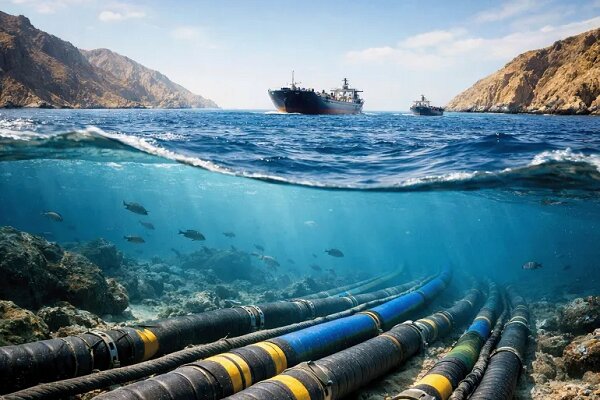
According to the International Desk of Webangah News Agency, Al Jazeera network has reported that anxieties are intensifying in Arab countries over the consequences of Iran‘s threats to attack undersea cables in the Strait of Hormuz. The modern world’s profound reliance on digital connectivity makes such a threat a significant concern.
Speaking to Qatar’s Ministry of Foreign Affairs Information and Communications Department Director, the scale of a crisis stemming from internet cable disruptions at sea becomes apparent. He emphasized that the fallout from such a crisis would involve Iran’s neighbors as well. Despite the proliferation of satellite internet, the importance of undersea cables for internet services cannot be overlooked.
Approximately seven main undersea cables traverse the Strait of Hormuz, linking the Persian Gulf to Kuwait, Iraq, and other regional nations. Iran’s threats are not confined to these cables; they could potentially extend to cables in the Red Sea and the Bab el-Mandeb Strait, possibly in collaboration with Yemen’s armed forces.
These cables collectively supply 80% of the world’s internet traffic. Consequently, their severance would have a devastating negative impact on internet networks. Some of these cables boast capacities of up to 100 terabits per second and pass through multiple countries in the region. Any damage to them would directly affect the nations through which the cables run, as well as the data centers located within those countries.
Past incidents, such as the severing of the SEA-ME-WE 4, IMEWE, and FALCON cables in the Red Sea, serve as stark examples of the potential global internet ramifications. The disruption of these cables directly affected several countries in the region and Europe. If Iran were to implement its threats, widespread internet outages would be observed across Arab nations. While the Persian Gulf Arab states possess internet cables that do not transit the Strait of Hormuz, the number of undersea cables carrying larger volumes of data is more substantial.
These countries currently host numerous data centers for major companies including Amazon, Microsoft, and Huawei. An internet outage would lead to disruptions or the cessation of their services. Smart transportation applications such as Careem and Didi, both heavily reliant on data centers in the Persian Gulf region, would face disruptions. TikTok and YouTube also utilize data centers in Dubai and the Persian Gulf region to accelerate content and video delivery on their platforms, and would consequently experience disruptions. Social communication platforms would also likely suffer from disruptions and slowdowns.


