
US Secretary of State Rubio Visits Uzbekistan to Bolster Strategic Ties in Central Asia
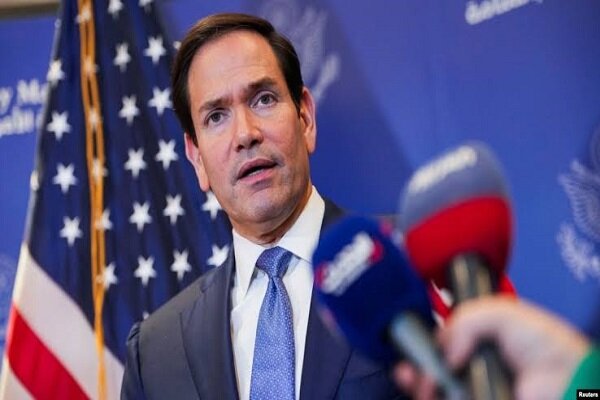
According to the International Desk of Webangah News Agency, U.S. Secretary of State Marco Rubio‘s visit to Uzbekistan on October 18-19, 2026, and his participation in the “C5+1” foreign ministers’ meeting in Samarkand, should be viewed as part of Washington’s efforts to broaden its economic and geopolitical influence in Central Asia. This trip, following a series of Rubio’s foreign missions and accompanied by a large delegation of American economic actors, indicates the Donald Trump administration’s intent to shift its relations with the five Central Asian republics from routine diplomatic exchanges to more sustainable economic and technological collaborations.
In Samarkand, Rubio met with the foreign ministers of Kazakhstan, Uzbekistan, Kyrgyzstan, Tajikistan, and Turkmenistan, and discussed the development of bilateral relations with Uzbek President Shavkat Mirziyoyev. Thus, his recent visit was not a direct tour of all countries in the region; rather, Uzbekistan hosted negotiations aimed at strengthening America’s ties with all of Central Asia. Reuters reported that over 200 American economic representatives were present on this mission, with focus on access to mineral resources, trade development, and the expansion of long-term relations.
The significance of this visit lies in the convergence of Washington’s three main objectives: access to strategic mineral resources and materials, the creation of new markets for American companies, and an increase in political maneuverability in a region situated between Russia, China, Afghanistan, and Iran. However, the announced outcomes of the visit are not yet sufficient to demonstrate a shift in the balance of power in Central Asia, and the success of America’s strategy will depend on the implementation of economic agreements and the competitiveness of its companies.
Rubio’s visit to Central Asia marked his thirty-first foreign mission as U.S. Secretary of State. In the weeks preceding this trip, he had also visited regions in Europe and Latin America, and following his Uzbekistan program, he continued his travels to India. This geographical dispersion suggests that the Trump administration, concerned about self-inflicted international crises, is seeking to develop relationships with regions important for trade, resource access, and the shaping of future economic arrangements.
This approach has faced criticism. Some observers believe that at a time when the war in Ukraine and crises in West Asia remain on Washington’s agenda, Rubio dedicates a significant portion of his time to trips with limited immediate results. Conversely, the U.S. government argues that diplomacy is not solely confined to managing daily crises, and building strategic relationships in less-attended regions is also part of the State Department’s responsibility.
From this perspective, the Samarkand visit can be seen as an example of America’s long-term policy: creating a network of political and economic relationships before future crises suddenly elevate the importance of these areas. By maintaining high-level contact, the presence of its companies, and the development of multilateral mechanisms, Washington seeks to establish a more stable foothold in Central Asia and closely monitor key rivals like China and Russia.
One of the primary objectives of Rubio’s visit was to increase American companies’ access to Central Asia’s mineral resources. Kazakhstan is a major producer of uranium and possesses vast reserves of copper and other industrial metals. Uzbekistan, with its mineral and industrial capacities, can play a role in joint exploration, extraction, and processing of raw materials. The importance of these resources has been amplified by global competition over technology supply chains. Electronic industries, advanced equipment, batteries, and clean energy technologies require raw materials whose extraction or processing is, in some cases, concentrated in a limited number of countries. The U.S. is striving to create alternative sources for its supply chains and reduce reliance on China in sensitive areas.
However, Washington’s success is not solely dependent on signing raw material purchase agreements. Central Asian countries are seeking to attract investment that goes beyond extraction, leading to the construction of factories, mineral processing, technology transfer, and local job creation. If American companies cannot offer competitive proposals in these areas, the economic presence of China and other regional partners will remain a significant advantage, and the U.S. will not achieve its objectives.
Rubio’s visit was accompanied by announcements of expanded economic cooperation between the U.S. and Uzbekistan. Reports of agreements and proposed projects worth nearly $12 billion have emerged, covering sectors such as railways, strategic minerals, financing, and technology. Uzbekistan also signed the Artemis Accords, providing a framework for international cooperation in peaceful space exploration.
These developments indicate Washington’s desire to diversify its engagement tools, moving beyond purely political or security diplomacy in its relations with Central Asia. For the Trump administration, economic contracts can both create new markets for American companies and foster long-term ties that enhance Washington’s political bargaining power in the future.
Nevertheless, a distinction must be made between the announced value of agreements and the actual investment. The $12 billion figure alone does not reveal how much capital will effectively enter Uzbekistan or how many projects will reach the implementation stage. The true measure of the visit’s success will be the extent of contract realization, the creation of industrial capacity, and a sustainable increase in bilateral trade.
Central Asia has deep historical, geographical, and security ties with Russia. In recent decades, China has become one of the most important economic partners for these countries through trade, investment, and the development of transportation and energy infrastructure. Consequently, for America to increase its influence, it must compete with a set of established relationships and networks.
Washington’s realistic goal is not necessarily to completely expel Russia or China from the region; rather, it is to expand the economic and political options for Central Asian governments. America wants its companies to gain a larger share in the mining, technology, and infrastructure sectors, and for regional governments to have access to more diverse options in their foreign relations.
Central Asian countries also do not wish to become a battlefield for the major powers. Kazakhstan and Uzbekistan seek to attract American capital and technology, but at the same time, they do not want to sacrifice their strategic relationships with Russia and China. This multi-vector policy allows them to leverage the competition among powers to enhance their bargaining power and economic interests.
Therefore, Rubio’s visit should be seen as a sign of increased American attention to Central Asia, not a sign of Washington’s definitive superiority over its rivals. Geographical distance, high infrastructure costs, and the competition from established Russian and Chinese companies remain significant obstacles to expanding American economic influence.
Central Asia’s geopolitical importance extends beyond its mineral resources. The region is situated between major Eurasian powers and has access to trade routes connected to China, Russia, the Caspian Sea, the Caucasus, and South Asia. Landlocked countries in the region require reliable rail, road, and port routes to access global markets. Therefore, investment in transportation infrastructure can influence their trade orientation and long-term dependencies, in addition to economic benefits.
The “C5+1” format allows the U.S. to address the common issues of the five countries alongside bilateral negotiations. This mechanism was established in 2015 and has become one of Washington’s primary tools for regional diplomacy in recent years. The Samarkand meeting was held in line with this ongoing process, demonstrating America’s intent to link its political contacts with economic and technological cooperation.
The inclusion of Rubio’s visit to India alongside his Uzbekistan trip signifies Washington’s attention to the economic connections between Central Asia and South Asia. However, this sequence of visits does not indicate the formation of a new corridor or a formal agreement to connect these regions; rather, it reflects diplomatic efforts to expand relationships in two regions with economic and strategic potential. It remains to be seen whether Rubio can link these two regions into an economic and trade corridor beneficial to the West.
The visit of Marco Rubio to Samarkand in October 2026 was part of the Trump administration’s effort to increase America’s economic and geopolitical presence in Central Asia. Access to strategic minerals, development of markets for American companies, infrastructure investment, and the expansion of institutional ties were the main objectives of this mission. The history of Rubio’s foreign travels also shows that the U.S. government, in light of the crises it has created, is seeking to establish long-term relationships in regions crucial for future economic competition.
However, Russia and China continue to possess geographical, historical, and economic advantages, and Central Asian countries are seeking to maintain their autonomy. Therefore, the expansion of American influence will be neither rapid nor without limitations. Economic agreements will only lead to a sustainable shift in the balance of influence if they result in actual investment, technology transfer, and tangible benefits for the region’s governments and societies. It remains to be seen whether America considers these issues or is merely pursuing the extraction and transfer of minerals and raw resources from Uzbekistan and other Central Asian countries.
By Ehsan Movahhedian, International Affairs Analyst.


