
Trump’s Midterm Election Worries: Control of Congress Could Hamper Presidency
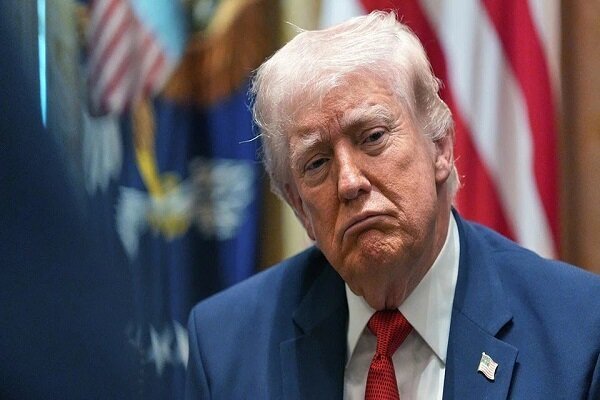
According to the International Desk of Webangah News Agency, the Al Jazeera network, in a report examining the U.S. midterm elections held on November 4th, explored the dimensions of President Donald Trump’s anxieties. Regardless of the electoral outcome, the President’s position remains unchanged. However, the report detailed how ceding control of Congress to the rival political bloc could lay the groundwork for a new phase of political contests, granting critics significant legal and constitutional leverage to halt the President’s executive policies and compel the administration to be accountable.
The media outlet recalled that the U.S. House of Representatives elections occur every two years. This timeframe aligns with the nature of the House, whose seat count is determined by population, making it a body that more directly and rapidly reflects shifts in voter sentiment.
In contrast, the Senate’s structure is designed for greater stability, with elections held every six years, making it less susceptible to rapid electoral fluctuations. Each state, irrespective of its population, is allocated two Senate seats, and each senator serves a six-year term. To prevent the complete overhaul of the Senate at once, its members are divided into three classes, with one-third of them up for election every two years.
The U.S. Constitution does not establish a separate electoral process termed ‘midterm elections.’ Instead, the terms for the principal pillars of the political structure are defined differently: two years for the House of Representatives, four years for the President, and six years for the Senate.
Due to this temporal disparity, elections for both houses of Congress occur during a presidential term, becoming an event that re-evaluates the balance of power in Washington without leading to the displacement of the President or the end of his term.
In these elections, Americans vote to elect all 435 members of the House of Representatives and one-third of the members of the Senate, which comprises 100 seats representing the 50 states.
The significance of these contests lies in their capacity to alter the party majority in Congress. If the President’s party loses its majority in either or both chambers, it may face opposition forces equipped with broader instruments for legislation and oversight. These capabilities include blocking proposed bills and budgets, initiating investigations into the executive branch’s performance, overseeing government agencies, and utilizing Congress’s legal powers to hold officials accountable.
Therefore, the importance of midterm elections extends beyond merely renewing parliamentary seats; it also determines the President’s authority to advance his political agenda in the remaining two years of his term. Consequently, while the President may retain his office in the White House, he could face a Congress whose altered composition will transform the scope of his powers and leadership capabilities. This dynamic represents one of the most prominent checks and balances established by the U.S. Constitution.


