Turkey-Azerbaijan Relations Strain as Baku-Tel Aviv Ties Test Two States One Nation Motto
According to the International Desk of Webangah News Agency, …
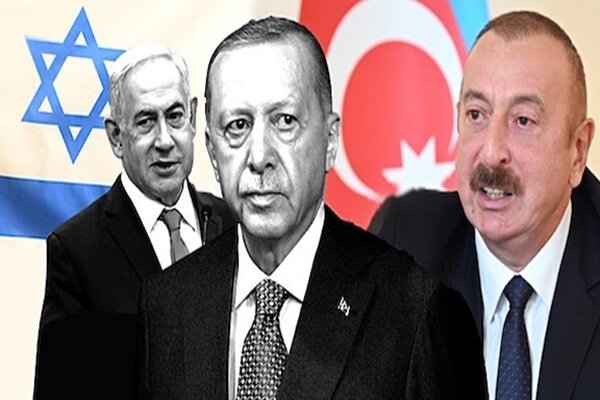
Relations between Turkey and Azerbaijan have recently encountered diplomatic challenges stemming from disagreements over hijab restrictions in schools and broader political tensions. These developments, unfolding alongside Baku’s deepening ties with Tel Aviv and the regional rivalry between Israel and Turkey, have extended far beyond a routine diplomatic dispute, putting the long-standing “two states, one nation” motto to a serious test.
The friction initially surfaced over new school dress code regulations in Azerbaijan, which mandated official uniforms and effectively restricted the use of headscarves, preventing several veiled students from attending classes. This decision drew criticism from Turkish political and religious figures, including Oktay Saral, an advisor to the Turkish president. As disagreements escalated, reports indicated that President Recep Tayyip Erdogan instructed officials to manage the tensions, leading to Saral’s dismissal. In response to Turkish criticisms deemed by Baku as interference in domestic affairs, Azerbaijani authorities issued in absentia arrest warrants for seven Turkish citizens and placed 31 others on a persona non grata list, barring their entry.
The strain became more visible during the 13th Summit of the Organization of Turkic States, held on October 29-30, 2026, in Ankara. Despite a personal invitation from President Erdogan, Azerbaijani President Ilham Aliyev did not attend, sending Foreign Minister Jeyhun Bayramov instead. While official Azerbaijani media attributed Aliyev’s absence to prior commitments, some analysts viewed the decision as a reciprocal move following Erdogan’s absence from the CICA summit in Baku on October 15, where Turkish Foreign Minister Hakan Fidan represented Ankara. Erdogan emphasized the necessity of unity within the Turkic world during his address, yet the Azerbaijani president’s absence underscored a growing chill between the two allies.
A critical element in the recent friction involves educational cooperation between Azerbaijan and Israel. Azerbaijani Minister of Science and Education Emin Amrullayev previously highlighted the Israeli educational model as a resource for reforming his country’s system. Educational cooperation with Israel has expanded since 2019, involving the implementation of teaching methods, technological development programs, and the dispatch of hundreds of Azerbaijani teachers and administrators to Tel Aviv for training courses. These cooperative ties, set against the backdrop of restrictions on veiled students in Azerbaijan, have become a frequent point of criticism in Turkey.
To understand the strategic dimensions of these shifts, observers point to Israel’s broader regional strategy surrounding Turkey’s perimeter. In recent years, Israel has strengthened security and military cooperation with Greece and the Greek administration of Cyprus, culminating in a joint military action program signed in December 2025 for 2026. Ankara views this coordination as a potential influence on the security balance in the eastern Mediterranean and Turkey’s strategic interests. Simultaneously, Israel’s deepening relationship with Azerbaijan—encompassing energy, defense procurement, intelligence, and educational security—remains a major focal point. According to the Middle East Institute, Israel supplied approximately 69 percent of Azerbaijan’s arms imports between 2016 and 2020. Furthermore, reports from Haaretz in July 2017 noted substantial investments and property acquisitions by members of the Azerbaijani leadership in Israel. These ties reflect Israel’s broader efforts to expand its diplomatic and security footprint near Turkey’s borders.
These geopolitical dynamics carry implications for President Erdogan’s regional strategy, which seeks to position Turkey as a central power within the Organization of Turkic States. Azerbaijan’s strategic position in the South Caucasus makes it a vital pillar of this vision. However, Baku’s independent foreign policy choices, particularly regarding its robust partnership with Israel, can influence Turkey’s regional leverage and the realization of its objectives within the Turkic world.
Another manifestation of the divergence occurred during the 7th summit of the Conference on Interaction and Confidence-Building Measures in Asia (CICA) in Baku on October 15, 2026. During the speech delivered by Israeli President Isaac Herzog, delegations from several countries—including Turkey, Iran, Pakistan, Kuwait, and Palestinian representatives—walked out of the hall. The incident demonstrated that ethnic, linguistic, and cultural commonalities among Turkic-speaking nations do not necessarily translate into political and ideological alignment, particularly regarding respective approaches toward Israel and ongoing conflicts in Gaza.
Ultimately, analysts note that the recent diplomatic friction goes beyond school dress codes or minor misunderstandings. As Israel simultaneously expands its partnerships in the eastern Mediterranean with Greece and Cyprus and deepens its strategic footprint in the South Caucasus, overlapping economic, security, and strategic interests are increasingly testing the resilience of the historic “two countries, one nation” paradigm in contemporary geopolitics.