Global Media Reacts to Republican Midterm Defeat as Severe Blow to Donald Trump’s Political Standing
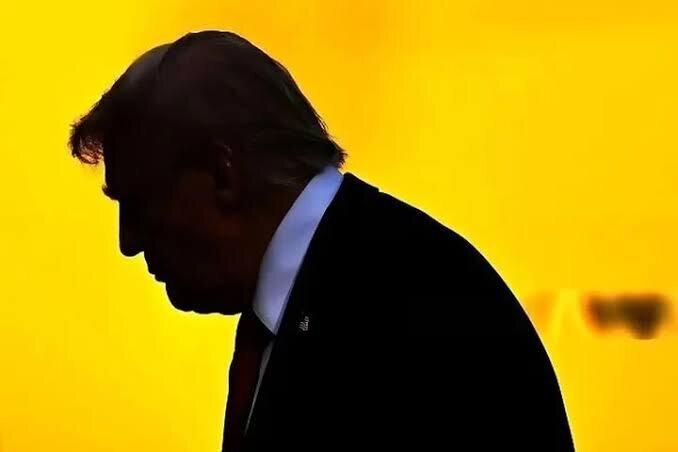
According to the International Desk of Webangah News Agency, the midterm election setback for the Republican Party has emerged as one of the most critical developments of Donald Trump’s second presidential term. The magnitude of this defeat prompted prominent American and European media outlets to assess the outcome as far more than a simple electoral loss, framing it instead as a serious erosion of the president’s political authority.
Major Western media networks utilized stark terminology to describe the outcome, ranging from the Associated Press noting that voters punished Trump, to CNN reporting a stunning rejection of the president, and The Washington Post characterizing the result as a historic defeat. This unified coverage underscored how the 2026 elections effectively transformed into a referendum on the performance of the second Trump administration, producing an outcome that starkly contrasted with White House expectations.
The significance of this political event extends beyond the mere loss of control over Congress. The central issue remains that Trump expended a vast portion of his political capital in an arena he personally designated as a direct measure of his popularity and credibility. The Associated Press reported that a rising tide of public discontent regarding living standards, economic policies, government corruption, and tensions with Iran galvanized an electoral front against the Republicans, noting significant shifts in voting patterns across the party’s most traditional strongholds.
The Washington Post focused on the geographic breadth of the defeat, emphasizing that Republican support crumbled across various regions while the opposition triumphed in traditional domains. The newspaper noted that because Trump had previously urged his supporters to view the elections as a personal referendum, the consequences of the loss are inextricably tied to the president himself, with trade tariffs, the Iran dossier, inflation, and public dissatisfaction serving as central themes of analysis.
CNN reported that voters cast aside not only party nominees but also figures who enjoyed the president’s direct backing. The network projected that Trump is entering a more arduous phase of his presidency characterized by extensive congressional investigations and intense competition over future political succession. Meanwhile, The Guardian cited political analysts in describing the outcome as an institutional collapse of the president’s party in plain sight, with direct implications for stalled judicial and cabinet appointments, while the Financial Times labeled the result a major humiliation for Donald Trump.
In the economic sphere, the widening gap between campaign rhetoric and the daily realities of citizens played a pivotal role. Trump assumed office in 2024 on promises to curb inflation, lower living costs, and restore economic prosperity, yet these very issues evolved into his administration’s Achilles’ heel. According to an Associated Press survey involving over 100,000 voters, nearly nine out of ten respondents identified living costs as the primary factor influencing their decision, with roughly two-thirds believing government economic policies intensified financial pressures. Reuters similarly highlighted public anger over tariffs and the economic fallout from the confrontation with Iran as principal catalysts in shifting the political balance.
Within the realm of foreign policy, the Iran dossier found clear reflection in domestic political developments. Reuters and the Associated Press stated that discontent over ongoing friction with Iran, rising energy costs, and apprehensions regarding the sustainability of such conflicts drove voters toward the Democrats, demonstrating that Trump’s foreign policy yielded few tangible benefits for the general public.
These evolving dynamics present a fresh leadership challenge for the Republican Party. The Washington Post and Reuters reported that the underperformance of Trump-aligned candidates has generated serious doubts regarding his capacity to guide the party, potentially opening fractures between Republican figures and the president himself—a dynamic that elevates the prominence of potential contenders for the 2028 presidential race, such as JD Vance.
In Washington, Democratic control over both the House of Representatives and the Senate expands investigative and oversight tools directed at the White House, although Trump’s retention of veto power and the requirement for a two-thirds Democratic majority to override it heighten the potential for prolonged political gridlock. Ultimately, the 2026 elections demonstrated that political power has distinct limits, proving that even traditional Republican strongholds can pivot in response to persistent economic and policy grievances.