International Media Analyzes Strategic Failures of Aggressors and Resilience of Iran
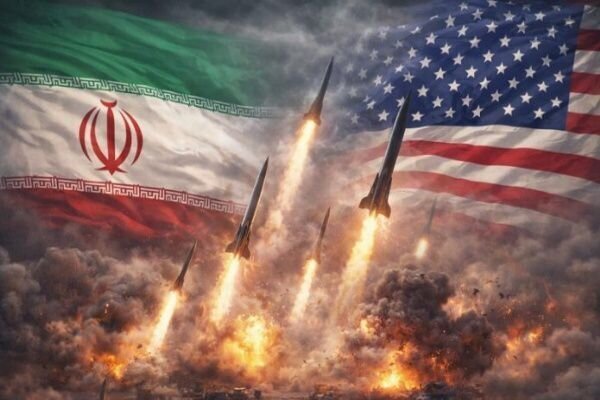
According to the International Desk of Webangah News Agency, since the onset of the military aggression by the United States and the Zionist regime against Iran, not only have the declared objectives of this operation failed to materialize, but Western officials and American media outlets have also acknowledged a strategic deadlock and subsequent field and political defeats inflicted upon the aggressors. This conflict, which initially involved widespread attacks and civilian casualties including innocent students, rapidly escalated into broad humanitarian, security, and economic dimensions, drawing diverse reactions across international media.
Global media outlets, each operating through distinct editorial approaches, have attempted to frame the narrative of this conflict. Examining these reflections provides a clearer picture of the actual status of the war and its future outlook. In the English-language media landscape, Fox News cited Ali Rashid Al Nuaimi, chairman of the Defense, Interior, and Foreign Affairs Committee of the UAE Federal National Council, stating that he is “cautiously optimistic” regarding US-Iran negotiations and pointing to recent progress facilitated through Qatari mediation. He noted, “We are seeing progress… we hope both sides reach a point to build trust and avoid war… I am cautiously optimistic, but I do not rule out the other option.” Fox News added that these remarks followed a Reuters report regarding a fresh nuclear proposal submitted by Iran to Washington via Qatar.
Despite Tehran’s emphasis on seven preconditions prior to negotiations—including the lifting of sanctions and the termination of the US naval blockade—Al Nuaimi noted that the UAE is “planning for the worst and hoping for the best.” According to the report, over 3,000 Iranian missiles and drones were launched toward the UAE during the hostilities, causing property damage and casualties, although no fresh attacks have targeted the nation since May. Simultaneously, NBC News reported that Iran is preparing for a potential resumption of hostilities, with numerous officials calling for a reassessment of its nuclear policy and the potential pursuit of atomic weaponry. In northern Tehran, the “Janfada” volunteer forces training center was inaugurated with facilities including a shooting range, rope courses, and rappelling walls under the slogan “Death to Trump.” Mohammad, an instructor registered in the program, stated, “We stand ready and steadfast and will not surrender.” In this regard, Ali Vaez from the International Crisis Group remarked that Iran is repairing the vulnerabilities of past conflicts and rebuilding its missile capabilities to ensure that any subsequent war proves costly and unmanageable for Washington. Furthermore, the Leader of the Islamic Revolution emphasized during a meeting with senior commanders that any threat will be met with a response devoid of geographic limitations.
According to NBC News, several parliamentarians and prominent clerics have advocated for a revision of nuclear policy as a deterrence mechanism. Mohsen Rezaei stated that no new decision regarding a shift in the nuclear doctrine has been finalized, yet the question remains whether the previous doctrine will be maintained should war resume. Yadollah Javani, a senior Islamic Revolutionary Guard Corps commander, also announced that submarine internet cables in the Strait of Hormuz could serve as a primary target for Iran. Analysts suggest that a broader escalation could potentially draw Hezbollah, the Houthis, and Iraqi resistance groups into the arena. Concurrently, Pakistani and Qatari mediators alongside the Saudi defense minister have intensified diplomatic efforts to avert further conflict, although analysts remain skeptical regarding the sufficiency of these initiatives.
In The Independent, an editorial titled “American Democracy Corrected Its Course” addressed the decisive rejection of Donald Trump by the American electorate, expressing concern that a detached president might react in an even more destructive manner. Initial indications suggest that Trump accepted the election results and commended the Democrats, yet he subsequently dismissed Susan Wiles and appointed Stephen Miller as chief of staff. Miller is recognized as a hardline figure associated with aggressive immigration enforcement by ICE agents, threats regarding the annexation of Greenland, and the abduction of Nicolás Maduro, making a softening of immigration policy unlikely during the final two years of Trump’s presidency. Nevertheless, the editorial notes that the election message was sufficiently clear to foster hope that Trump might grasp realities on other fronts. Republicans suffered electoral defeats largely due to surging fuel prices driven by Trump’s unnecessary conflict with Iran. The Independent suggests that Trump may pursue an exit strategy from the war following his declaration of victory, while expressing hope that mounting pressures might compel him toward ending the war in Ukraine, though anxieties regarding domestic authoritarianism under Miller persist.
Within the Arabic media sector, Al Jazeera reported that the Democratic victories in the midterm elections and their acquisition of majorities in both chambers of Congress stand in sharp contrast to the religious right-wing movement in Israel, creating a widening rift that could potentially undermine unconditional US support for Israel in the aftermath of the Gaza war and the aggression against Iran. In Israel, despite ongoing friction between Benjamin Netanyahu and Gadi Eisenkot, both political factions share opposition to the establishment of a Palestinian state and firmly support the Jewish character of the state. The article outlines four potential scenarios for Israel’s political future: a minority government led by Eisenkot, a coalition between Netanyahu and opposing right-wing factions, a national unity government, or the scheduling of snap elections. Ultimately, the author speculates that Trump might resort to resuming aggression against Iran to compensate for Republican setbacks and preserve Netanyahu’s political standing, though a mediated political agreement facilitated by Qatar and Pakistan remains a viable alternative.
Rai Al-Youm published an article asserting that the US-Israeli war against Iran aimed at overthrowing the political system and dismantling industrial infrastructure ultimately failed. Following the collapse of the 12-day war in June 2025 and aborted attempts to stoke domestic unrest, a subsequent 40-day war initiated on February 28, 2026, failed to topple the Iranian system and instead reinforced public solidarity. This failure reverberated politically; Netanyahu’s coalition dropped from 64 to 53 seats in the October 27 elections, and Republicans lost control of both houses of Congress in the November 3 midterm elections. Trump and JD Vance identified the conflict with Iran and rising fuel prices as primary drivers of this defeat, leading the author to conclude that military might does not necessarily translate into political victory.
Al Mayadeen examined three pivotal factors—the populace, geography, and the political structure—that have preserved the Islamic Republic. Iran’s vast geography encompassing approximately 1.6 million square kilometers, the Zagros and Alborz mountain ranges, extensive deserts, long coastlines along the Persian Gulf and the Oman Sea, and strategic islands complicate any ground invasion while providing Iran with significant leverage over global energy commerce. The third factor is the multi-layered political structure of the Islamic Republic, comprising the leadership, the presidency, the parliament, the Guardian Council, the Assembly of Experts, and the Expediency Discernment Council, which—despite heavy military losses and the elimination of certain officials—has utilized alternative mechanisms to prevent system collapse.
In Chinese and Russian media outlets, an opinion piece published by RT authored by Tariq Cyril Amar characterized the Republican defeat as a manifestation of widespread dissatisfaction with Trump’s policies, including the conflict with Iran, inflation, trade tariffs, and immigration enforcement. The outlet highlighted JD Vance’s post-election postures aimed at concluding the war with Iran and alleviating living costs as strategic maneuvering ahead of the 2028 presidential election. Furthermore, China’s CGTN network reported that Democratic victories and their control of both congressional chambers starting January 2027 will lay the groundwork for renewed legislative friction with the Trump administration over the federal budget, artificial intelligence regulations, and tariff policies. Primary challenges include disputes regarding federal spending reductions and budgetary oversight, which alongside an expanding national debt exceeding $40 trillion, have transformed the debt ceiling into a potent political leverage tool.