Kremlin States European Negotiators Haven’t Contacted Moscow on Ukraine Peace Talks
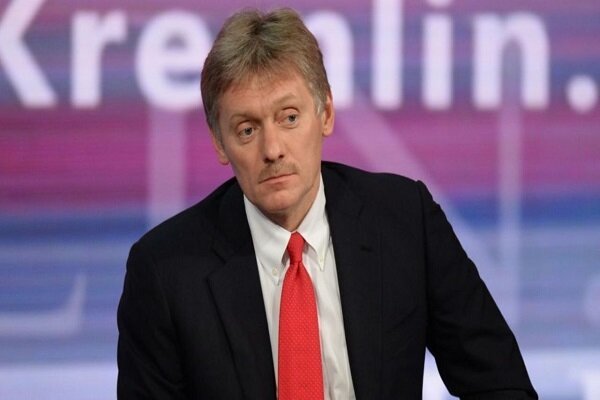
According to the International Desk of Webangah News Agency, Dmitry Peskov, the spokesperson for the Russian Presidential Administration (Kremlin), stated in an interview with TASS news agency that European negotiators have not yet made any direct contact with Moscow. This statement emerges amidst ongoing consultations aimed at broadening the scope of Ukraine peace negotiations to involve European powers. Peskov clarified, “European negotiators have not yet contacted the Russian side, and no specific dialogue has taken place on this matter to date.”
These remarks come as the potential participation of European representatives in future rounds of talks to end the war in Ukraine has become a central theme in recent diplomatic consultations. Following tripartite negotiations between Russia, Ukraine, and the United States held in Abu Dhabi on November 10-11, 2026, Steve Witkoff and Jared Kushner, representatives of the U.S. President, met with Vladimir Putin in Moscow and Volodymyr Zelenskyy in Dublin. Following these consultations, Jared Kushner announced that both sides had agreed to expand the next round of negotiations to include European partners. However, the Kremlin has emphasized that no final decision has been made regarding the form and framework of European involvement.
On November 13, Peskov had previously announced that Moscow needed to first ascertain the true intentions of European countries and their readiness to contribute to the peace process before deciding on broader negotiation formats. He also indicated that Russia would not oppose establishing a preliminary form of communication with Europe, but no concrete dialogue had occurred yet. The Kremlin spokesperson further stressed on November 14 that Moscow did not intend to set conditions for the composition of the European negotiating delegation, deeming such an approach inappropriate.
Meanwhile, European officials have been consulting on the appointment of a representative to engage in talks with Russia. António Costa, President of the European Council, announced on November 13 that European leaders had reached an agreement on a framework for European representation, which would involve the European Union and five member states: Germany, France, the United Kingdom, Italy, and Poland. Despite these internal European deliberations, direct and official contact between European representatives and Moscow to initiate the aforementioned negotiations has not yet been established.
The Abu Dhabi talks in November 2026 marked the first round of trilateral discussions between Russia, Ukraine, and the United States after a hiatus of approximately nine months. On the sidelines of these negotiations, representatives from the UK, France, Germany, Italy, NATO, and the European Union also held separate consultations with the Ukrainian delegation and U.S. officials, but the Russian delegation did not meet with European representatives. A key point of contention among the parties, in addition to territorial issues and Ukraine’s security guarantees, involves the manner of European participation and the establishment of broader security arrangements on the European continent.