Yemen Strikes Saudi Ports in Escalating ‘Port for Port’ Retaliation
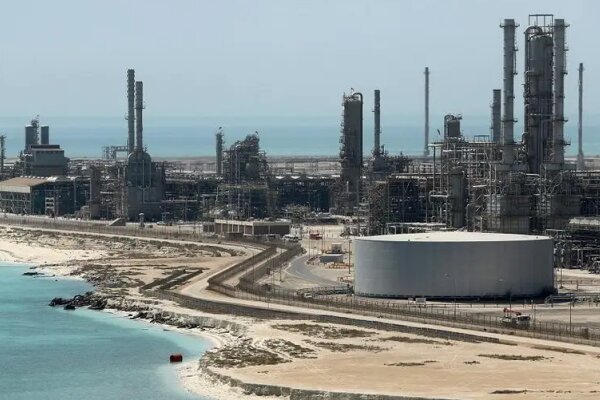
According to the International Desk of Webangah News Agency, recent developments in the confrontation between Saudi Arabia and Yemen‘s Ansarullah forces indicate a renewed expansion of the conflict, with ports and economic infrastructure now at the forefront of military calculations. The Yemeni armed forces’ announcement of targeting the ports of Jeddah and Jizan in response to the Saudi-led coalition’s attacks on Hodeidah port carries a message beyond a mere military operation: Sanaa is attempting to transfer the cost of military pressure on Yemen’s vital infrastructure into Saudi Arabian territory.
Yemeni armed forces claim to have targeted Jeddah port and Jizan port in two separate operations, stating that the attacks hit their intended objectives. A statement from these forces described these operations as a response to Saudi attacks against Yemen and Hodeidah port, emphasizing the continuation of equations such as “port for port,” “blockade for blockade,” and “escalation for escalation.” However, details regarding the extent of damage and the operational impact of these attacks have not yet been independently verified.
The significance of Jeddah port on the Red Sea coast makes it one of Saudi Arabia’s most crucial commercial and logistical hubs. According to statistics on Saudi port operations published in 2025, Jeddah port handled approximately 1,428,000 TEUs (Twenty-foot Equivalent Units) in inbound and outbound traffic. This volume underscores Jeddah’s prominent position in Saudi Arabia’s maritime trade network, although King Abdulaziz Port in Dammam recorded higher overall container throughput in the same year. Its proximity to the population and economic centers of western Saudi Arabia also positions it as a key player in the commodity supply chain and commercial communications, meaning any threat against it could increase insurance, transportation, and supply chain management costs.
Jizan port, located in southwestern Saudi Arabia near the Yemeni border, forms part of the economic and logistical infrastructure for the country’s southern regions. It ranks as Saudi Arabia’s third-largest port by design capacity on the Red Sea coast and plays a significant role in importing livestock from Horn of Africa nations. The port is approximately 266 miles from the Bab el-Mandeb Strait. The selection of these two ports aims to exert pressure on a vital Saudi maritime trade center while simultaneously posing a threat near the kingdom’s southern borders.
To understand the logic behind Yemen’s announced operations, it is essential to consider the importance of Hodeidah port. This port serves as one of the most critical routes for goods entering the densely populated northern and western regions of Yemen. According to reports from the UN Mission to Support the Hodeidah Agreement, in 2024, approximately 4.87 million tons of food and 3.04 million tons of fuel entered Yemen through the ports of Hodeidah, Saleef, and Ras Isa. Hodeidah port alone facilitates roughly 70 percent of commercial imports and close to 80 percent of incoming humanitarian aid to the country. These figures illustrate that, from the perspective of Ansarullah forces, attacks on Hodeidah impact the access of millions to essential goods.
The declaration of the “port for port” equation is an attempt to establish mutual deterrence. The logic of this strategy is based on the principle that if Yemen’s vital infrastructure is targeted, the economic infrastructure of the opposing party will also face threats. Through this action, Sanaa is altering Saudi Arabia’s military operation cost-benefit analysis, linking continued attacks on Yemeni ports to the potential for insecurity to spread to Saudi ports. Ansarullah seeks to extend its deterrence from military targets to economic infrastructure, a tactic employed in asymmetric warfare to increase the operational costs for the adversary.
Saudi Arabia has made extensive investments in developing its ports, trade routes, and logistical infrastructure in recent years. The security of these infrastructures is vital for the kingdom’s economic programs and regional standing. However, independent evidence of widespread disruption to commercial activities at Jeddah or Jizan, or significant economic damage to these ports, has not yet been published. Nevertheless, the persistence of such threats could increase maritime security and transportation costs, impacting investment in coastal areas. The expansion of confrontation to civilian infrastructure carries serious humanitarian and economic risks for both parties.
These developments are unfolding in the strategically vital Red Sea region, which connects important trade routes. Any escalation of tensions in this area could affect the calculations of shipping companies and the security of international trade routes. Threats to ports in this region increase the risk of economic activity along a crucial international corridor. Ultimately, the announced operations against Jeddah and Jizan represent an effort to change the rules of engagement and shift some of the confrontation’s costs to Saudi Arabia’s economic infrastructure. This action serves as a message from Sanaa that pressure on Yemeni ports will not go unanswered. The success of this strategy depends on the Yemeni forces’ ability to pose a continuous threat, the vulnerability of Saudi infrastructure, and Riyadh’s political and military calculations. The “port for port” equation, if sustained, could propel the two sides’ confrontation beyond a military dispute, transforming the economic and maritime security of the southern Red Sea into a primary arena of competition.