
Global Oil Prices Retreat Weekly Despite Day-End Rebounds Amid Geopolitical Tension
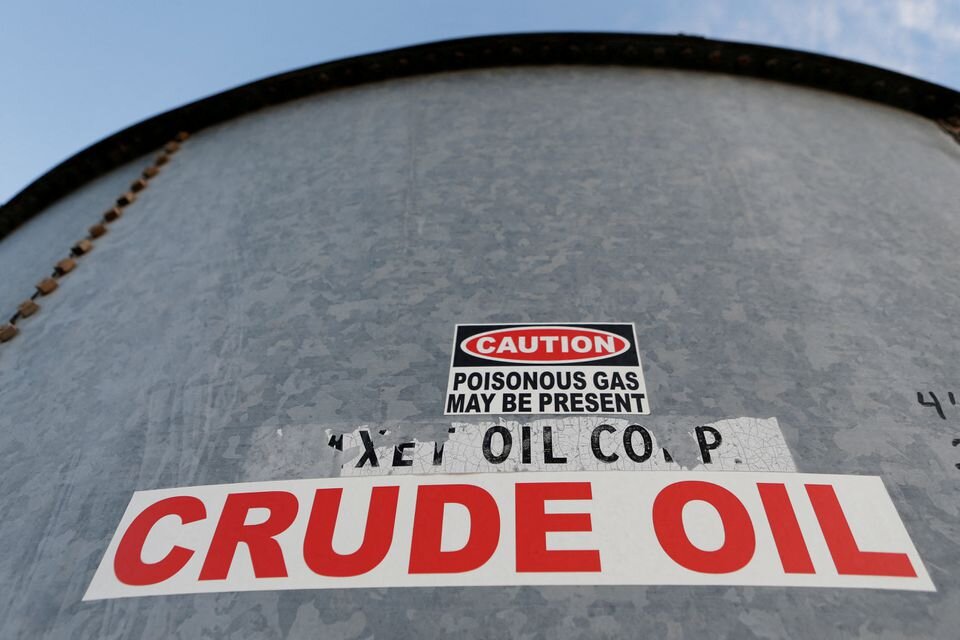
According to the Economic Desk of Webangah News Agency, global oil prices saw a reversal this week, with both major benchmarks posting their first weekly losses since the middle of December 2025. Despite end-of-day gains, the overall trend reflected investor caution and profit-taking following recent upward momentum.
On Friday’s trading session, Brent crude futures settled at $68.05 per barrel, marking an increase of 50 cents, or 0.74 percent. Similarly, US benchmark West Texas Intermediate (WTI) crude rose by 26 cents, equating to a 0.41 percent gain, to close at $63.55 per barrel.
During Thursday’s overnight trading, both benchmarks had initially fallen but subsequently surged by over a dollar per barrel during US market hours, before those gains moderated by the official closing bell. Over the full trading week, Brent crude retreated by 3.4 percent, while WTI futures recorded a 2.0 percent drop.
Market sentiment remains sensitive to geopolitical developments, particularly concerning the Middle East. Indirect talks between Iran and the United States concerning Tehran’s nuclear program recently took place in Oman. John Kilduff, a partner at Again Capital, commented on the ongoing situation, stating, “We continue to discuss this Iran situation.”
Any escalation of tensions between Washington and Tehran could significantly disrupt the flow of oil, given that approximately one-fifth of the world’s total consumption passes through the Strait of Hormuz, which lies between Oman and Iran. Major crude exporters, including Saudi Arabia, the UAE, Kuwait, and Iraq, rely heavily on this waterway for their exports.
Analysts suggest that a sustained reduction in the probability of regional conflict could lead to further downward pressure on oil prices. Adding to market dynamics, four trade sources told Reuters that Kazakhstan’s planned crude oil exports via Russia’s main pipeline route could decrease by as much as 35 percent this month due to a slower-than-expected ramp-up in production at the massive Tengiz oil field.
Furthermore, Saudi Arabia reduced the official selling price (OSP) for its Arab Light crude destined for Asia for March delivery to near a five-year low on Thursday, marking the fourth consecutive month of price cuts by the kingdom.


