Iranian Drones Breach US Defenses, Raising Questions on Advanced Systems
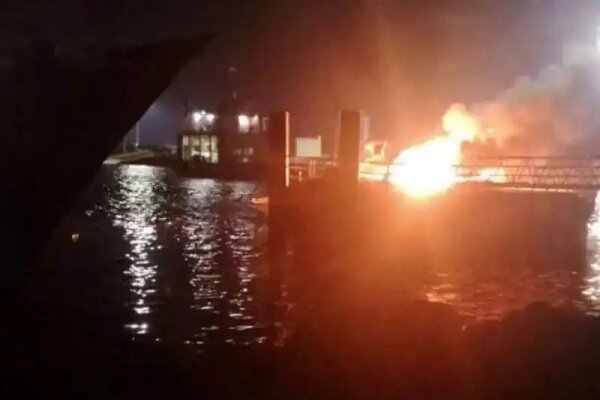
According to the International Desk of Webangah News Agency, the recent Iranian missile attack on a U.S. military base in Jordan, confirmed by Washington and resulting in American military fatalities and injuries, has raised serious questions about the capability of advanced U.S. air defense systems to intercept Iranian missiles and drones. This development, as reported by Al Jazeera and cited by the Mehr News Agency, underscores the challenges faced by even sophisticated defense networks.
Military and strategic analyst Brigadier General Elias Hanna explained that the successful penetration of Iranian projectiles demonstrates that no defense network, however advanced, can offer a hundred percent guarantee of protection. He noted that Iranian missiles had previously targeted the occupied territories, even when that regime employed advanced air defense systems like the Iron Dome and Arrow systems. Hanna believes that the presence of systems such as THAAD and Patriot at U.S. bases in the region does not necessarily prevent certain projectiles from penetrating and reaching their targets.
Hanna added that the killing of American soldiers, if it was the result of a direct Iranian attack, might alter equations at a tactical level but does not necessarily signify a shift in the overall strategy of the conflict. He characterized the ongoing events as indicative of a new phase in the exchange of pressure between Washington and Tehran. Hanna elaborated that the U.S. has based its strategy on intensifying naval blockades and increasing economic costs for Iran. In response, Iran’s actions have followed two parallel paths: disrupting navigation in the Strait of Hormuz, with implications for the global economy and regional countries, and geographically expanding the targets of its attacks, as evidenced by the strikes reaching Jordanian territory.
While Washington has yet to disclose the full details of the incident that led to the deaths of its soldiers in Jordan, Elias Hanna suggests that the outcomes of the U.S. investigation and the nature of a potential response will determine the path forward amidst continuing military tensions and the broadening scope of conflict between the United States and Iran.