Pakistani Leader Praises Iran’s Resilience and Strategic Response to US and Israeli Actions
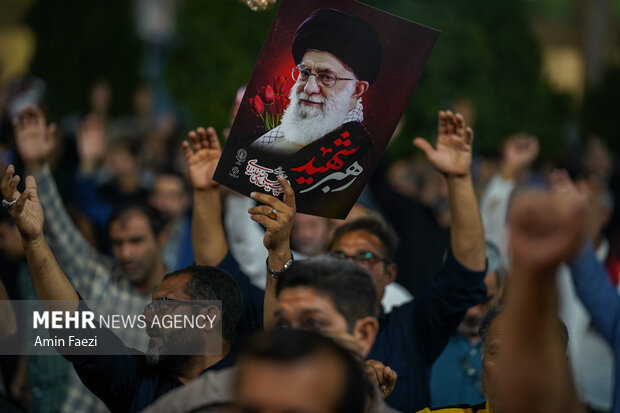
According to the International Desk of Webangah News Agency, Ejaz-ul-Haq Hashmi, a prominent leader of Pakistan’s Jamaat-e-Islami, has commended Iran‘s resilience and strategic handling of recent events, particularly in the aftermath of actions by the United States and Israel. Speaking at the annual ‘Week of Unity’ conference in Tehran, Hashmi observed a remarkable absence of fear and anxiety among the Iranian populace, attributing this to the nation’s inherent courage and steadfastness.
Hashmi noted that while visiting Tehran, he witnessed a palpable sense of determination among the people, unaffected by external pressures. He remarked on the Iranian people’s familiar spirit of bravery, conviction, and adherence to their principles, which he believes render them formidable against any adversary. This assessment, he stated, aligns with pre-existing perceptions that Iran’s strategic defense had compelled its opponents to reassess their actions.
The ‘Week of Unity’ conference, originally conceived by Ayatollah Ruhollah Khomeini and continued by his successors, primarily focuses on fostering solidarity among Muslim nations. This year, the urgency of the conference was amplified by the prevailing geopolitical climate. Hashmi emphasized that a significant portion of discussions revolved around the Palestinian issue, underscoring its critical importance to the Islamic world.
He elaborated on the profound vision of Imam Khomeini in establishing designated occasions like the ‘Week of Unity’ and Al-Quds Day, transforming them into significant events with enduring philosophical weight. Hashmi posited that the significance of these initiatives has become increasingly apparent over time, especially in the current context where many Muslim nations struggle to counter the influence of global powers.
Hashmi commended Iran’s measured response to recent provocations, highlighting that its actions were specifically targeted at U.S. and Israeli bases, rather than indiscriminate retaliation. This strategic approach, he suggested, has fostered a realization that Iran’s objective is to counter external interference in the region, aiming to create an environment where regional security can be collaboratively established based on shared religious and ideological principles, free from sectarian divisions.
He pointed to the Saudi Arabian ambassador’s attendance at the ‘Week of Unity’ event as a tangible sign of evolving regional dynamics and a growing opportunity for unity. Hashmi praised the late Ayatollah Seyed Ali Khamenei, not as the ‘martyred leader’ but as a figure embodying deep Islamic understanding, historical awareness, and philosophical insight. He described him as a leader who consistently communicated with clarity and profound wisdom, offering invaluable guidance.
Hashmi further elaborated that the successor to the founder of the Islamic Revolution, Ayatollah Khamenei, has effectively upheld the principles of the revolution, demonstrating exceptional vigilance and a keen awareness of enemy plots. He stressed that true wakefulness, or ‘bidari,’ in an Islamic context, entails courage and unwavering resolve in confronting adversaries, a quality he observed exemplified by Iran’s stance, which has garnered global solidarity despite U.S. condemnation.