
US Admits Failure to Achieve Goals in Attacks on Iran
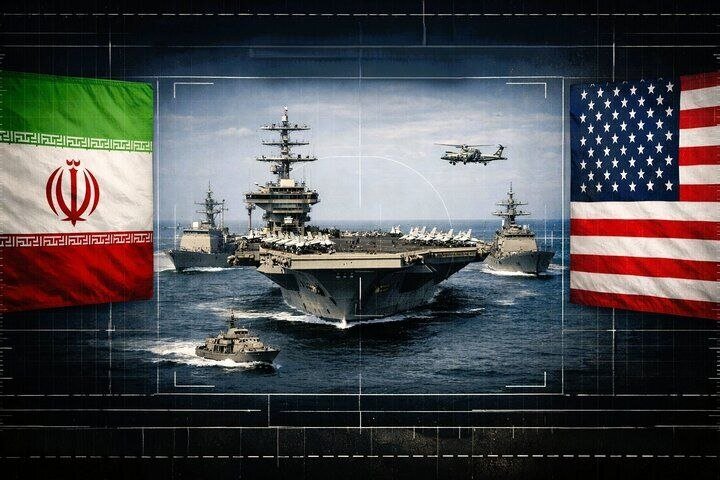
According to the International Desk of Webangah News Agency, despite the passage of over six months since the initiation of aggressive attacks by the United States and the Israeli regime against Iran, Washington’s account of the operation’s gains is encountering significant questions. Notably, these inquiries are no longer confined to critics of U.S. policy; American media outlets, think tanks, and officials are also offering critical assessments regarding the extent to which stated objectives have been met and the outcomes these attacks have yielded for Washington.
A review of these admissions suggests that the narrative of decisive victory has, at least in segments of the American political and media landscape, given way to discussions about failures, costs, and Washington’s limited options. Observers note that the significance lies not merely in the volume of these statements but in the convergence of assessments emerging from within the U.S. political and media structures, painting a different picture of the results of the aggressive attacks.
A Lengthy List of Failures: From Nuclear Annihilation to Regime Change
At the outset of the aggressive attacks, Washington declared multiple objectives for its operations, including the destruction of Iran’s missile capabilities and defense industries, disabling its navy, and permanently preventing Iran from acquiring nuclear weapons. Alongside these military goals, Donald Trump repeatedly spoke of altering Iran’s political structure. The Center for Strategic and International Studies (CSIS) also examined these stated objectives in the initial days, warning that some were fundamentally unachievable through airstrikes and would require political changes within Iran.
However, months later, even assessments published in American media highlighted the gap between these objectives and the results achieved. The Washington Post reported in June that some of Trump’s key objectives remained unmet, emphasizing that while the U.S. had achieved tactical successes in weakening Iran’s military capabilities, these had not necessarily led to strategic outcomes. The outlet also cited an acknowledgment from a senior U.S. commander in the Middle East that Iran still possessed the capability for regional missile strikes.
The nuclear program also did not reach the point Washington had promised. The Trump administration had spoken of destroying Iran’s nuclear program at various junctures, but initial assessments of U.S. defense intelligence following previous attacks had indicated that these strikes had not destroyed the program, merely delayed it for a period. In the latest round of attacks, the fate of Iran’s uranium stockpiles and the potential for rebuilding its nuclear capacity remained a primary concern for Washington, making the collection and destruction of these reserves one of the most difficult issues in negotiations.
In the missile domain, claims of complete destruction also diverged from subsequent realities. Trump initially spoke of destroying a very large portion of Iran’s missiles and launchers, but later U.S. estimates revised these figures downward, with a senior U.S. military official acknowledging that Iran had maintained its missile strike capabilities. The Chatham House think tank, in its assessment, wrote that the continued launch of ballistic missiles, cruise missiles, and drones by Iran is inconsistent with initial claims about the destruction of a significant portion of its missile power.
Perhaps the clearest indicator of the gap between objectives and outcomes is the fate of Iran’s political structure. One of the objectives Trump explicitly stated at the outset of the attacks was to pave the way for regime change in Iran. However, the Washington Post reported weeks after the attacks began that even U.S. and Israeli intelligence officials acknowledged that Iran’s political structure had not collapsed and the government remained firmly in place. Months later, Chatham House’s assessment reiterated that the Islamic Republic, despite pressures, had maintained the institutional cohesion and security capacity necessary for its survival.
This list, however, is not exhaustive. Iran’s regional networks have not been eliminated, its missile program retains its capacity for reconstruction, and a stable agreement on the nuclear program has not been reached. Former U.S. diplomat Gary Grappo spoke more candidly in a recent interview with CNN, assessing that the U.S. had not succeeded in achieving its strategic objectives, despite acknowledging military and tactical successes. Thus, the core issue in evaluating Washington’s performance is not the denial of damages inflicted on Iran, but rather the chasm between military impact and the attainment of political and strategic results—a gap that a segment of American circles now acknowledges.
Cracks in America’s Regional Security Umbrella
The retaliatory attacks of recent months have raised serious questions about a long-standing pillar of U.S. presence in the region: whether the extensive deployment of American forces and bases in the Persian Gulf can still serve as a security umbrella for Washington’s allies, or if it has itself become a factor exposing them to attacks. This doubt is now visible in American strategic circles. The Council on Foreign Relations has acknowledged that U.S. bases in the region are vulnerable to Iranian missiles and drones due to their proximity to Iran, and the recent conflict has underscored the need for a review of the U.S. force deployment model.
This vulnerability is not merely theoretical; it has led to changes in U.S. military posture. The Washington Post has reported that the Pentagon is considering a reduction in U.S. military presence in the Persian Gulf after the end of hostilities and even harbors doubts about rebuilding some damaged bases. The implication of this development is clear: facilities intended to be platforms for U.S. power projection and deterrence have now become a concern for the country’s military planners.
The Brookings Institution, in its assessment of the attacks’ consequences, has acknowledged a more significant point, writing that U.S. forces, who previously enjoyed forward deployment in the region and a degree of operational immunity, no longer have such a sanctuary against attacks. The Stimson Center has written more explicitly that the conflict demonstrated that the U.S. network of bases, designed for efficiency in normal conditions and unparalleled superiority, is overly concentrated and vulnerable to a prolonged war of missiles and drones.
The consequences for America’s allies are also noteworthy. The Washington Post has reported increased dissatisfaction and concern among leaders of Arab states in the Persian Gulf regarding Trump’s crisis management, and American analyses speak of a wavering confidence in Washington’s security umbrella. Consequently, the issue is not merely the damage to a few bases, but the very equation of ‘security under America’ has faced a serious test—a test that now, even in American assessments, speaks of the necessity for a changed presence model and reduced vulnerability for allies.
The Hormuz Strait Blockade Bill on American Tables
The costs of disruption in the Strait of Hormuz are no longer merely a geopolitical issue; they have directly impacted the economies of the United States and its allies. The International Monetary Fund has acknowledged that the de facto closure of Hormuz removed approximately 20 million barrels of oil and refined products per day from the market, causing the largest oil market disruption in decades—a disruption that was only partially compensated for, despite alternative mechanisms.
The bill for this disruption quickly became apparent in fuel prices and living costs. The Council on Foreign Relations has estimated that this conflict has cost American consumers and taxpayers approximately $132 billion to date, with gasoline prices reaching an average of $4.56 per gallon at one point. A nearly 47% increase in fertilizer prices indirectly raised production costs and food prices, meaning the impact of Hormuz extended beyond gas stations to people’s grocery baskets.
This economic pressure has also translated into public dissatisfaction. A survey by the University of Massachusetts in late August indicated that 80% of Americans believe the attacks on Iran led to increased prices for food and gasoline, and 68% are dissatisfied with Trump’s handling of Iran. In the same poll, Trump’s overall approval rating fell to 32%, with 64% disapproving of his performance—figures that demonstrate the economic cost of aggression has become a political cost for the White House as well.
Even the latest economic data indicate the continuation of this pressure. With renewed tensions in Hormuz, Brent crude oil prices have neared $100 in recent days, reigniting concerns about rising diesel costs and inflation. Concurrently, a new Financial Times poll put Trump’s approval rating at 33% and showed 57% of voters feel they are financially worse off during his tenure. Therefore, Hormuz is not just a strategic chokepoint for Washington; it is a bill that extends from the energy market to people’s tables and, ultimately, to Trump’s political record.
Return to Sanctions: An Admission of Stalemate
Following months of U.S. failures in confronting Iran, Washington has once again turned a significant portion of its pressure on Iran back to sanctions and economic blockade—a shift indicating that military tools alone have failed to achieve America’s political objectives. The Associated Press has reported that in response to Tehran’s steadfast position, Trump has adopted a dual strategy of military and economic pressure, with his administration launching a new sanctions campaign to cut off Iran’s remaining trade relations.
However, the return to sanctions faces an old problem: sanctions can increase economic costs but do not necessarily lead to changes in political behavior. Reuters, in its six-month assessment, stated that despite severe sanctions and an oil export blockade, Iran has maintained its political control, and experts doubt the efficacy of sanctions in forcing Tehran to alter its strategic priorities.
A more significant limitation emerges when China is involved. Washington expanded the scope of secondary sanctions in August, but simultaneously, a Washington Post report indicated that Beijing has countered Trump’s ‘Economic Day D’ plan, and U.S. threats against trade with Iran could even strain Washington-Beijing relations. China is one of Iran’s most significant oil buyers, and imposing maximum pressure against it would incur substantially higher costs for the U.S.
This limitation is also evident in practice. The Financial Times has reported that despite intensified sanctions, U.S. pressure has not yet extended to sanctioning major Chinese banks and companies exposed to the U.S. financial system, as such an action would have broad economic and geopolitical implications for Washington. Thus, sanctions are once again on America’s table, but a fundamental question remains: if years of economic pressure could not compel Iran to change its behavior, and aggressive attacks failed to achieve declared political objectives, what less costly tool does Washington possess to achieve its desired outcome?


