
Lebanese PM Cites Limited Funds for Reconstruction, Focuses on Israel’s Withdrawal
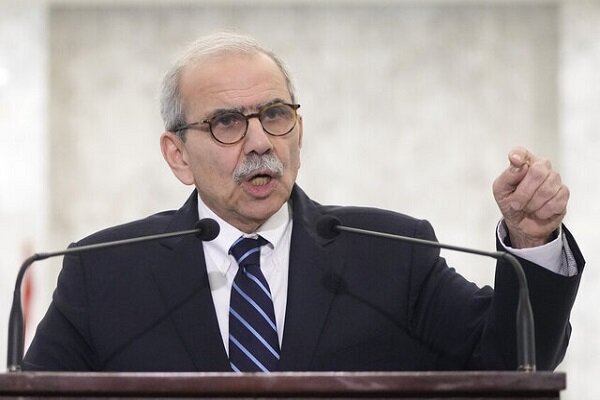
According to the International Desk of Webangah News Agency, Lebanese Prime Minister Najib Mikati, in explaining his government’s limited focus on reconstruction efforts following alleged war crimes by the Israeli regime, stated that the nation’s financial resources are constrained. He indicated that the government cannot bear the reconstruction costs and requires Arab assistance.
Mikati emphasized that financial discipline is not merely an option for Lebanon but a prerequisite for monetary stability and a crucial factor in maintaining the government’s spending capacity.
He claimed that the government’s efforts are concentrated on facilitating the return of displaced Lebanese citizens to their homes, adding that the administration’s sole aims are fiscal balance, social support, economic growth, and investment promotion.
The Lebanese Prime Minister asserted that policies that led to past crises cannot be pursued in Lebanon today.
He also claimed to have re-established connections with Lebanon’s Arab neighbors, noting that the government has successfully increased exports to Arab countries during his tenure.
The Prime Minister, whose government is pursuing normalization with Israel despite ongoing Israeli attacks against Lebanon, stated without condemning the occupation and the brutal Israeli attacks that Lebanon has entered a war that it did not choose but was imposed upon it, with an estimated cost between $3 to $4 billion.
While not detailing efforts to enhance the Lebanese army’s capabilities, he claimed to be working towards strengthening the armed forces and seeking greater support for the military through collaboration with Arab and international partners.
Mikati further stated, “As long as the war continues in the south, security and stability in Lebanon are meaningless. Our goal is the withdrawal of Israel from all our lands and the return of the displaced.”
Facing significant domestic opposition and protests regarding negotiations with Israel, the Lebanese Prime Minister attempted to refute the opponents’ logical arguments about the potential damage to the country’s territorial integrity. He claimed that judgments on the success or failure of negotiations should be based on their ultimate outcomes, stressing that the priority is achieving Lebanon’s objectives and that they do not accept negotiation for negotiation’s sake.
He concluded by stating that only the Lebanese government can speak on behalf of the country and that direct negotiations with Israel are not a simple matter.


