
Europe Navigates Tensions Between Washington and Hormuz, Defining Limits of Alliance with Trump
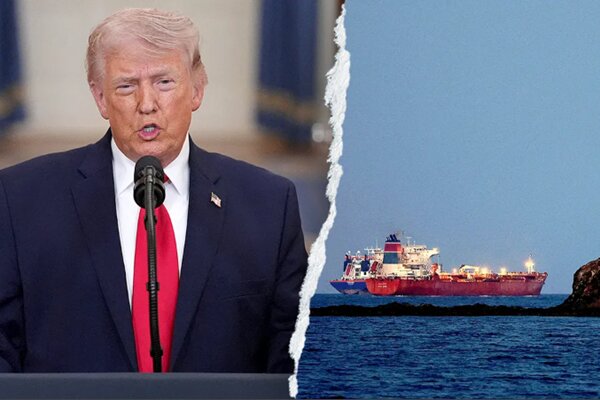
According to the International Desk of Webangah News Agency, the Strait of Hormuz has once again emerged as a pivotal test for Europe in its engagement with the Iran crisis and Washington’s policies. In recent days, France has been spearheading the drafting of a UN Security Council resolution aimed at guaranteeing freedom of navigation in Hormuz, while simultaneously emphasizing the imperative of returning to diplomatic channels for dialogue with Tehran. This approach underscores Europe’s concern over the repercussions of disruptions to energy and trade routes, suggesting that these issues cannot be solely managed through pressure and military confrontation.
Meanwhile, London has also intensified pressure on Iran without direct military involvement with the United States. In September, the UK imposed new restrictions on Iran across energy, banking, shipping, insurance, and technology sectors, expanding sanctions on Iranian vessels and aircraft. However, in its official statement, the UK reiterated that a “negotiated solution” remains the sole long-term path to resolving Iran’s nuclear issue.
This dual strategy of pressure and diplomacy highlights the defining line of Europe’s policy in contrast to Washington’s approach. Brussels and European capitals aim to maintain leverage against Iran but appear unwilling to equate escalating military conflict with the advancement of their own interests.
The Boundaries of European Alignment with Trump
During Donald Trump’s second term, Europe has encountered a different model of relationship with Washington. This model involves the United States not only expecting alignment from its European allies but also employing tactics such as tariffs, economic threats, security pressure, and even disputes over NATO member territories to enforce its demands.

The Greenland crisis served as a turning point in this trend. Amidst intense pressure for the territory’s cession to the U.S., President Trump threatened to impose tariffs on several European countries and did not rule out the use of force at one point. Europe’s response was not purely diplomatic; European officials spoke of potential reciprocal economic measures, and the European Council affirmed the sovereignty of Denmark and Greenland.
However, the issue did not end with Greenland. Trade tariffs, pressure for increased defense spending, threats to reduce U.S. military commitments in Europe, and disagreements over the resolution of the Ukraine war have progressively prompted European capitals to question whether every decision made by Washington necessarily serves Europe’s security interests.
In the Ukraine file, President Trump’s efforts to advance an agreement and pressure Kyiv to accept Washington’s framework, coupled with his divergent stances on Russia, have complicated European calculations. Concurrently, U.S. pressure within NATO has pushed some member states towards strengthening independent defensive capabilities and diversifying their arms suppliers.
Essentially, Europe’s current challenge is not solely about trusting or distrusting the United States. It is about the extent to which European allies can exercise independent choice in the face of Washington’s decisions. Recent months have shown that Brussels sometimes negotiates, sometimes concedes, and sometimes draws a line in response to Trump’s pressure.
However, the more these pressures impinge upon Europe’s direct interests, the sovereignty of its members, or its economic and military security, the more significant the distinction between “alliance” and “subservience” becomes for Europeans. This experience is equally relevant in dealing with Iran and the Strait of Hormuz. Europe is not obligated to replicate a decision made by the United States in a context where Europe itself might bear the primary cost.
Europe’s Strategy: Coercive Engagement Without Escalation to War
Europe has pursued a different path regarding Iran than full alignment with Washington. On one hand, it has maintained and even intensified sanctions, political pressures, and firm stances concerning Iran’s peaceful nuclear program and missile capabilities. On the other hand, it does not view direct engagement in war and aggression as a solution to disputes.
France and the United Kingdom exemplify this dual policy. Paris, while maintaining pressure on Tehran, emphasized a return to diplomacy and the reopening of Hormuz during a recent meeting between its foreign minister and Seyed Abbas Araghchi. France is currently pursuing a resolution in the Security Council to guarantee freedom of navigation in the strait.

In September, London also imposed new sanctions on Iran in the energy, banking, shipping, insurance, and technology sectors, while simultaneously continuing to emphasize a negotiated solution.
This approach indicates Europe’s desire to retain leverage against Iran without necessarily being drawn into an offensive initiated by Washington. France, even in its proposal for Hormuz, has sought to separate the issue of freedom of navigation from broader confrontation with Iran, avoiding the creation of an aggressive posture towards Tehran.
Nevertheless, this distancing should not be interpreted as Europe being immune to the costs of war. The Hormuz crisis has directly impacted Europe’s economy, with increased energy prices imposing a significant burden on the continent’s nations.
France has recently called on the European Union to take immediate action to curb energy prices. European gas prices have risen this year from approximately 27 euros to 80 euros per megawatt-hour, and oil prices have surpassed $100 per barrel.
Therefore, Europe’s caution cannot be solely attributed to a successful political choice or distancing from President Trump. Europe itself is bearing the costs of conflict and has no alternative but to limit the scope of the crisis. The longer the insecurity in Hormuz and the conflict persist, the greater the pressure on Europe’s energy sector, transportation, inflation, and industries will become.
Consequently, Europe’s policy toward Iran is positioned between pressuring Tehran for behavioral change and striving to prevent a wider conflict. This stance diverges from Washington’s maximum-pressure policy but does not signify the abandonment of sanctions or pressure on Iran.
Hormuz: A Red Line for European Interests
For Europe, the Strait of Hormuz is more than just a maritime route in the Persian Gulf. Disruptions in this waterway directly affect energy prices, transportation, and the economic costs incurred by European countries. In July, the European Commission stated that while there were no immediate issues with oil supply at that time, it warned that the continuation of the Middle East crisis could lead to greater market constraints in the coming weeks and months.

The extent of this dependency is also evident in the costs imposed on the European economy. According to European Commission estimates, since the onset of the Middle East crisis in 2026, EU member states have incurred approximately 53 billion euros in additional costs for fossil fuel imports. Concurrently, the Commission has emphasized that the closure or restricted access of the Hormuz route could keep oil and gas prices high for an extended period, impacting economic growth and European trade.
For this reason, Europe’s response to the Hormuz issue is not solely security-driven but is intrinsically linked to energy security and economic stability. In September, France proposed drafting a UN Security Council resolution aimed at establishing an international mechanism to guarantee freedom of navigation in Hormuz. A key aspect of Paris’s plan is to separate the issue of shipping security and energy transfer from a broader dispute with Iran, emphasizing a non-aggressive approach.
Simultaneously, European officials have linked diplomatic efforts to the Hormuz issue. In recent meetings between European officials and Abbas Araghchi in New York, the reopening of Hormuz and de-escalation of regional tensions were discussed alongside diplomatic dialogues.
The European Union is also strengthening its naval mission in the Red Sea to protect European shipping. This action demonstrates that while ensuring the security of trade routes is paramount for Europe, it does not necessarily equate to engaging in a wider and more costly war.
Ultimately, this point clarifies the limit of Europe’s alignment with Washington. Europe can cooperate with the U.S. on political pressure, sanctions, and even ensuring shipping security. However, as the crisis escalates to a point where its continuation threatens Europe’s energy prices, trade, and economic stability, the direct interests of European nations gain greater importance.
For Brussels, the primary concern is not choosing between Tehran and Washington, but rather preventing a crisis whose costs would also be borne by the European economy and citizens. Therefore, maintaining pressure on Iran, while keeping diplomatic channels open and striving for the normalization of traffic in Hormuz, constitutes two concurrent pillars of Europe’s policy.


