
New York Times: India’s Anti-Government Protests Overcome State Suppression
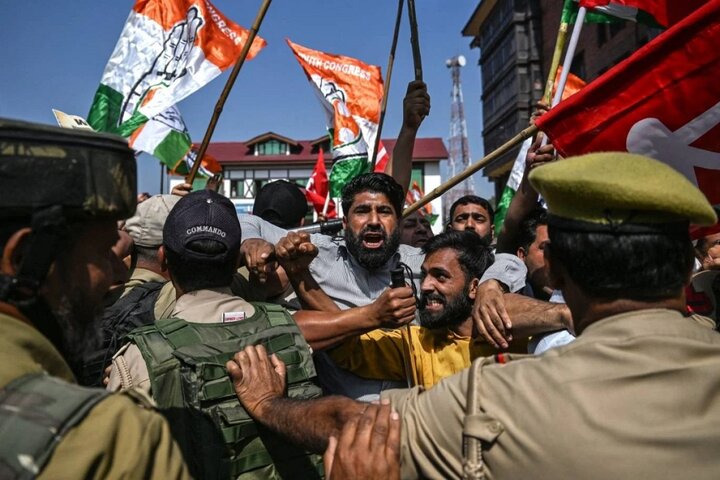
According to the International Desk of Webangah News Agency, the American newspaper The New York Times has reported on the escalating violence in anti-government protests in Delhi, noting that police officers suppressed demonstrators during a protest on October 10, 2026, in New Delhi.
The “Coalition for Justice and Peace” (CJP) has called for a large-scale demonstration demanding the resignation of Gyanesh Kumar, the Chief Election Commissioner of India, citing irregularities in electoral processes and a review of voter lists.
The New York Times, in its analysis, examines the challenges faced by Prime Minister Narendra Modi following widespread protests by Generation Z. These protests were sparked by accusations of tampering with the voting system and voter records.
The analysis posits that these protests present a different challenge than those Modi has previously encountered. Modi had previously managed to contain his opponents by discrediting them, labeling some as terrorists or anti-national, and by utilizing state institutions, legal pressures, and administrative measures to stifle dissent, independent media, and activists.
However, the recent confrontation has revealed the limitations of this strategy. After police used force against protesters in the capital and arrested thousands, young people used mobile phones to record the police’s violent actions and disseminated the footage through social media. They succeeded in bypassing internet restrictions, releasing images that undermined Modi’s claims of being a leader who maintains control and societal stability.
Intensified security measures, including the erection of barriers and the deployment of thousands of security personnel, have also failed to end the protests, which continue to emerge in various parts of the capital. Leaders of the movement have vowed to organize further actions upon their release.
The analysis indicates that the core of the crisis is linked to growing doubts about the integrity of elections. A review of voter lists nationwide has led to the removal of over 130 million names in the past year, accompanied by accusations of chaos in the process and the deliberate disenfranchisement of millions of citizens.
Protesters are demanding the resignation of Gyanesh Kumar, the Chief Election Commissioner, who was appointed through a mechanism that critics claim is influenced by Modi. They accuse him of manipulating voter rolls to enhance the ruling party’s future prospects. The ruling Bharatiya Janata Party, conversely, has denied these allegations, stating that its critics are attempting to compensate for their electoral defeats.
Observers believe that the resignation of the Chief Election Commissioner could harm Modi, as it might be interpreted politically as an implicit admission of doubt regarding the legitimacy of his electoral mandate. Conversely, refusing to resign could lead to continued protests and an escalation of the confrontation.


