
Turkey Submits Mecca Accord to Parliament Amidst Opposition Concerns
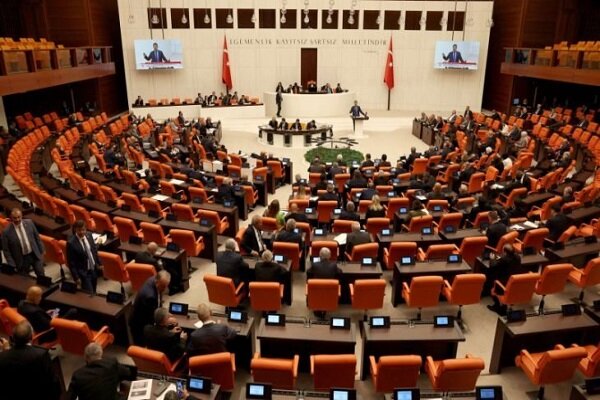
According to the International Desk of Webangah News Agency, Turkish President Recep Tayyip Erdoğan has submitted the Mecca Accord to the Turkish Parliament for ratification, a surprising decision made two months after its initial signing. Sources indicate this action is aimed at garnering parliamentary approval amidst domestic criticism and public concerns over Ankara’s potential involvement in the Yemen war and skepticism about the agreement’s true aims.
Despite Foreign Minister Hakan Fidan’s assurances that Turkey would not send forces to Saudi Arabia “to attack anyone,” public sentiment remains unconvinced. Murata Yektin, a Turkish journalist, reported from government sources that “support and training units,” rather than combat forces, are slated for deployment to Saudi Arabia.
While the accord’s passage in parliament appears likely given the pro-Erdoğan parliamentary blocs, questions persist regarding the timing of its submission and whether the full text will be presented or if it will be limited to a “press release.”
Escalating criticism, Iskender Bayhan, Deputy Chairman of the leftist Workers’ Party, stated, “The government is acting as if the agreement has been approved by parliament. The outcome is the shedding of soldiers’ blood for the benefit of imperialists, domestic capitalists, and the Presidential Palace’s interests, which must not be allowed.” Bayhan characterized the “Mecca Alliance” as “part of an imperialist plan for the region’s redistribution,” asserting that Ankara’s objective is to “profit from arms sales and receive financial aid from Saudi Arabia.”
Ilkay Aksoy, a prominent political activist and member of the Democratic Party, dismissed Fidan’s claims of the “Mecca Alliance” being “defensive and non-offensive” as misleading and contradictory. She questioned how defense can be guaranteed without a clear response to incoming attacks and highlighted the Justice and Development Party’s apparent shift from supporting armed opposition groups in Syria to defending the Saudi government, which she deems contrary to Turkish interests. Aksoy also raised concerns about the immediate decision by Turkey and Pakistan to offer assistance to Saudi Arabia without certainty on the accord’s explicit provisions, especially when the text remains unpublished. She warned that deploying Turkish soldiers to Saudi Arabia would make them targets for Yemenis and jeopardize relations with Iran.
Fatih Erbakan, leader of the New Welfare Party, articulated that the accord’s purpose is to combat Israel’s enemies, and Turkey should not serve as Israel’s shield. He suggested that member nations should prepare their forces for the defense of Gaza, not Saudi Arabia. Conversely, Ilhan Özgil, foreign relations coordinator for the main opposition New Party, stated that the government has opted for war over peace, with national interests no longer a benchmark in foreign policy. Özgil recalled Erdoğan’s 2019 remarks questioning Saudi Arabia’s role in the Yemen crisis and emphasized that any agreement with a collective defense clause would draw Turkey into war, aligning the Justice and Development Party government with the “Donald Trump system in the Middle East.”


