Netanyahu’s Security Document Against Iran: Real Strategy or Election Ploy?
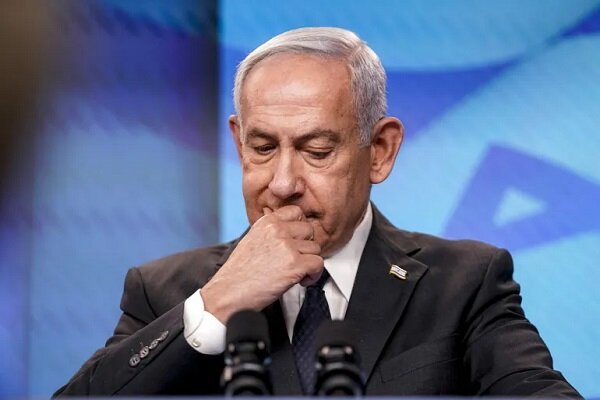
According to the International Desk of Webangah News Agency, Israeli Prime Minister Benjamin Netanyahu has stressed the necessity of bolstering Israel’s military power in his new security document, advocating for the nation’s capacity to act against Iran’s nuclear installations even without American assistance. The document outlines a strategy of preemption, establishing buffer zones, enhancing domestic arms production within occupied territories, and achieving superiority in advanced technologies like artificial intelligence.
On the surface, these positions appear to be part of an effort to reduce Israel’s military dependence on its primary ally, the United States. However, a significant contradiction lies beneath this assertion. A state that has long defined its security based on Washington’s military, arms, and political support is now speaking of the imperative to act independently. This very emphasis suggests that dependence on the United States has become a strategic concern for Israel.
Announcing the goal of increasing military might does not equate to possessing the necessary capacity to achieve it. There is a considerable gap between the publication of a political document and the establishment of sustainable operational capabilities. To transform these pronouncements into reality, Israel requires financial resources, advanced technology, specialized human capital, and, most importantly, a realistic assessment of its limitations. This is occurring while experience in confronting Iran has shown that superiority in certain equipment and technologies does not necessarily translate into the ability to impose political will on the opposing party.
Opposition Doubts Netanyahu’s Security Document
The reaction of Netanyahu’s political opponents to this document is a significant aspect of the narrative. Yair Lapid, the opposition leader, derisively compared it to a text written by free artificial intelligence. Gadi Eisenkot, another prominent figure, described its content as a collection of hollow slogans.
These criticisms come from individuals who are themselves part of Israel’s political and security establishment, and therefore cannot be dismissed as mere outsiders to the power structure. Consequently, the issue transcends simple partisan disputes; a segment of the Israeli elite harbors doubts about the feasibility of Netanyahu’s security claims and his ability to present a clear vision for the future.
The fundamental question arises: if a document is issued with the aim of charting Israel’s security future, why should it be so general and lacking in detail? A comprehensive security strategy should prioritize threats, specify required resources and capabilities, assess limitations, and outline a path to achieving objectives. The repeated use of phrases like increasing military power, strategic independence, and technological superiority, without sufficient detail, fails to meet these expectations.
Furthermore, Netanyahu cannot simply discard the regime’s deep-seated dependencies on the United States by merely declaring that Israel must act more independently. Washington’s support extends beyond arms provision; intelligence cooperation, technological collaboration, political backing, and military coordination are crucial components of this relationship. Therefore, the claimed strategic independence requires extensive and costly changes rather than being realized through a political declaration.
Threat of Iran: A Consistent Israeli Political Tool
Placing Iran at the center of the new security document is not disconnected from Netanyahu’s political history. For years, he has consistently focused on Iran’s nuclear program and defensive capabilities in his speeches, endeavoring to present the threat posed by Iran as the primary justification for strengthening Israel’s military power.
In this narrative, Iran is portrayed not merely as a regional rival but as a threat that can explain all of Israel’s security concerns. Such an approach allows Netanyahu to steer public discourse away from his government’s performance in other areas toward a familiar and sensitive issue, one that can amplify security anxieties and influence the political climate.
However, the perpetual portrayal of Iran as a threat does not resolve questions concerning the Israeli government’s own performance. If increasing military might and pre-emptive actions are intended to create lasting security, it must be explained why, despite years of military investment and extensive American support, security risks remain central to Israeli policy.
Moreover, a distinction must be made between the capacity to inflict military damage and the achievement of strategic outcomes. A military operation might inflict significant damage on the adversary, but this does not necessarily mean the destruction of its capabilities, a change in its political behavior, or the attainment of the aggressor’s long-term objectives. The experience of confrontations between Iran and Israel has demonstrated that regional security calculations cannot be solely explained by the number of fighter jets, missiles, or advanced equipment.
Three Pages for Israel’s Future?
The release of a brief document on the eve of elections provides critics with an opportunity to question the Prime Minister’s political motives. Netanyahu aims to present himself as a decisive leader prepared to act against external threats. Emphasizing Iran and promising independent attack capabilities could be part of this image-building exercise. In this context, the issue is not solely the content of the document but also how it is politically leveraged.
For a prime minister facing domestic criticism regarding his cabinet’s security performance, highlighting an external threat can serve as a diversionary tactic. Instead of all attention being focused on past decisions, political responsibilities, and security failures, the discussion is redirected towards the necessity of increasing military power and confronting Iran. This pattern has precedents in Israeli politics, but its electoral success cannot be definitively predicted.
New Threat or Repetition of a Stalemate?
The primary concern for Iran is not how many pages Netanyahu has written about Israel’s military strength, but whether these claims will lead to a genuine change in the regime’s military conduct or remain mere political rhetoric. Netanyahu may speak of military independence and technological superiority in his document, but he cannot eliminate Israel’s strategic limitations with a few sentences. Artificial intelligence, whether used in drafting such documents or not, cannot replace a correct assessment of on-the-ground and political realities. Ultimately, Netanyahu’s three-page document, rather than answering difficult questions about Israel’s security future, once again places Iran at the center of the regime’s alleged threats.
While this approach might capture public attention on the verge of elections, it is insufficient for establishing lasting security. Security is not achieved through the repetition of threats and displays of power; it requires recognizing limitations, avoiding miscalculations, and understanding the costs of confrontation. If Netanyahu continues to believe that increasing pressure and threats can compel Iran to back down, he will once again face another strategic failure.