
Global Media Reflects Fallout from War Against Iran, Citing Strategic Deadlock and Economic Impacts
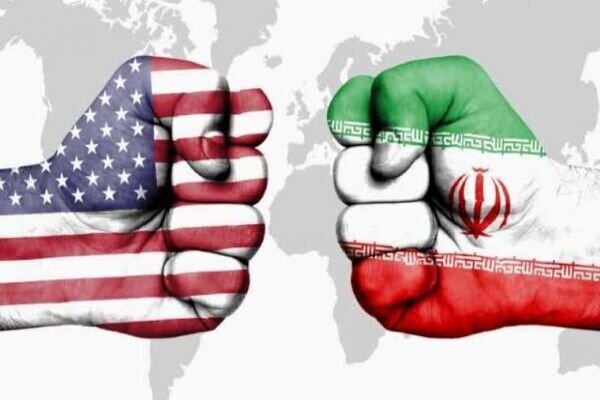
According to the International Desk of Webangah News Agency, the military operations initiated by the United States and the Zionist regime against Iran have failed to achieve their stated objectives. Instead, Western officials and American media acknowledge a strategic deadlock and significant battlefield and political setbacks for the aggressors. The conflict, which began with extensive attacks and civilian casualties, including students, has rapidly escalated with widespread humanitarian, security, and economic dimensions, eliciting diverse reactions across international media.
Global media outlets have approached the narrative of this war with their distinct perspectives, and an examination of these reflections offers a clearer picture of the war’s reality and its future outlook.
English Media
In an op-ed for ‘The Hill,’ William S. Becker argued for the necessity of a decisive Congress following the November elections to restore balance in government. He posited that the new Congress’s immediate task, should the war against Iran continue, would be to end it. Becker noted that while Trump stated he would not resume attacks on Iran before the election, his post-election intentions remain unclear. The author contends that the war not only usurped Congress’s war-making authority and damaged the economy but also violated the sacred trust between commanders and American families, who expect their children to be sent to war only when facing clear and immediate national security threats with no alternative but military action.
Becker attributed the war to greed, personal vendetta, megalomania, and an inability to learn from history. Citing CNBC, he reported that Trump holds stocks in oil and gas companies, profiting up to $4.4 million in the first six months of the war. Trump’s sons also have investments in defense companies, which have secured billions in defense contracts since their father’s return to the presidency. Regarding personal animosity, the author recalled that Trump replaced Obama’s diplomatic agreement to curb Iran’s nuclear program with war, an act the British ambassador, in a leaked telegram, termed ‘diplomatic vandalism.’ Concerning Trump’s ego, Robert Kagan of Brookings views his objectives in Iran as unattainable, yet Trump has repeatedly demonstrated an unwillingness to accept defeat.
Drawing parallels to the Vietnam War, the author recalled Richard Nixon’s 1968 promise to end the war, which he prolonged by obstructing Lyndon Johnson’s peace efforts. Over four years, between Nixon’s intervention and the 1972 election, more than 20,000 American soldiers were killed and over 100,000 wounded, alongside more than a million Vietnamese deaths. The Powell Doctrine, the author added, emphasizes that military force should be used only as a last resort, with clear objectives, cost-benefit analysis, a credible exit strategy, and domestic and international support – principles Trump has disregarded.
Becker concluded that the next Congress must halt the war, but this can only happen if voters elect representatives with sufficient principles and courage on November 3rd to pose a credible threat of impeachment. The war is in Iran, but the ball is now in the voters’ court.
The Cradle, in a report, stated that Iran responded to the new security doctrine of Israeli Prime Minister Benjamin Netanyahu by calling it ‘stillborn.’ Ebrahim Azizi, chairman of Iran’s National Security and Foreign Policy Commission, declared in a message in Hebrew on X that the new Zionist regime’s security doctrine ‘is stillborn and provides no escape, not even a sliver of time.’ He added that the regime’s end would be ‘annihilation by the will of the brave Iranian people and the resistance front.’ According to The Cradle, Netanyahu unveiled the new doctrine two days prior to this reaction. The doctrine emphasizes ‘preemptive’ military action over ‘containment,’ including so-called preventive strikes and the creation of ‘buffer zones’ in Lebanon, Gaza, and Syria. This ten-point doctrine highlights military and technological superiority, preventing enemies from acquiring nuclear weapons, expanding intelligence and deterrence, strengthening defenses against missiles, drones, cyberattacks, and border infiltration, increasing the military budget, achieving independence from foreign suppliers, domestic weapons production, and advancements in artificial intelligence, quantum computing, and space. It also deems the formation of international and regional alliances against Iran and the Axis of Resistance essential.
The Cradle noted that an Al Jazeera analysis characterized the doctrine as a ‘political maneuver’ ahead of the Zionist regime’s October 27th elections. The Institute for National Security Studies of the Zionist regime described it as a ‘turning point’ in the regime’s policy, asserting that the doctrine prioritizes Jewish identity over democracy, views peace as a ‘tool’ rather than a ‘goal,’ and rejects the independent existence of Arab states.
Arab Media
Al Jazeera, in an article, stated that ‘hunger storms’ are a structural and complex phenomenon stemming from climate change, drought, water scarcity, wars, rising energy and transportation costs, and disruptions in food supply chains. This crisis threatens the food security of millions by reducing agricultural production and increasing food prices. The El Niño phenomenon may also deepen the crisis by exacerbating drought and damaging staple crops. Furthermore, the war in Russia and Ukraine, and the closure of the Strait of Hormuz, exert additional pressure on global markets by disrupting the transport of grains, fuel, and chemical fertilizers. Hoarding and financial speculation also contribute to price increases and intensified shortages.
In the Arab world, countries like Yemen, Sudan, and parts of Syria face critical food situations. The continuation of these conditions could lead to social unrest, political instability, and increased migration. Therefore, reforming agricultural policies, managing water consumption, strengthening domestic production, strategic food storage, and curbing monopolies in distribution networks are deemed essential.
Rai Al Youm, in an article, suggested that Donald Trump’s defeat in the mid-term elections and the loss of control over both houses of Congress could increase the political and institutional limitations of the U.S. administration, impacting the dossiers on Iran, Gaza, and Lebanon. Regarding Iran, this development might alter calculations for negotiation or escalation but would not necessarily lead to reduced conflict. In Gaza, increased Democratic oversight could broaden discussions on military aid to Israel, civilian protection, and ceasefires, though actual policy changes are not guaranteed. In Lebanon, U.S. internal divisions could weaken Washington’s mediation or push Trump towards agreements to contain the conflict.
Overall, Trump’s electoral defeat does not necessarily signify a decline in U.S. influence but rather makes its exercise more complex and unpredictable. Arab nations should prevent the spread of war and instability by strengthening regional coordination and supporting political solutions.
Al Mayadeen, in an article, stated that Donald Trump’s primary objective is not merely to defeat Iran but to impose American will without inflicting irreparable damage on the U.S. economy. On the eve of the November 3rd mid-term elections, rising oil prices and disruptions in energy exports could lead to voter dissatisfaction and weaken Trump’s political position. Consequently, a military victory over Iran might result in an American economic defeat.
According to the author, Iran does not necessarily need a military victory to achieve strategic gains; maintaining its deterrence and economic resistance is sufficient to increase the cost of continued war for Washington. Meanwhile, the possibility of increased U.S. attacks for electoral motives exists, although the path to an agreement is not entirely closed. The article also touched upon the fragility of the U.S. economy in the face of oil shocks, the potential for an artificial intelligence bubble, and the limited impact of Russian diesel imports on prices. Ultimately, Iran’s resistance could become a decisive test for Trump’s political future and America’s strategic credibility.
Russian and Chinese Media
RT, in a report titled ‘Riots, Looting, and Rage: Will Violence Solve France’s Leaders’ Problems?’, examined widespread protests in France, identifying rising fuel prices, cost of living, government austerity policies, and police conduct as primary causes of protester dissatisfaction. According to the report, the price of fuel reached €2.40 per liter at the end of the previous month, with hundreds of thousands taking to the streets across France to protest economic and social conditions. These protests occur against a backdrop where the war between the U.S. and the Zionist regime against Iran and concerns about energy security have cast a greater shadow of uncertainty over Europe’s economic outlook.
While the demands of the French protesters are not directly linked to the war against Iran, the continuation of hostilities and disruptions in the energy market could impose further pressure on European households through increased fuel and transportation costs. This situation once again raises the issue of the economic consequences of Western military policies and their impact on citizens’ lives.
RT also highlighted the efforts by Marine Le Pen and French leftist movements to politically capitalize on public discontent, a trend that could influence the country’s internal political dynamics.
CGTN, in a report titled ‘Why Did Netanyahu Announce a New National Security Doctrine Before Israel’s Election?’, stated that Israeli Prime Minister Benjamin Netanyahu introduced a new security doctrine on the eve of the October 27th parliamentary elections. This doctrine emphasizes preventing threats through preemptive military action and establishing buffer zones along the borders.
According to the report, Li Zishun, an expert at the China Institute of International Studies, believes this doctrine lowers Israel’s threshold for military force and increases the risk of unilateral attacks against Iran. Chinese experts also assess the timing of this strategy’s announcement as an attempt by Netanyahu to leverage recent military operations for electoral gain and showcase the effectiveness of his security policies. Concurrently, U.S. President Donald Trump, in a letter, declared his support for Netanyahu’s re-election, claiming Iran had suffered extensive military and economic losses. According to experts, the mutual support between Washington and Tel Aviv stems from both electoral considerations and their shared approach toward Iran.
CGTN warned that the renewed convergence of the U.S. and the Zionist regime and the emphasis on preemptive attacks could increase the risk of renewed conflicts and escalating tensions in West Asia.


