Central Asia Becomes Global Power Hub Amidst Rivalry Between China, Russia, and Europe
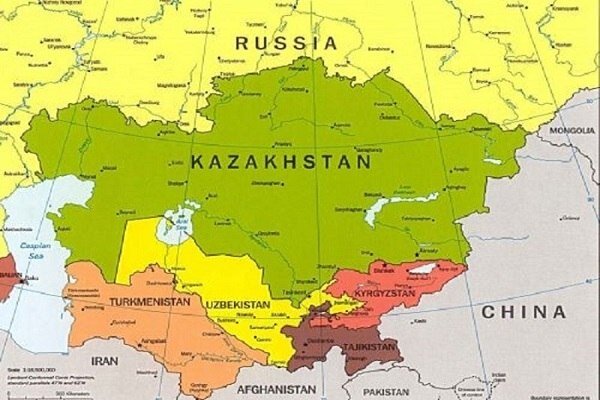
According to the International Desk of Webangah News Agency, Central Asia is currently experiencing heightened international attention as global powers, including China, Russia, and Europe, intensify their engagement with the region. This surge in interest stems from Central Asia’s pivotal geographic location in the heart of Eurasia, its growing economic potential, and the region’s expressed desire to strengthen local cooperation and enhance its global standing.
Recent weeks have seen a flurry of international activity in Central Asia. From October 7-9, Turkmenistan hosted meetings of the Council of Foreign Ministers and the Council of Heads of State of the Commonwealth of Independent States (CIS), coinciding with the organization’s 35th anniversary. Additionally, a consultative meeting of the heads of state of Central Asian countries and the Republic of Azerbaijan took place. On October 13-14, Ashgabat also served as the venue for a high-level meeting on the development of the Trans-Caspian Transport Corridor, supported by the European Union. The week prior, October 12-13, a parliamentary dialogue titled ‘Central Asia – European Union’ was held in Tajikistan.
These developments raise questions about the objectives of external actors and the five Central Asian nations within the ‘5+1’ cooperation frameworks, their implications for Russia’s policies and Eurasian initiatives, and the continued relevance and sustainability of the CIS and regional cooperation formats.
China’s Strategy in Central Asia
Beijing has consistently deepened its ties with Central Asian countries over recent decades, employing a multi-pronged approach that includes bilateral engagement, multilateral cooperation, and technological partnerships.
In its bilateral approach, China tailors its interactions to the specific needs of each nation, fostering connections with local elites, enhancing social acceptance for its programs, and implementing targeted projects, with a particular emphasis on the energy sector.
Multilaterally, China leverages platforms such as the Shanghai Cooperation Organization (SCO) to discuss collective security, transportation and logistics development, and counter-terrorism, extremism, separatism, and drug trafficking with Central Asian partners.
Technologically, China actively exports its innovations to Central Asia, embodying its Digital Silk Road initiative. The region has shown readiness to adopt these technologies, with future plans including the establishment of joint payment systems and e-money.
Both Beijing and Moscow view Central Asia as a region of strategic importance. To date, no significant disputes between Russia and China over regional projects have been reported. While competition may arise in energy or food markets, there is no political divergence between the two powers in Central Asia. Their primary shared objective is to contain and manage cross-border military-political risks, a goal for which they collaborate. Both nations recognize the need for a stable and prosperous region and align their policies accordingly.
China-EU Competition
The evolving relationship between Europe and China reveals a notable contrast. China is successfully marginalizing European actors in parts of Central Asia by leveraging its control over technology and logistics routes. European politicians have repeatedly called for dialogue with Beijing to address existing disputes, but China has firmly rejected any attempts to divide spheres of influence in the region.
China holds greater appeal for Central Asian nations due to its advantageous offers in logistical connectivity, investment, human capital development, and facilitating the region’s integration with the wider world. Furthermore, China’s ancient historical ties with Central Asia make it a more familiar and acceptable partner to regional governments than European Union member states.
The Geoeconomic Significance of Central Asia for Russia
Central Asia’s appeal to Russia and other external powers is driven by its geostrategic position, natural resources, and the rapid growth of its economy and population. Over the past two decades, the region’s population has increased by 41 percent to 84 million, and its combined GDP at purchasing power parity has reached $1.7 trillion, equivalent to a quarter of Russia’s GDP. Central Asia also holds significant geoeconomic importance for Russia as a transit and logistics hub.
Since 2022, Russia’s engagement with Central Asia has expanded considerably. Trade turnover between Russia and Central Asian countries reached $47 billion in the past four years, based on 2025 data, excluding Turkmenistan due to data unavailability. However, Russia’s share in the region’s total foreign trade has decreased from 23 percent to 19 percent between 2021 and 2025, indicating increased engagement by Central Asian countries with other partners, particularly China, whose share in foreign trade has doubled during the same period.
Central Asian nations are actively participating in regional and supra-regional integration processes. Intra-regional trade and investment ties have grown significantly, with economic relations expanding faster than the regional average. The convergence of Kazakhstan and Uzbekistan has become a focal point of Central Asian integration.
Concurrently, cooperation with other regions, including the South Caucasus, is expanding, manifested in a readiness to jointly develop transport links and corridors. This cooperation with South Caucasus nations is largely driven by Central Asian countries’ desire to access European markets and leverage EU technologies.
Existing cooperation formats also remain important, with demand for collaboration within the CIS framework increasing in recent years. The share of CIS member states in Russia’s foreign trade has risen from approximately 10-11 percent to 17 percent over the past four years. However, the organization’s agenda needs expansion to include areas like transportation, agriculture, and the environment. The ‘CIS Plus’ format, established in October 2025 with Baku’s participation, shows promise, and Iran has also expressed interest in joining.
Given geographical proximity and existing capacities, Russia’s Siberian and Far Eastern regions may see increased engagement with Central Asia in the future, potentially within the CIS framework. The diversification of Central Asian foreign relations is expected to continue, and Russia must factor in growing competition in its calculations. Nuclear energy, green energy, agriculture and food industries, and transport and logistics infrastructure will remain key areas for developing cooperation. Bilateral relations with each Central Asian nation will also continue to be a crucial factor.
Central Asian Countries’ Political Distancing from Moscow
Despite reaching record levels in trade turnover, Central Asian countries are exhibiting a tendency towards relative political distancing from Moscow. They prefer to avoid direct endorsement of Russian policies, particularly following the commencement of the special military operation in Ukraine. This situation inevitably reduces mutual understanding on shared issues and creates space for greater diversification in Central Asia’s political orientations.
The root of these divergences lies in differing priorities amidst the current geopolitical landscape. For Russian foreign policy, maintaining sovereignty and security, including preventing overt anti-Russian military activities near its borders, are paramount. In contrast, Central Asian nations are pursuing developmental goals and are more focused on engaging in global processes.
Although the EU and the United States pursue anti-Russian policies in the Central Asian arena, the region’s political agency is currently relatively high. Regional governments have concluded that exploiting rivalries between major powers is not a beneficial strategy and are therefore striving to remain neutral in geopolitical conflicts.
Under these circumstances, both the United States and the European Union are compelled to adopt a more cautious approach to avoid further alienating their Central Asian partners, for whom maintaining a neutral stance is significant.
The European Union’s Strategy in Central Asia
The European Union stands alongside Russia and China as one of three actors with a systematic and extensive presence in Central Asia.
Three factors contribute to the EU’s attractiveness for Central Asian countries. Firstly, EU policies encompass a broad spectrum of regional actors. Secondly, the Union primarily focuses its offerings on social and economic development, a critical area for the region that enhances the appeal of cooperation with Brussels. Thirdly, the EU publicly supports the expansion of multilateral cooperation in Central Asia and the strengthening of ties among the five regional nations. This stance can positively influence the perception of the EU in the region, even if proposals do not translate into practical projects.
The importance of the EU’s humanitarian projects and ‘soft power’ tools, such as development aid programs, educational initiatives, and cultural exchanges, should also be emphasized, as these continue to be significant for Central Asian countries.
However, the EU’s priorities have shifted in recent years, and two main groups of interests in Central Asia can now be identified. The first group pertains to developing regional connectivity and linkages. Central Asia lies on the communication routes between China and Europe; therefore, integrating the region into a broader economic space aligns with Brussels’ interests. The EU is actively working to provide logistical solutions, including digital ones, to facilitate transportation.
The TRACECA (Transport Corridor Europe-Caucasus-Asia) project, established in 1993, is a relevant example, directly impacting Central Asian countries by enhancing transport routes.
The EU’s policy and strategic orientation in the region continue to be influenced by competition with Russia, but this component is gradually yielding to increasing competition with China. Previously, EU strategic documents identified Russia as a key regional player, with democratization and governance reforms in Central Asia being priority areas. Today, these priorities have been relegated to the lower rungs of the agenda, with projects at the forefront that China also offers alternatives for to regional countries.
Russia must consider in its foreign policy calculations how the rivalry between Brussels and Beijing will shape the region’s development and what alternative strategies Moscow can offer in response to proposals from both sides.
The Future of Russia-Central Asia Historical Relations
The breadth and diversity of relations between Russia and Central Asia are difficult to compare with the region’s ties with other foreign partners. Years of economic cooperation, shared transport and energy infrastructure, and close educational, scientific, and cultural ties provide a robust foundation for further development. Ensuring security, including countering cross-border threats, remains a significant pillar of cooperation. However, Moscow must also consider the priorities of Central Asian countries, particularly their social and economic development goals.
Russia is currently involved in addressing these issues, with joint projects underway in gas and nuclear energy, industrial unit creation, and expanding relations. Specialized human capital training is also a priority, including through branches of Russian universities in the region and interest in vocational technical training.
The most crucial function of the ‘Central Asia-Russia’ cooperation format is coordinating approaches to address issues of mutual importance. The Joint Action Plan for 2025-2027, approved last year, outlines the directions of this cooperation. It is now vital that agreements are consistently implemented and yield practical results, enabling Russia to maintain a competitive edge against Europe and subsequently China.