Washington Faces Political Fallout Over Iran Conflict as Defense Secretary’s Future Hangs in Balance
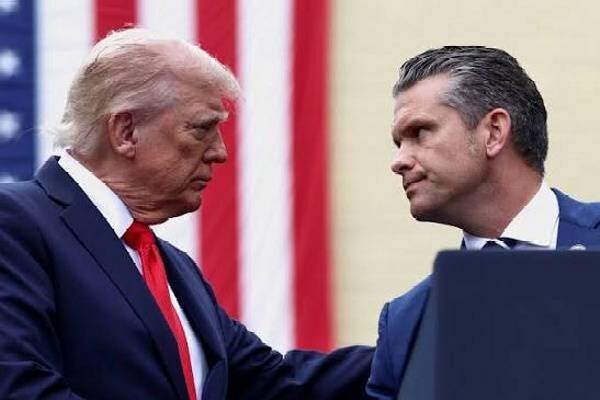
According to the International Desk of Webangah News Agency, the failure of Republicans in the United States midterm elections has triggered widespread repercussions within the political structure of the White House. The conflict initiated by Donald Trump under the assumption of achieving a swift and low-cost victory against Iran not only failed to yield the desired political and military outcomes for Washington, but also became a factor undermining the Republicans’ domestic standing. Simultaneously with Democrats taking control of both chambers of Congress, signs have emerged within the Republican camp indicating efforts to identify those responsible for this failure and to impose its political costs on certain administration officials.
Amidst these developments, U.S. Defense Secretary Pete Hegseth has come under intense scrutiny more than others, although the dimensions of this current stream extend beyond the political future of a single minister. Current events in Washington point to a probable attempt to separate the responsibility for initiating the war from its subsequent consequences. Consequently, the president continues to defend the principle of his decision while attributing the failure to achieve predetermined objectives to its planners and executors.
Following the Republicans’ electoral defeat, Trump acknowledged that the Iran conflict impacted the election results. He also conceded the political fallout of rising energy prices on the party’s position, yet he continues to avoid accepting political responsibility for a decision that squarely falls within executive authority. This approach highlights a clear political paradox, as the president acknowledges the negative impact of the war on the party’s electoral base while refusing to bear accountability for generating those consequences.
In practice, the U.S. president has attempted to draw a line between the initial decision to enter the war and its undesirable outcomes. He wishes to project the image of a resolute leader who issued necessary directives while shifting the financial and political burden of that decision onto others. This tendency is also evident in Trump’s electoral posturing. By emphasizing that his own presence on the ballot could have secured a stronger performance for Republicans, he seeks to dissociate his personal popularity from the defeat of party candidates, framing the losses as the result of external factors.
Pete Hegseth has currently become one of the primary targets to shoulder the political cost of this defeat. Assessments by American media indicate that a faction of Republicans and close White House advisors accuse him of exaggerating the nation’s military capabilities and providing overly optimistic reports regarding the outcome of the war with Iran. According to published reports, some Republicans believe Hegseth played a pivotal role in persuading Trump to swiftly pursue military objectives. Additionally, he is reported to have been a staunch advocate for continuing military operations within the administration, whereas Secretary of State Marco Rubio and Vice President JD Vance favored diplomacy and a swift conclusion to hostilities.
Such a narrative holds significant political utility for the executive branch, as it allows initial miscalculations to be blamed on a minister’s error or flawed military assessments rather than calling the president’s grand strategy into question. Nevertheless, even if Hegseth played a part in offering flawed evaluations or pushing for sustained operations, this does not absolve Trump of ultimate responsibility. Within the U.S. political system, the decision to launch military engagement is made at the highest executive level, and the defense secretary cannot replace the president’s political accountability.
Consequently, the prospect of ousting Hegseth is viewed less as a genuine solution and more as a crisis management tool to designate a scapegoat for the administration’s broader setbacks. A fundamental challenge for the Trump administration remains the widening gap between its official narrative regarding the war’s outcome and the political and economic realities on the ground. Last April, Hegseth spoke of a decisive and historic victory against Iran; however, the prolongation of hostilities, American casualties, the depletion of costly weapons stockpiles, and surging energy costs painted a starkly different picture.
Under such conditions, claims of victory cannot be easily sustained through official pronouncements, as the public measures military outcomes against their tangible impacts on livelihood and security. According to an ABC News poll, 34 percent of voters cited the Iran war as a decisive factor in their ballots, whereas 49 percent identified the cost of living and 55 percent pointed to government corruption as major influences. Thus, while the war was not the sole reason for the Republican defeat, it served as the connecting link between foreign policy failure and voter economic dissatisfaction.
With Democrats holding majorities in both houses of Congress, the party has acquired expanded tools to scrutinize the administration’s decisions regarding Iran. The issue extends well beyond Hegseth’s dismissal, bringing Pentagon performance, military analyses, operational expenditures, and top commanders’ decisions under congressional investigation. Moreover, Republican Representative Thomas Massie of Kentucky has introduced eight articles of impeachment against Hegseth, raising the likelihood of a House vote that could serve as leverage to pressure or remove the defense secretary.
Congressional inquiries may ultimately broaden, probing the underlying calculations that led the Trump administration into this campaign and examining its hidden agendas. The central theme of developments in Washington is the containment of this defeat’s fallout. Trump has no desire to be remembered as the president whose strategy weakened his party and inflicted economic hardship upon the public; hence, shifting a portion of the blame onto the defense secretary and military commanders constitutes the White House crisis-control strategy.
Yet, this policy faces inherent limitations. Dismissing Hegseth or replacing commanders cannot alter the reality that the final order to launch the war was issued at the highest executive level. Trump may sacrifice his defense secretary, but he cannot delegate the responsibility of a decision he personally authorized. Therefore, Hegseth’s fate transcends an individual’s career, serving as a serious test of Trump’s willingness to accept accountability for the consequences of his foreign policy.