
Global Media Weighs In on Iran Conflict: From Strategic Setbacks to Diplomatic Stalemate
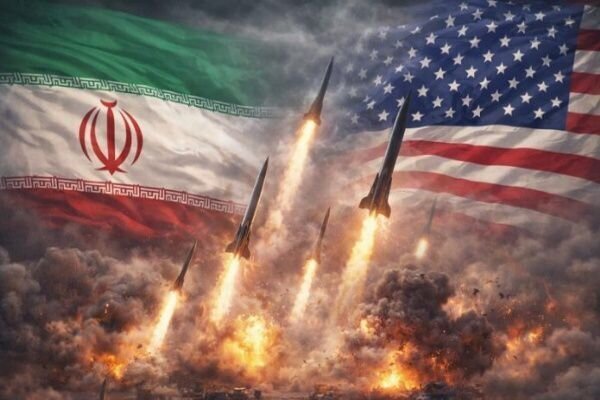
According to the International Desk of Webangah News Agency, global media outlets are offering diverse analyses of the conflict involving Iran, with reports from English, Arabic, Russian, and Chinese sources detailing strategic shifts and diplomatic impasses.
In English-language media, Fox News reported that U.S. President Donald Trump declared no further agreement with Iran is necessary, a sudden pivot from his prior optimism about negotiations. Trump stated on his social media platform, “We don’t need a deal with Iran. Those days are long gone. We have their money, hundreds of billions of dollars, and we have the Strait!” He had previously announced victory over Iran at a Veterans Day ceremony, stating, “We won… It’s just a question of when we’re going to finish it. I want to make sure we have total victory, not a 93 percent victory.” A Trump administration official defended the strategy, claiming the U.S. holds significant leverage over Iran through naval blockade and military pressure, and that operations of “economic expulsion” and “Iron Gate” would continue with full force. These remarks followed months of predictions about reaching an agreement, raising questions about the future of negotiations. Trump had previously stated at least twelve times since February that Iran was seeking negotiation or that a deal was imminent.
Newsweek, citing Republican Representative Thomas Massie of Kentucky, reported that he is offering his Republican colleagues a “lifeboat” ahead of a fresh attempt to compel Congress to vote on ending the war with Iran. Massie, who is leaving Congress after losing a primary election, is trying to encourage more Republicans to break with the President on this war. He wrote on X that he would force a vote to “end the war in Iran” before his term concludes. Jeff Van Drew believes “one or two more” might support it, but Tom Barrett is doubtful of further Republican defections. In September, seven Republicans joined Democrats to pass a War Powers resolution concerning Iran by a vote of 220 to 204 in the House, but it did not compel the administration to withdraw. Massie argues that the economic consequences of the war, such as increased prices for gasoline, diesel, fertilizer, and food, have harmed the party, and this vote is the best opportunity to distance themselves from a failed war policy. A Reuters and Ipsos poll conducted from November 6-9 also found that 51 percent of Republicans supported passing legislation to end the war.
The Associated Press reported that since the midterm elections, Donald Trump has simultaneously retreated from launching new attacks and distanced himself from the prospect of further negotiations with Iran to end the eight-month war. The day after the elections, Trump acknowledged that the war and its resulting global economic turmoil were partly responsible for Republican losses but called it the right decision. He met with the Prime Minister of Qatar and stated that he was unlikely to need to order new major attacks, calling the war “practically over militarily.” However, he again raised the question of whether he should rush to find an end, announcing the U.S. no longer needed a deal with Tehran and instructing JD Vance to focus his attention on the domestic campaign against fraud in Democrat-controlled cities and states. Trump simultaneously warned Iran that the U.S. military was “ready and armed” and would not hesitate to act if things did not progress. Democratic Senator Cory Booker likened Trump to an “arsonist” who set U.S. foreign policy ablaze and now wants to step away. Trump’s ambiguous stance will be prominent during his upcoming trip to the Philippines and the Asia-Pacific Economic Cooperation summit in Shenzhen, China, where he will hold a trilateral meeting with Xi Jinping and Vladimir Putin regarding Iran and its nuclear stockpiles. Marco Rubio also stated that economic pressure on Iran is so intense that military action is unnecessary.
In Arabic media, Al Jazeera published an article asserting that the escalation of tensions between Iran and the United States has put regional security on the brink of collapse. Continued attacks on U.S. bases in the Persian Gulf and disruptions to shipping in the Strait of Hormuz have harmed Iran’s neighboring countries and even allies like China more than Washington. Al Jazeera believes this war has exposed the ineffectiveness of two existing security paradigms: Arab states’ reliance on U.S. support and Iran’s dependence on military tools to pressure Washington. Therefore, Tehran and the Persian Gulf states must accept the reality of shared geography and the necessity of coexistence. The author suggests forming a joint agreement for managing shipping in the Strait of Hormuz, which could pave the way for broader cooperation and even the formation of a “Mecca Accord Plus” with Iran’s participation. The author warned that if a regional war expands, neighboring countries would bear the cost of a conflict that the U.S. and Israel have failed to resolve.
Al-Rai Al-Youm, in an article, wrote that the main issue in the confrontation between Iran and the U.S. is not merely the possibility of resuming military attacks, but the conflict entering an attrition phase centered on energy, economy, and deterrence. Winter, with its increased demand for fuel and electricity, will be a serious test for Iran’s economic capacity, vital infrastructure, and social resilience. The term “General Winter” refers to conditions that test a country’s ability to maintain public services, provide energy, and support logistics. The Persian Gulf states are concerned about the war’s expansion, Netanyahu desires a resumption of attacks, and Trump is caught between economic pressure and the risk of escalation. Tehran, too, considers the lifting of the blockade a condition for ensuring shipping security and reopening the Strait of Hormuz. Ultimately, winter could benefit Iran, just as geography serves as a strategic factor in Tehran’s deterrence calculations.
Al Mayadeen, in an article dividing the world into two arenas, “Illusion and Domination” and “Truth and Resistance,” believes that the colonial and Zionist system, despite its economic and military power, is doomed to decline due to internal contradictions. In the economic sphere, the dominance of financial capital and speculation over real production has besieged the global economy, and the way out lies in strengthening production, curbing speculative capital, and reforming the international financial system. In the military sphere, the increasing reliance of Western powers and Israel on technology, air strikes, and intelligence operations has replaced human and ground capabilities; however, the experience of conflict with Iran and resistance forces has shown that technological superiority does not necessarily lead to victory. In the political arena, the “Greater Israel” project faces the resistance of Palestine, Iran, and their allies, declining Western support, increased Israeli isolation, and internal contradictions. The author concludes that returning to truth, production, and independence is a prerequisite for overcoming colonial domination.
In Russian and Chinese media, China’s Global Times reported that the Islamic Revolutionary Guard Corps (IRGC) announced its Air Force had targeted a U.S. air defense radar station at the Riffa airbase in Bahrain in a drone attack. According to the IRGC’s statement, the operation was conducted using six drones as part of the second phase of retaliatory action against U.S. military aggression towards Iran. The IRGC emphasized that Washington, having failed in its plan to transfer oil from the Strait of Hormuz under the guise of escorting ships, is attempting to divert global public attention from the closure of this waterway through limited and misleading actions.
The IRGC Navy also announced that two oil tankers attempting to pass through the Strait of Hormuz via unauthorized routes and without heeding maritime warnings exploded and caught fire after hitting naval mines. These vessels had turned off their navigation and automatic identification systems to pass secretly through the strait. Two other oil tankers changed course and reached the waters of the Persian Gulf after receiving warnings from the IRGC Navy.
Russian news agency TASS, citing the public relations of the IRGC, reported that two oil tankers collided with naval mines, exploded, and caught fire while attempting to transit the Strait of Hormuz on an unauthorized route. These two tankers, involved in the illicit transfer of oil cargoes, intended to pass through the strait without authorization and outside the designated shipping lanes. The IRGC stated that the vessels had deactivated their navigation and automatic identification systems before entering these lanes to avoid detection. The IRGC’s public relations department, in a message on its Telegram channel, emphasized that the collision of the tankers with naval mines led to explosions and fires on board these vessels. TASS, in reflecting this statement, covered the security developments in the Strait of Hormuz amid increased military tensions in the region.


