Iran’s Strategic Advantage in Strait of Hormuz Reshapes Post-Conflict Dynamics
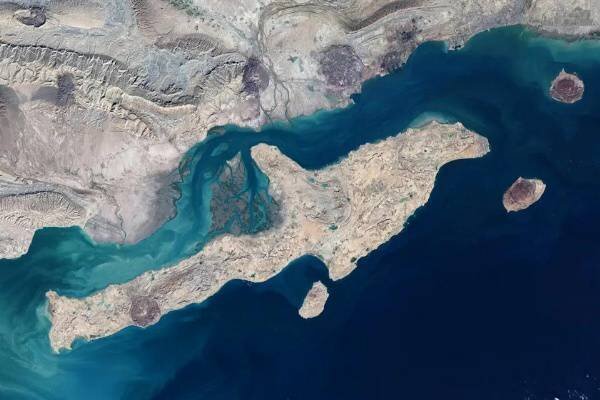
According to the International Desk of Webangah News Agency, The International Institute for Strategic Studies (IISS) has examined the developments in the Strait of Hormuz during the conflict between the United States and Israel against Iran. In an article titled ‘The Persian Gulf in the Era of War,’ the report asserts that the Strait of Hormuz was not merely a maritime passage whose ship traffic was disrupted, but rather it transformed into one of the most critical arenas of strategic confrontation. Tehran successfully leveraged its geographical position to partially offset military power disparities and expand the scope of engagement from direct conflict to the global economy, energy security, and supply chains.
The think tank emphasizes that a nation’s power is not solely measured by its aircraft, ships, and missiles, but also by its ability to control choke points that the world cannot easily disregard. Prior to the conflict, approximately one-quarter of global oil trade and nearly one-fifth of liquefied natural gas trade passed through the Strait of Hormuz. These figures indicate that threats to shipping in this strait are not limited to the Persian Gulf states but represent a direct pressure on international energy markets and the global economy.
To impose a new equation following the American-Zionist instigation of war, Iran did not require conventional, complete maritime dominance over the Strait of Hormuz. It was sufficient to imbue passage through it with risk, increase insurance and transportation costs, and compel shipping companies and mariners to reconsider their decisions. The result of these developments was the near-complete collapse of maritime traffic in the initial weeks of the war, with the number of large commercial vessels transiting the strait falling from over 3,200 per month in 2025 to fewer than 230 in March 2026, and oil tanker transits declining by more than 90 percent compared to normal levels.
The consequences of the crisis were not confined to the reduction in vessel numbers. War risk insurance premiums, which ranged from 0.10 to 0.25 percent before the conflict, rose to approximately one percent at the outset of the war, reaching between 2.5 and 7 percent in some instances. The insurance for an oil tanker carrying a cargo valued at $250 million, which cost around $500,000 before the war, could have escalated to $17.5 million. In some cases, insurance companies even canceled war risk coverage in the Persian Gulf.
The report underscored that Iran has transformed its geographical position into a tool for economic and political pressure. A more significant danger is that not all Persian Gulf states are equally affected by this situation. According to the report, Bahrain, Kuwait, and Qatar are the most vulnerable due to their lack of sufficient alternative options for exporting their hydrocarbon resources. In contrast, Saudi Arabia, the United Arab Emirates, and Oman possessed alternative routes and options to varying degrees, but these also have their limitations. Pipelines can transport crude oil but are not suitable replacements for moving liquefied natural gas, refined petroleum products, petrochemicals, and industrial goods. Furthermore, establishing new routes faces political, security, technical, and financial challenges, and their capacity to transport the volume of goods that typically transit the Strait of Hormuz would be limited.
The crisis’s repercussions extend beyond energy supply security, also impacting the standing of Persian Gulf countries in the global energy market. Oil-producing nations in the region have built their credibility on their ability to reliably and consistently supply oil and gas, particularly to Asian markets. However, the war demonstrated that a supplier country’s reputation is not solely dependent on its reserves or production capacity, but that the security of export routes is also of fundamental importance. By threatening one geographical point, Iran has created consequences far beyond the results of direct military attacks. This situation has compelled Persian Gulf countries to reassess the security of their ports and pipelines, pushed markets to factor the risks of the Strait of Hormuz into prices and contracts, and presented international powers with a dilemma that cannot be solely resolved by naval force.
The report concludes that the return of maritime traffic to pre-war levels is not guaranteed and that the future of the Strait of Hormuz depends on the trajectory of negotiations between the United States and Iran, as well as discussions between Iran and Oman concerning arrangements for this waterway. Any new stability will likely require a framework accepted by the relevant countries and shipping companies. The core dilemma is that Persian Gulf states cannot change their geographical positions, and the world cannot easily dispense with the Strait of Hormuz. Therefore, the strategic response should not rely solely on military power or the assumption that pipelines and alternative ports can fully resolve the problem. The International Institute for Strategic Studies believes that the 2026 war demonstrated that Iran does not necessarily need economic power equal to its rivals to influence their economies; rather, it is sufficient to possess the capability to threaten a route through which their economic and commercial interests pass. This is the most significant strategic message of the recent developments.