Netanyahu Offers Rotating Premiership in Bid to Stave Off Political Ouster
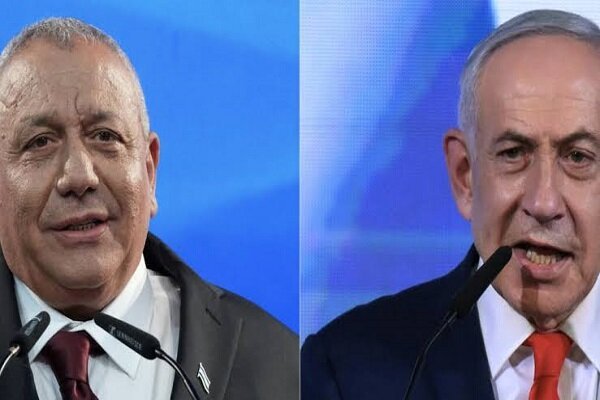
According to the International Desk of Webangah News Agency, Israeli Prime Minister Benjamin Netanyahu, facing the imminent threat of losing power and the formation of a coalition led by his political rival, has put forward a proposal for a national unity government with a ‘rotating premiership.’ Under this plan, Gadi Eisenkot would assume leadership of the government first, with Netanyahu regaining the position at a later stage. Netanyahu’s opponents view this proposal as a strategy to buy time and prevent the establishment of a new government without his involvement.
Recent developments indicate that the political crisis in the occupied territories has entered a new phase. Netanyahu, who has maintained power in recent years through coalitions of right-wing parties and religious factions, now faces a situation where even the offer of a temporary handover of the premiership has become a tool to prevent his complete exit from the power structure.
In a message released on Saturday, November 28, Netanyahu announced his readiness to forgo his party’s priority for the premiership within the framework of forming a national unity government, allowing Gadi Eisenkot to lead the government initially. He justified this proposal by citing ‘existing threats against the existence’ of the Israeli entity, claiming that leadership responsibility necessitates setting aside political differences so that the new government can confront these threats.
However, the timing of this proposal is more significant than its apparent content. This initiative comes at a time when Eisenkot is reportedly close to reaching agreements with various parties to form a new cabinet, and Netanyahu is facing the possibility of complete power loss. According to Reuters, following the October 27 elections, neither of the two main blocs secured a clear path to forming a government. Isaac Herzog, the President of the Israeli entity, has tasked Eisenkot with forming the government, giving him until December 6, with a possible 14-day extension.
Eisenkot had previously signed agreements with the Democratic Party and the right-wing Israel Beiteinu party, strengthening his position to form a coalition. Therefore, Netanyahu’s proposal can be seen as an attempt to alter the course of negotiations and prevent the formation of a coalition whose primary objective is to end his premiership.
The reactions from opposition figures to the Israeli Prime Minister’s proposal indicate that the main obstacle to forming a unity government is not merely a dispute over seat distribution, but a deep political distrust of Netanyahu plays a decisive role. Yair Lapid, former Prime Minister and a key opponent of Netanyahu, described the proposal as a ‘blatant political deception,’ stating that the Prime Minister has repeatedly deceived his political partners and violated previous agreements. Naftali Bennett, while welcoming the principle of forming a unity government with Eisenkot’s initial premiership, warned against allowing negotiations to become a tool for wasting time and preventing the formation of a government without Netanyahu.
This distrust stems from previous coalition-building experiences in Israel. In 2020, Netanyahu signed a rotating government agreement with Benny Gantz, under which the two were to serve as prime minister alternately. However, disputes over budget approval and the use of legal mechanisms ultimately led to the collapse of the government before the power transfer to Gantz. This precedent has now become one of the most significant arguments for Netanyahu’s opponents. They fear that the Prime Minister will once again use a power-sharing agreement to overcome the immediate crisis, but in practice, conditions will be created where the power transfer never materializes. The Washington Post, in its reporting, also pointed to this history, writing that distrust of Netanyahu is widespread among opposition parties, even among politicians who previously served in his cabinet.
Meanwhile, Eisenkot announced that his party had submitted a detailed proposal on the principles of government formation to Netanyahu through a confidential channel but had not received a response. He has invited Netanyahu to engage in urgent and intensive discussions regarding the policies of the future government.
One of the most crucial dimensions of the current political crisis in Israel is its direct connection to the aftermath of the October 7, 2023 events and the issue of accountability for the security and intelligence failures of the entity. More than three years after the Al-Aqsa Flood operation, the establishment of a state inquiry committee into security and management failures remains one of the primary points of contention between Netanyahu and his opponents.
Eisenkot and his political allies have made the formation of an independent inquiry committee into the October 7 events a key demand. Furthermore, limiting the premiership to eight years and preventing individuals with indictments from holding the position are among the plans being pursued by the political current opposing Netanyahu. According to The Times of Israel, the Knesset on November 25 gave initial approval to some draft laws related to the establishment of an inquiry committee into the October 7 failure and the limitation of the premiership term. These developments represent another political setback for Netanyahu’s bloc, as the advancement of such plans could seriously impact his future political standing.
In addition to these issues, disagreements over Haredi military service, judicial reforms, and the management of security institutions are among the unresolved matters in the negotiations for the future government. These disputes suggest that even if an initial agreement on a rotating premiership is reached, achieving a common plan for governing the Israeli entity will not be easy. On the other hand, the potential composition of Eisenkot’s coalition also presents unique complexities. Arab parties, having secured 19 seats in the recent elections, have become significant parliamentary players, and their representatives’ support could be decisive in forming the future government. However, divisions among Israeli parties regarding reliance on the support of these factions have complicated the path to forming a cabinet.
In sum, Netanyahu’s proposal for a rotating premiership should be seen as an indication of intensifying competition for Israel’s future power. By putting forward this proposal, he seeks to prevent his complete removal and turn the divisions among his opponents into an opportunity to rebuild his political position. However, the issue goes beyond a mere change in prime minister. The crisis of public trust, the repercussions of the October 7 failures, deep disagreements over the political structure, and the schism between religious and right-wing parties and opposing factions have created a set of accumulated crises that will not be resolved by an agreement on cabinet seat distribution.
From this perspective, even if a national unity government is formed, the fundamental question remains: Will Israel’s political structure accept responsibility for security failures and the consequences of recent years’ policies, or will it once again postpone the crisis to the future through temporary agreements?