
Trump’s Repeated Claims of Imminent Iran Deal Face Scrutiny
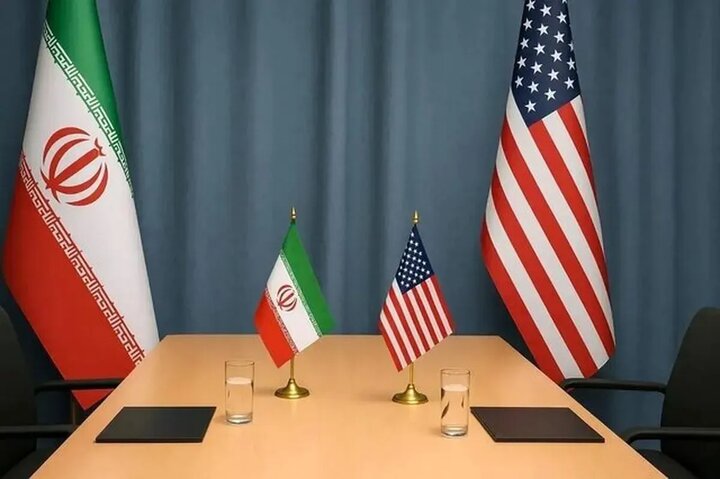
According to the International Desk of Webangah News Agency, more than two months have passed since U.S. President Donald Trump announced a ceasefire between Iran and the Israeli regime. During this period, CNN has analyzed Trump’s frequent statements regarding the nearing of an agreement with Iran, noting that the U.S. President has spoken of an impending deal dozens of times, yet no concrete outcomes have materialized.
Aaron Blake, a CNN analyst, wrote in a report that Trump has repeatedly claimed since the April 7th ceasefire announcement that a deal with Iran is close to being finalized. However, the passage of over two months has shown a significant divergence between these claims and the existing realities.
According to the report, Trump announced on April 7th via his social media that Washington and Tehran were “very close to a deal” and needed only “two weeks” to finalize it. At the time, he wrote that the two sides had “made great progress” and that “this long-standing problem is at the doorstep of being solved.”
Contrary to this prediction, no agreement was reached. Nevertheless, the U.S. President continued to reiterate this claim in the weeks and months that followed.
CNN, by examining Trump’s public statements, social media posts, and media interviews, has estimated at least 37 instances where he directly spoke of an approaching agreement or Iran’s strong desire for one.
The report emphasizes that there is no indication that the likelihood of reaching an agreement today is greater than when Trump spoke of its imminent finalization on April 7th. Despite this, he continues to repeat this narrative, a subject that, according to the report’s author, may stem from efforts to keep financial markets calm, psychological pressure on the other party, or Trump’s personal belief in the possibility of this scenario.
CNN then reviewed the timeline of these statements.
The first instance was recorded on March 23rd, less than a month after the start of the conflict. In a conversation with reporters near the presidential aircraft, Trump claimed peace negotiations were underway and “we agree on almost all the big subjects.” This was at a time when Iran had fundamentally denied the existence of such negotiations.
A day later, Trump made another claim that later became a recurring theme in his speeches. He stated that Iran was “very eager” to reach an agreement, adding, “I think we’ll end up in a situation, but I can’t tell you for sure.”
On March 25th, Trump announced that Iran was “dying to make a deal,” and the following day, at a U.S. cabinet meeting, he claimed Iran was “begging” for an agreement.
CNN critically questions that if Iran were genuinely so eager for a deal, why has no agreement been reached over two and a half months later?
On March 29th, Trump, speaking to reporters on the presidential aircraft, responded to a question about whether a deal would be reached within the next week by stating, “Yes, I see a deal with Iran.”
From early April, Trump’s tone became more confident. On April 6th, he said they had previously “gotten very close” to a deal, but the process had encountered an obstacle.
A day later, he announced a ceasefire that was intended to last two weeks, giving Tehran and Washington an opportunity to finalize the agreement.
On April 15th, in an interview with Fox Business, Trump stated, “I think it’s almost done. I think we’re very close to the end.” He again added that Iran was “dying to make a deal.”
In the following days, the U.S. President spoke with greater certainty about the impending agreement. On April 16th, he told reporters, “Things look very good, and we’ll have a deal with Iran, a good deal.”
On April 17th, in three separate programs and interviews, he claimed that Iran had “agreed to everything,” that “we’ll have a deal in a day or two,” and that “there aren’t many major differences left.”
Three days later, on April 20th, Trump wrote on Truth Social that “everything will happen relatively quickly.” However, not only was no agreement reached, but no progress was announced by the end of the month. Despite this, Trump claimed again on April 30th that Iran was “dying for a deal.”
On May 1st, he told reporters, “When the war is over, which shouldn’t be too long…”
After a period of relative quiet, Trump announced on May 18th that he had postponed military operations for two or three days at the request of some Middle Eastern countries, as they believed the parties were “very close to a deal.”
Interestingly, Trump himself implicitly acknowledged the failure of previous predictions during this period. He said, “There have been times when we thought we were very close to a deal, and it didn’t happen.” However, he immediately added, “But this time it’s different.”
CNN writes that this time was no different, yet Trump persisted with his narrative. On May 19th, during a ceremony at the U.S. Congress, he announced, “We’re going to end this war very quickly.”
On May 23rd, he once again made a series of optimistic statements, saying the U.S. administration was “very close to a deal,” the deal was “virtually negotiated and just needs to be finalized,” and that “the announcement of the deal will happen soon.”
On May 28th, in an interview with his daughter-in-law, Lara Trump, he emphasized that the parties were “very close to a very good deal.”
The last example cited by CNN pertains to last Sunday. In a conversation with Axios, Trump stated, “We are very close to reaching a final deal with Iran. It will be a good deal.”
He also claimed that the conflicts between Iran and the Israeli regime could jeopardize this process, adding, “I don’t want what’s happening to destroy this deal.”
According to CNN, this was at least the third time Trump had spoken of an approaching deal in his conversations with Axios. A day later, at a conference call to support Republican Senator Lindsey Graham, he again spoke of “total victory” within the next two weeks, stating, “We are negotiating now. They want to make a very good deal.”
Trump concluded with a claim that has perhaps garnered the most attention. He said, “They are ready to give us everything.”
In its conclusion, CNN emphasizes that the repeated dozens of times these predictions have been made without their practical realization has led to the U.S. President’s claims about an imminent deal with Iran losing their credibility, and observers now view such statements with greater skepticism.


