
Iran’s Missile Response to Israel Solidifies ‘Unity of Arenas’ Strategy
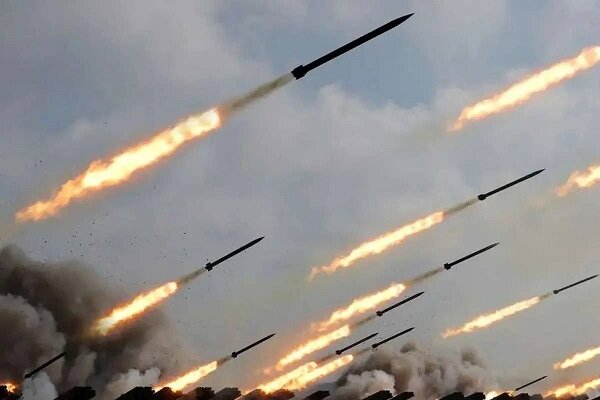
According to the International Desk of Webangah News Agency, Iran‘s missile attacks on occupied territories, in response to the Israeli regime’s aggression against the southern suburbs of Beirut, can be considered one of the most important strategic developments in West Asia in recent years. The significance of this operation is not limited to its military dimensions; its primary consequence lies in the consolidation and realization of a concept known as ‘Unity of Arenas’ or ‘Unity of Fields’ proposed by the resistance movement over the past years.
Previously, ‘Unity of Arenas’ was primarily recognized as a political and theoretical strategy, viewing resistance fronts in Palestine, Lebanon, Yemen, Iraq, and Iran as part of a single system where the security of each element is intertwined with the security of others. However, the recent operation demonstrated that this concept has moved beyond being a political slogan or theoretical framework to become an operational and deterrent reality.
From Tel Aviv’s perspective, the Israeli regime’s attack on the southern suburbs of Beirut was part of a pattern it had repeatedly implemented over the years: targeting resistance actors in various countries without facing direct retaliation from other members of the Axis of Resistance. Israel assumed it could strike Lebanon without incurring costs beyond the Lebanese front. Iran’s missile response, however, completely altered this calculation.
For the first time, aggression against a core pillar of the Axis of Resistance was met with a direct and powerful response from its strongest component. This development effectively means that geographical boundaries have become less significant in the resistance’s deterrence calculations, and any aggression against one member of the Axis of Resistance could elicit a reaction from other members.
Iran’s action conveyed a clear message to Tel Aviv: Lebanon’s security is not separate from Iran’s security, and an attack on the southern suburbs of Beirut cannot be solely considered an internal Lebanese matter or a limited conflict between Israel and Hezbollah. This is the essence of the ‘Unity of Arenas’ strategy, which dictates that the enemy cannot compartmentalize the resistance fronts or exert pressure on each one individually.
In addition to Iran, Yemen’s reaction held particular importance. The announcement of restrictions on Israeli vessel traffic in the Red Sea and Bab el-Mandeb Strait indicated that retaliation for the Israeli regime’s aggressions is not confined to direct military operations. The Axis of Resistance possesses diverse tools for applying pressure, with each element capable of acting according to its position and capacity.
The Ansar Allah’s action in Yemen is significant as it shows that ‘Unity of Arenas’ is not merely political coordination but also involves operational division of labor. While Iran utilized its missile capabilities, Yemen leveraged its unique geopolitical position to pressure the Israeli regime. This signifies the growing maturity of the Axis of Resistance structure and enhanced coordination among its components.
Furthermore, the widespread reaction from Palestinian and Lebanese resistance groups to Iran’s operation underscored the formation of a shared understanding of threats and interests among the members of the Axis of Resistance. The welcome extended by Palestinian groups to Iran’s missile operation and their emphasis on its role in consolidating the ‘Unity of Fields’ equation illustrate the strategy’s transition from discourse to action.
One of the most significant consequences of solidifying ‘Unity of Arenas’ is the increase in the strategic costs for the Israeli regime. Previously, Tel Aviv attempted to manage resistance fronts separately. Wars in Gaza, attacks on Lebanon, pressure on Syria, or threats against Iran were treated as independent dossiers. However, the situation is now changing. Iran’s response demonstrated that action against one front can have repercussions on others.
This transformation means that Israel can no longer engage in military adventurism with the assurance that conflict will remain contained. Any military decision in Lebanon could have implications in Iran, Yemen, Iraq, or Palestine, thereby significantly escalating the calculational and security costs for the Israeli regime’s leaders.
The political dimensions of this development are also crucial. Over the past months, the United States attempted to manage regional crises individually through negotiations and diplomatic pressure. However, the solidification of the ‘Unity of Arenas’ strategy could alter these calculations. Now, the resolution of any regional crisis is more interconnected with other dossiers than ever before.
For instance, the recent action by Ansar Allah in Yemen demonstrated that the issue of lifting Red Sea restrictions is no longer solely a Yemeni concern but is linked to the status of the entire Axis of Resistance. This could introduce new complexities into the negotiation processes and diplomatic efforts aimed at ending regional wars and crises.
From a deterrence perspective, the recent operation is a turning point. The most critical feature of successful deterrence is convincing the adversary that the cost of offensive action outweighs its benefits. Iran’s missile response can be assessed precisely within this framework. Tel Aviv is now confronted with a new reality: an attack on any part of the Axis of Resistance may result in a direct or indirect response from its other members.
Consequently, many analysts view the recent operation as the beginning of a new phase in regional security equations, a phase where the concept of ‘aggression without cost’ is challenged more than ever before. What has been discussed as ‘Unity of Arenas’ for years has now been demonstrated in the field, evolving from a political theory into an operational mechanism.
In conclusion, Iran’s missile response to the Israeli regime’s aggression against the southern suburbs of Beirut should be evaluated beyond a military operation. This operation signaled that the Axis of Resistance has entered a new phase of coordination and synergy, where the security of its members is intertwined, and any aggression against one could trigger a collective response from the others. Therefore, perhaps the most significant achievement of this operation is not the number of missiles fired, but the solidification of the equation long referred to as ‘Unity of Arenas,’ which has now become an undeniable reality in regional dynamics.


