Qatar Faces Critical Juncture: Ally or Adversary in Regional Tensions?
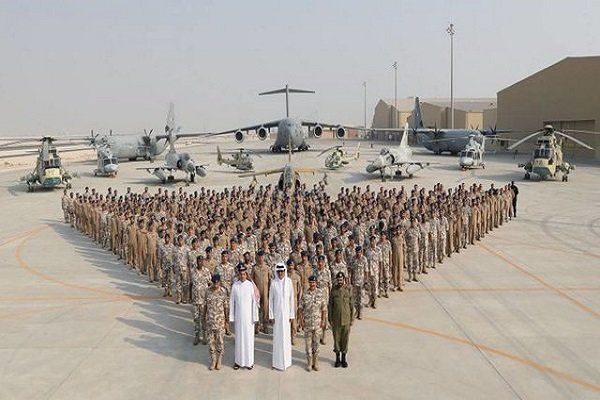
According to the International Desk of Webangah News Agency, Qatar‘s strategic positioning and its long-held aspiration to be a neutral mediator in regional disputes are being tested amidst escalating geopolitical tensions. The presence of the Al Udeid Air Base, the largest U.S. military facility in the region, located just 200 kilometers from Iran’s borders, has placed Qatar in a precarious situation. Reports indicate that this base has been utilized for direct operations against Iran, making Qatari territory susceptible to retaliatory actions. The nation now faces a critical decision: to pursue confidence-building measures with Iran and leverage the economic benefits of regional cooperation, or to remain reliant on the United States for security, a strategy increasingly viewed as yielding diminishing returns.
The Al Udeid Air Base, situated 35 kilometers southwest of Doha, is a significant U.S. military installation in the Middle East, hosting approximately 10,000 American personnel and over 100 aircraft, including B-52 bombers. It serves as the headquarters for U.S. Central Command (CENTCOM) in the region. During recent conflicts, increased military activity at the base was noted, with Israeli media confirming that B-52 bombers and KC-135 refueling aircraft were directly involved in operations targeting Iran. This occurred despite prior assurances from Qatari officials that their territory would not be used for attacks against Iran, assurances that proved to be unsubstantiated in practice.
It is crucial to recall Iran’s supportive role for Qatar in 2017, when Saudi Arabia, the United Arab Emirates, Bahrain, and Egypt severed diplomatic ties and imposed a land, air, and sea blockade on Qatar. Facing a severe food shortage due to its reliance on imports from these neighboring countries, Qatar received immediate assistance from Iran. Within six days of the blockade’s commencement, Iran dispatched aircraft and ships laden with food supplies. Furthermore, Iran opened its airspace to Qatari flights, facilitating an additional 100 daily flights for the nation.
However, the substantial U.S. military presence in Qatar has not deterred security threats. During the recent conflict, the Al Udeid Air Base was reportedly targeted by Iranian missiles, a fact officially acknowledged by the Pentagon. The New York Times also reported the evacuation of hundreds of U.S. military personnel from the base. Prior to this, in September 2025, Israel conducted an unprecedented operation, using over ten fighter jets to assassinate Hamas leaders in Doha. This aggressive act underscored that foreign military bases do not inherently guarantee a host nation’s security. Questions are now being raised within Qatar regarding the utility of these American bases, especially when they failed to defend the country against the Saudi-led coalition in 2017, the Israeli operation in September 2025, or during the recent conflict, leading to accusations of squandering vast oil and gas revenues on illusory American security guarantees.
Qatar has paid a heavy price for its support of U.S. military operations. On March 2, 2026, Iran targeted Qatar’s strategic liquefied natural gas (LNG) facilities in Ras Laffan, destroying approximately 17% of the nation’s LNG export capacity. The subsequent closure of the Strait of Hormuz effectively halted all of Qatar’s gas exports, a crucial route for nearly 20% of global LNG trade, predominantly originating from Qatar. These blows have severely impacted Qatar’s import-dependent economy, disrupting supply chains for essential goods and crippling its vital energy sector. The country’s economy is now facing a sharp downturn as a direct consequence of its alignment with U.S. military interests.
For Qatar to achieve genuine independence and security, two strategic steps are imperative. Firstly, the country must cease denominating its oil and gas sales in U.S. dollars and stop purchasing U.S. Treasury bonds. Many Gulf nations, including Qatar, have pegged their currencies to the dollar and maintain substantial dollar reserves. Their national wealth funds have invested billions in U.S. Treasury bonds, a mechanism that directly supports the U.S. budget deficit and finances its ongoing military engagements. A move away from this cycle would represent a significant shift towards economic sovereignty. Secondly, Qatar must sever all overt and covert ties with Israel. While official diplomatic relations do not exist, back-channel communications have reportedly persisted. Evidence suggests Doha has maintained direct contact with Tel Aviv concerning the situation in Gaza. The recent Israeli incursion into Qatari territory to assassinate Hamas leaders demonstrates a blatant disregard for the sovereignty of regional nations. Israel’s regional hegemonic ambitions are hindered by peace and cooperation among Muslim countries, leading it to sow discord and instigate conflict to deepen divisions within the Islamic world.
The time has come for Qatar to make a definitive choice. It can continue to host the largest U.S. military base in the region, enduring the consequences of compromised security, economic paralysis, and becoming a target for hostilities. Alternatively, it can learn from its recent difficult experiences and pursue a path of cooperation with its neighbors, securing a more stable and prosperous future.