
Israeli Analyst Details Eight Friction Points Between Turkey and Israel Amid Rising Strategic Competition
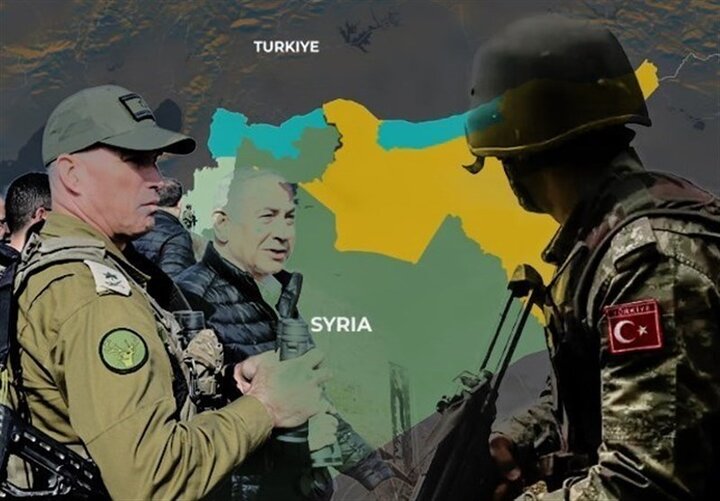
According to the International Desk of Webangah News Agency, Israeli writer and analyst Eitan Lasri stated that Israel and Turkey have entered a phase of increasing strategic competition that may define the Middle East in the coming years. He noted that tensions between the two sides have reached their highest level in recent decades, though a direct military confrontation is still avoided.
Lasri, in an article published in the Israeli newspaper Maariv, added that the growing debate within Israel, suggesting “Turkey is the new Iran,” reflects the significant concern over Ankara’s strategic approaches.
The analyst elaborated that the points of tension between Turkey and Israel are not confined to a single issue but manifest across eight primary arenas.
Gaza tops this list. The two sides hold divergent views on Gaza’s future. Israel views the dismantling of Hamas’s military capabilities as a strategic objective, whereas Turkey sees the continued presence of the movement as an effective post-war actor, representing a clear benefit.
Turkish President Recep Tayyip Erdoğan considers Hamas a resistance organization and, alongside Qatar, supports the movement, maintaining communication channels with it.
Syria emerges as the second major point of contention. The Israeli writer identifies Syria as the most prominent center of strategic tension between the two nations, adding that Tel Aviv views with concern the potential establishment of Turkish military bases in central and southern Syria and Ankara’s efforts to limit Israeli aerial operations in the country.
Lasri highlighted that on the Lebanese front, Erdoğan’s statements, such as “Turkey’s security begins from Aleppo, Damascus, and Beirut,” reflect a new perspective that grants Ankara an increasing role. He believes that any future confrontation between Israel and Hezbollah could become another point of friction with Turkey, which seeks to consolidate its presence as an effective regional player in Lebanon.
Regarding Turkey’s relations with Iran, the article notes that Ankara does not welcome Israeli efforts to destabilize Iran, fearing the rise of independent Kurdish aspirations within Turkey.
Another area of competition is the Eastern Mediterranean, encompassing maritime interests, energy, and geopolitical influence. Turkey promotes the “Blue Homeland” doctrine, aiming to expand its maritime influence in the Aegean Sea and the Eastern Mediterranean, directly conflicting with the interests of Greece and Cyprus, and indirectly with those of Israel.
Ankara perceives the growing alliance between Tel Aviv, Greece, and Cyprus as a geopolitical threat. It views cooperation in energy and gas sectors, as well as the deployment of Israeli missile defense systems in Cyprus, as part of a system designed to limit its regional influence.
The issue of Gaza blockade-running flotillas, which began with the 2010 Mavi Marmara incident, remains a persistent source of tension. The Israeli writer pointed to an “economic and diplomatic war of attrition” between the two sides, including Turkish trade sanctions against Israel, the initiation of anti-Israeli international campaigns by Ankara, its participation in international legal cases, and Erdoğan’s sharp political rhetoric regarding the occupation.
Lasri also commented on Turkey’s rapid armament process, noting Ankara’s acquisition of new fighter jets, the development of its air defense system, expansion of national defense infrastructure, and the development of long-range ballistic missiles.
The Israeli writer identified the United States as the most significant balancing factor between the two parties, asserting that Washington considers both Israel and Turkey as strategic partners and consistently strives to prevent their relationship from deteriorating into direct confrontation.
Lasri concluded that the most probable scenario in the coming years is not a war between Israel and Turkey, but rather a “regional cold war” in which both countries compete for influence, alliances, energy, trade routes, and leadership in the Middle East.


