
Yemen’s Al-Masirah Highlights Ayatollah Khamenei’s Enduring Legacy and Popular Support
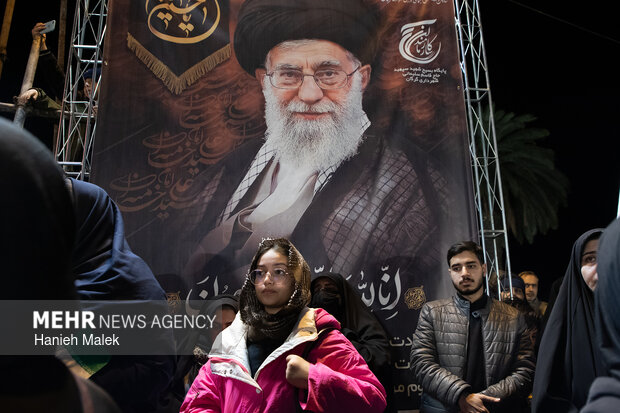
According to the International Desk of Webangah News Agency, Al-Masirah, a Yemeni news outlet, has published an article commemorating the late Leader of the Islamic Revolution, Ayatollah Seyyed Ali Khamenei, emphasizing his deep place in the hearts of the Yemeni people and his enduring impact on regional dynamics. The article highlights the preparations for a historic farewell and funeral for the “greatest contemporary Islamic leader, the mujahid, revolutionary, and jihadi Imam, His Eminence Ayatollah Al-Udhma Seyyed Ali Khamenei, the Supreme Leader of the Islamic Revolution.”
The Yemeni outlet noted the “strength of the Imam’s personality, his management, steadfastness, and resilience in the face of plots and threats since the victory of the revolution in 1979,” observing that the Islamic Republic emerged stronger from each challenge. Al-Masirah stated that just as the people of Iran and the region loved this “great leader,” Yemenis were no exception, and that “martyr Seyyed Ali Khamenei holds a high position in the hearts of the Yemeni people.” The article specifically points to his stance against the “Saudi-American aggressive coalition” that began in Yemen on March 14, 2015, noting that the repercussions of his positions continue to this day. He had “sincerely emphasized that Saudi Arabia committed a grave mistake and an overt aggression,” which Al-Masirah points out proved accurate.
The article further states that the “great martyr of the Iranian revolution” asserted from the “first moments of the beginning of Saudi aggression against Yemen” that “the smoke of this aggression would befall Saudi Arabia and the Yemeni people would be victorious,” a prediction that, according to the report, came to pass.
Seyed Abdul-Malik Badr al-Din al-Houthi is quoted as describing Imam Khamenei as a “great scholar” who “denied Zionist dominance and was a supporter of the Palestinian cause and the people of the region.” Al-Houthi reportedly described the martyrdom of Mr. Khamenei as a “real loss for the Islamic world,” asserting that “American and Israeli enemies who committed this heinous crime want to be rid of the prominent role of Imam Khamenei in confronting injustice and oppressors and foiling their plots.”
According to Al-Masirah, Fadhel Al-Sharqi, a member of the Ansarullah political bureau, believes that Imam Khamenei was “a political leader, a religious symbol, a spiritual reference, and an exceptional leader.” Al-Sharqi is cited as saying that Khamenei transformed Iran from a “dependent country into a major regional power, creating a unique Islamic civilizational model in the modern era.” He is described as “an eloquent orator and a seasoned revolutionary.”
Al-Sharqi added that Imam Khamenei was a “symbol of steadfastness in the hearts of Iranians and the free people of the Islamic Ummah, placing Iran among advanced and civilized nations and achieving tremendous accomplishments that turned it into a great country that cannot be underestimated in many fields.” He elaborated on these achievements, stating that under the leadership of the “great martyr,” Hezbollah Lebanon transformed from a local group into the “strongest military and political force in Lebanon and the region.” Iran, he noted, became a leader in confronting the Zionist occupiers, leading the resistance until the complete liberation of southern Lebanon in June 2000. During his leadership, he also “opened his arms to the Palestinian resistance movements, providing them with weapons, money, and training, which led liberation and resistance movements to challenge Tel Aviv.” The defeat of the myth of the “invincible army” is attributed to “this decades-long support led by the great Imam Khamenei.”
Al-Masirah further states that for years, Yemenis have been connected with the Islamic Republic of Iran and Hezbollah Lebanon, “inspired by his courage, bravery, and strong will to confront global arrogance, namely the United States and the Zionist regime.” The departure of this “great martyr” is described not just as the loss of a political leader or religious reference, but as an “exceptional leader who left a significant impact at one of the most sensitive stages of the region’s history.” His name, the article suggests, will be linked to “political and intellectual projects based on rejecting the hegemony of the United States and the Zionist regime, supporting resistance movements, and striving to consolidate national decision-making independence for the governments and nations of the region,” making his presence felt beyond Iran’s borders and a part of regional equations.
The article concludes by asserting that he “gained a special place among a wide segment of the Yemeni people.” Iran, during his leadership, witnessed “major strategic transformations that strengthened Iran’s regional presence and solidified the axis of resistance as an influential player in regional equations, leading Tehran to be present in the most prominent political and military files, from Palestine and Lebanon to Iraq, Syria, and Yemen.” Al-Masirah noted that the “million-strong funeral of the martyr leader of the Islamic Revolution of Iran” reflects a “long list of his positions and views on regional and international developments.” The effectiveness of leaders, the article posits, is not measured by their lifespan but by the “impact they have on people’s conscience and the course of events,” an impact that, according to many observers, will become even more tangible in the years to come.


