
Iraq Navigates Complex Web of Political Oligarchy and Transnational Financial Networks
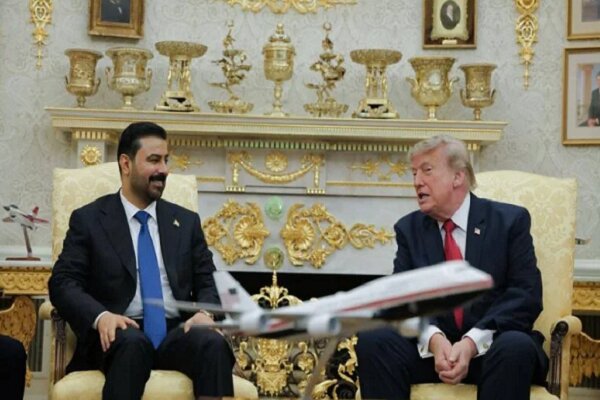
According to the International Desk of Webangah News Agency, the current developments in Iraq cannot be attributed to a single factor, whether it be the rivalry between Iran and the United States, internal structural divisions, or the ongoing regional conflict. The complex situation in Baghdad is the result of a convergence of three concurrent crises: the structural crisis of governance since 2003, the realignment of regional balances due to escalating Iran-US confrontations, and a fundamental shift in power from ideological politics to financial, economic, and transnational networks. Today, Iraq is more intensely competed over than ever before, yet possesses less capacity for independent management of these rivalries.
The Paradox of Sovereignty: When the State is a ‘Subject’ Not an ‘Agent’
Although Iraq possesses official state structures, a parliament, and sovereign institutions following 2003, it has yet to achieve the institutional cohesion necessary to speak of a ‘unified state will.’ The new Iraqi political system is built not on state-building but on a fragile balance among Shiite, Sunni, and Kurdish groups, power-sharing, and mutual containment of political actors.
The consequence of this situation is that the Iraqi government often serves not as the final decision-making center but as a perpetual arena for negotiation among rival forces. In such circumstances, any security, economic, or regional development rapidly navigates the channels of internal competition and becomes a tool for power redistribution.
Therefore, Iraq’s core problem is not merely a weak government; it is a crisis in defining the state’s role as an independent political agent. This is the paradox Iraq faces today: a country with formal sovereignty but limited capacity to exercise real sovereignty; a government that exists but in many instances is unable to manage the forces operating within or around it.
Corruption: From Administrative Malady to a Mechanism for Power Redistribution
Understanding the issue of corruption in Iraq is impossible without considering its power structure. Ostensibly, the arrest of certain political and economic officials or efforts to recover public assets might indicate a governmental will to reform administrative structures. However, within Iraq’s political context, corruption is not merely a legal or ethical problem but a part of the mechanism for resource distribution and the consolidation of power alliances.
Consequently, confronting corruption often takes on a meaning beyond administrative combat. The removal or weakening of certain figures can simultaneously serve as a tool for political pressure, a means to redefine alliances, and even a solution for managing the government’s financial crisis. In this context, the fight against corruption cannot be considered entirely neutral and separate from political rivalries. The fundamental issue is that corruption in Iraq often originates not outside the power system but within its networks. Thus, the danger exists that the fight against corruption may lead to the displacement of resource-rich networks rather than structural reform.
Iraq in the Matrix of War: From Proxy Battleground to Zero Point of Confrontation
The complexity of Iraq’s situation is amplified when analyzed within the framework of regional security developments. Over recent years, the Iran-US competition was largely managed through indirect warfare, political pressure, and proxy forces. However, the intensification of direct confrontation between Tehran and Washington has altered this pattern.
In the new circumstances, Iraq is no longer merely an arena for indirect competition. Due to its geographical position, security ties with Iran, and the presence of US military forces, it is at risk of becoming one of the primary centers of crisis.
Reciprocal attacks between Iran and the United States, and the expanding scope of pressure on infrastructure and bases associated with the US presence in the region, indicate that the line between deterrence, retaliatory response, and limited war has become more fragile than ever. In such an environment, Iraq faces a fundamental dilemma: it cannot fully distance itself from the Tehran-Washington competition, yet it lacks the capacity to manage its consequences.
The role of Israel cannot be overlooked in this context. Israel has not been a marginal player in the Iran-US conflict in recent years; rather, it has played a role in shaping the strategic environment of pressure on Tehran. From this perspective, the current Middle East crisis should be viewed as part of a more complex architecture in which Iran, the United States, Israel, and the Arab states of the Persian Gulf are engaged in a multi-layered security interaction.
Economic Dependence and Limitations on Iraqi Sovereignty
One of the less-examined dimensions of Iraq’s crisis is economic dependence. Iraq’s economy remains heavily oil-dependent, with the bulk of government revenue derived from oil exports. This dependence, coupled with the role of the international financial system and control over currency channels, imposes serious limitations on Baghdad’s economic independence.
In this situation, financial crises, delays in government employee salaries, or efforts to secure liquidity through resource control and anti-corruption measures are not merely economic issues; they become intertwined with political sovereignty. The Iraqi government simultaneously faces three pressures: internal structural inefficiency, external economic dependence, and the geopolitical competition of regional powers. This combination diminishes the government’s capacity for independent decision-making.
The Rise of Financial Technocrats: Transition from Party Politics to Network Politics
One of the most significant transformations in Iraq today is the change in the logic of power production. Power in Iraq is no longer solely generated through party, religious, or ideological leaders; instead, economic networks, banks, holding companies, media, and transnational capital have become decisive elements of policy.
The emergence of figures like Ali Al-Zaidi can be analyzed within this framework. The importance of such figures lies not only in their political position but in the changing nature of the power game. Iraq is transitioning from ‘party-ideological politicking’ towards ‘network-economic politicking.’
This development has dual implications. On one hand, new actors, due to their relative distance from traditional divides, may possess greater capacity for political compromise. On the other hand, if their power is based on financial networks and non-transparent agreements, the risk of the government becoming hostage to economic oligarchies increases. In other words, Iraq may move beyond a phase where traditional political groups divided power, into a phase where economic networks dictate the course of political decision-making.
Iraq and the Future of the Regional Order
Iraq is currently caught between several competing forces: Iran, which views Iraq as part of its geopolitical depth; the United States, which considers Baghdad important within the framework of containing Tehran’s influence and regional security; the Arab states of the Persian Gulf, which seek to increase their role in Iraqi affairs; and Israel, which plays a role in the regional pressure architecture against Iran. This multi-layered pressure means that Iraq is positioned not only among states but among various power networks. In such a scenario, any political change in Baghdad, any economic decision, and any security crisis carries implications extending beyond its borders.
Conclusion: A Fragile Power Realignment
Iraq is in a phase of ‘fragile power realignment,’ a stage where the lines between state, network, proxy, economy, and foreign intervention are more intertwined than ever. Iraq’s crisis cannot be resolved solely by changing the prime minister, arresting a few officials, or implementing administrative reforms, as the root of the crisis lies in the structure of power production and distribution.
Until the Iraqi government can transform from a ‘subject of others’ competition’ to an ‘agent managing the competitions,’ neither the fight against corruption will yield sustainable results nor will political decision-making independence be achieved. Ultimately, Iraq’s main issue today is not who holds power, but who and what network truly produces and controls power. The answer to this question will determine Iraq’s future path.


