US Sanctions Face Global Shifts: Can Maximum Pressure Achieve Foreign Policy Goals?
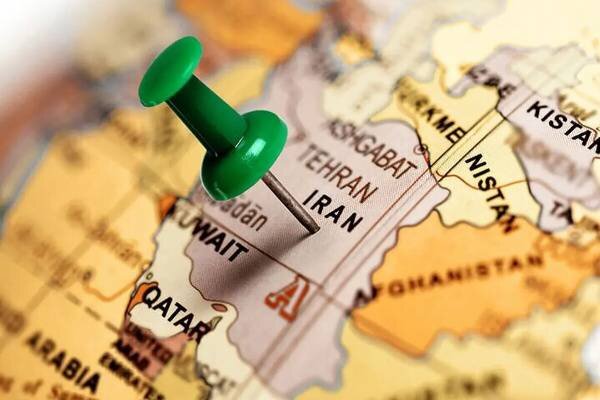
According to the International Desk of Webangah News Agency, economic sanctions have long served as a primary instrument of U.S. foreign policy. Leveraging its economic might, the dollar’s global standing, and extensive influence within international financial networks, Washington has historically used sanctions to compel behavioral changes from rivals and even allies. However, the current debate extends beyond the capacity of the U.S. to impose sanctions; the core question is whether the world remains willing to support Washington’s objectives through such measures.
Historically, the potency of U.S. sanctions derived significantly from America’s pivotal role in the global economy. Many nations, eager to maintain access to financial markets, banking systems, and the Western-controlled international trade network, felt compelled to comply with U.S. sanctions. Yet, the global power dynamics have undergone substantial transformations in recent years. The emergence of new economic powerhouses, China’s increasing prominence, the expansion of trade relations among countries outside the Western orbit, and a diminishing inclination by some nations to accept unilateral U.S. policies have created a significantly different landscape.
In this evolving environment, the U.S. is attempting to re-deploy economic pressure as a tool to constrain Iran. However, this time, it faces a more complex global arena than in the past. A report in The Telegraph, authored by Ambrose Evans-Pritchard, highlights the challenges of imposing a global economic blockade on Tehran, suggesting it is no longer as feasible as it once was. The report posits that U.S. success in this endeavor would require the cooperation of China, Russia, India, Europe, and major global financial centers—many of which no longer consider themselves fully bound by Washington’s policies.
The Telegraph effectively points to a fundamental alteration in power equations: while the U.S. retains the capacity to exert pressure, its ability to translate that pressure into global consensus has diminished. Sanctions achieve their greatest impact when the targeted country faces near-total economic isolation—meaning its trade routes, financial transfers, access to technology, and financial communications are severely restricted. The current environment, with significant players like China and Russia, makes such a comprehensive blockade considerably more difficult.
The Financial Times, in its analysis, has characterized the new U.S. economic pressure campaign as a reiteration of the 2018 strategy. Following its withdrawal from the nuclear deal, the U.S. pursued a policy of maximum pressure aimed at forcing Tehran to capitulate to its demands. Despite the imposition of hundreds of sanctions, this policy failed to achieve its primary objective of altering Iran’s behavior. The Financial Times emphasizes that a key weakness of this approach was its reliance on the cooperation of countries like China, Russia, and Turkey, whose national interests do not necessarily align with U.S. policies.
Past experiences have demonstrated that economic sanctions alone cannot guarantee the desired political outcomes for the sanctioning entity. While sanctions can impose costs, create economic difficulties, and impede developmental progress, transforming them into a tool to compel a nation to change its political course requires conditions beyond mere economic pressure.
A significant difference today compared to previous years is the altered perception of U.S. sanctions policies by many countries. Washington’s widespread use of secondary sanctions against various nations has led some governments to view this tool not just as an economic measure, but as an integral part of U.S. geopolitical competition to maintain its dominance. Consequently, their willingness to fully endorse such policies has decreased.
China plays a particularly noteworthy role in this context. Beijing is considered the U.S.’s principal strategic rival and maintains extensive economic ties with Iran. For China, fully accepting U.S. sanctions against Tehran is not merely an economic decision; it could signify an acceptance of the rules Washington seeks to impose in the global competition. Therefore, China has often sought to strike a balance between preserving its economic relationships and managing U.S. pressures.
Furthermore, U.S. policies in recent years have prompted some countries to reduce their dependence on financial structures influenced by Washington. Increased use of national currencies in trade, the establishment of alternative financial mechanisms, and the development of economic cooperation outside traditional Western frameworks are part of a trend that has diminished the monopolistic power of U.S. economic tools.
However, the other side of the equation should not be overlooked. Sanctions remain a significant instrument, and their economic ramifications cannot be disregarded. Restrictions on access to technology, difficulties in financial transfers, and increased costs for foreign trade are tangible consequences of sanctions. The fundamental difference, however, is that today’s sanctions function more as a tool of leverage than as a guaranteed pathway to political victory.
In essence, the core problem for the U.S. is the growing gap between its “capacity to impose sanctions” and its “capacity to enforce political outcomes.” Washington can threaten companies and countries with penalties, but it can no longer be as confident as before that all major global economic actors will adhere to its policies.
Regarding Iran, the experience of recent years has shown that while the policy of maximum pressure has incurred costs, it has not led to its ultimate goal of altering Tehran’s strategic calculations. Iran has sought to manage the effects of these pressures by expanding economic ties with non-Western countries, establishing new trade routes, and utilizing regional capacities.
In conclusion, the new U.S. sanctions against Iran are not merely an economic issue but are intrinsically linked to the broader competition for the future of the global order. The U.S. remains a significant economic power with substantial pressure tools at its disposal. However, the world today is no longer unipolar as it once was.
Consequently, the project of fully isolating Iran economically faces a fundamental obstacle: Washington can apply pressure, but to translate that pressure into a final outcome, it requires global cooperation—a level of collaboration that is proving far more challenging to achieve in the current climate.
Perhaps the most important reality is that the era of using sanctions as an unfettered weapon is nearing its end. In the new world, economic power is effective only when coupled with political legitimacy, international cooperation, and the acceptance of other actors. The U.S., more than ever, is confronting the limitations imposed by this new reality.