
Maintaining Ties with Tehran Benefits Regional Stability Amid US Pressure
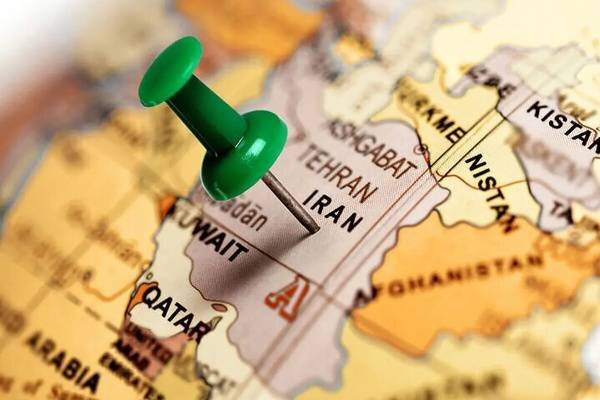
According to the International Desk of Webangah News Agency, Washington has initiated a new phase of economic pressure against Tehran, extending sanctions beyond Iran’s borders to target networks involved in oil transfers, revenue management, maritime transport, and financial intermediation. Under the new U.S. policy, companies and individuals continuing to cooperate with these sanctioned networks could face severe financial restrictions and the risk of losing access to the international banking system. This development places regional commercial and financial centers, which have played a significant role in trade with Iran in recent years, in a sensitive position.
Washington’s new pressure comes at a time when a substantial portion of Iran’s foreign trade has historically been conducted through regional commercial hubs. Electronic goods, industrial equipment, consumer products, and agricultural items are among the goods that have entered the Iranian market, partly through re-export. The new sanctions could increase the cost of these exchanges, forcing regional companies to choose between maintaining operations in the Iranian market and preserving their access to the global financial system.
Divergent Stances in the Persian Gulf
Arab states bordering the Persian Gulf have reacted differently to recent developments. Some, following intensified security threats and attacks on infrastructure and shipping routes, have adopted a tougher stance toward Tehran. Conversely, others continue to emphasize the necessity of maintaining political and diplomatic channels, striving to create a reasonable distance between their international financial obligations and continued contact with Iran. This difference in approach stems from each country’s unique security and economic calculations.
Regional Economy and Sanctions
The economies of the region are dependent on global trade, foreign investment, international financial markets, and connections with major world banks. This dependency significantly reduces the feasibility of ignoring U.S. sanctions. However, a complete severance of ties with Tehran is also a costly option for many of these countries, particularly given that the security of the Persian Gulf and the Strait of Hormuz remains a paramount concern for the region. Regional trade is one of the first sectors likely to be impacted by the new sanctions. Persian Gulf commercial centers have become a primary route for goods entering Iran over the decades.
Companies operating in these areas will face adjustments in their trading routes or a review of existing contracts. The extent to which these changes will be permanent or quickly reversible remains uncertain, but the outlook for regional trade is currently marked by doubt and some confusion.
These countries are more vulnerable to the direct consequences of escalating tensions between Iran and the United States than any other regional actor. Impacts range from increased trade and energy costs to insecurity on shipping routes and a heightened risk of conflict near their borders. Therefore, fully aligning with pressure campaigns against Iran does not necessarily translate to increased security for regional nations.
Conversely, as communication channels with Tehran become more restricted, the capacity to manage crises and prevent misunderstandings diminishes. In a situation where a significant portion of Persian Gulf security relies on the reciprocal behavior of its coastal states, maintaining dialogue could be one of the few available tools to prevent a political crisis from escalating into a broad military conflict. For Arab nations in the region, Iran is no longer a distant power that can be pressured solely through economic means; it is an integral part of the Persian Gulf security equation.
Shared geography, the Strait of Hormuz, energy transit routes, and the proximity of vital ports and infrastructure dictate that any extensive confrontation, before impacting Iran or the United States, would transfer its consequences to neighboring countries. From this perspective, maintaining political and security relations with Tehran could enable regional countries to engage directly with the Iranian side during crises and prevent escalation.
In essence, a balanced policy toward Tehran could be more beneficial for regional countries than complete adherence to a pressure-based approach. This entails respecting international commitments and preventing companies and banks from facing sanctions, while preserving legitimate political, diplomatic, and economic relations with Iran.
Furthermore, increased pressure coupled with the closure of diplomatic and economic channels provides Tehran with greater incentive to utilize unconventional tools to protect its interests and security. In such scenarios, Iran’s neighbors, particularly the Persian Gulf states, would be the first to experience the effects of instability. Persian Gulf nations will be unable to remain on the sidelines of this dispute. Their energy infrastructure, lack of overland trade routes, and reliance on maritime transport mean that a prolonged conflict between the United States and Iran would undoubtedly impact the entire region.


