
US Shifts Pacific Assets to Hormuz Strait Amidst Iran Tensions
According to the International Desk of Webangah News Agency, the United States‘ escalating actions against Iran have transcended the battlefield, now testing Washington’s capacity to manage multiple fronts simultaneously. A conflict intended to swiftly achieve American objectives has instead diverted critical resources and military focus from East Asia to the Middle East.
The relocation of a US aircraft carrier from the Pacific to the Persian Gulf, a reduction in joint military exercises with Asian allies, and growing concerns over potential military vacuums in the region, coupled with the strategic importance of the Strait of Hormuz and Iran’s assertive stance, raise a significant question: Is Washington inadvertently paying a price on a front it deems vital for containing China, in its effort to maintain pressure on Tehran?
Continued Tensions with Iran and Gradual Retreat from the Pacific
US-led aggressive attacks against Iran, which the Trump administration anticipated would yield results within weeks, have not only failed to achieve Washington’s initial declared objectives after six months of hostilities but have also generated a cascade of military and strategic consequences for the US itself.
Signs of this attrition are now evident in the redeployment of American military resources from East Asia to the Middle East, a region where Washington requires a greater military presence to sustain the conflict and manage its repercussions.
The deployment of the aircraft carrier USS George Washington from Japan to the Middle East gains significance in this context. With this carrier’s transfer to replace the USS Abraham Lincoln, the US has temporarily withdrawn an aircraft carrier that was stationed in the Pacific Ocean, a region Washington has long identified as the primary arena for competition with China.
Concurrently, reports have emerged regarding concerns within US military circles about dwindling weapons stockpiles following the conflict with Iran. This issue has amplified anxieties about the capability to maintain readiness against China and North Korea.
A more significant indicator, however, is the reduction in US military exercises with South Korea. Amidst the Iran conflict, President Trump ordered a substantial decrease in joint drills between the two nations, with the Ulchi Freedom Shield exercise ultimately concluding six days ahead of schedule. Several days later, another joint amphibious exercise was canceled due to limitations in US troop availability stemming from the Iran conflict.
The importance of these developments extends beyond the reduction of a single exercise or the withdrawal of one carrier. What is undergoing transformation is the balance between US military resources and the number of fronts Washington aims to manage concurrently.
According to observers, the protracted conflict with Iran has engaged a portion of America’s naval, air, armament, and operational capabilities. The effects of this engagement have now reached the region designated as the strategic focal point for America’s containment of China. Consequently, any reduction in presence in the Pacific should not be viewed as a mere temporary decision; these actions signify the increasing pressure exerted by a war of attrition on the global deployment of US forces.
Hormuz: The Nexus of US Strategy Erosion
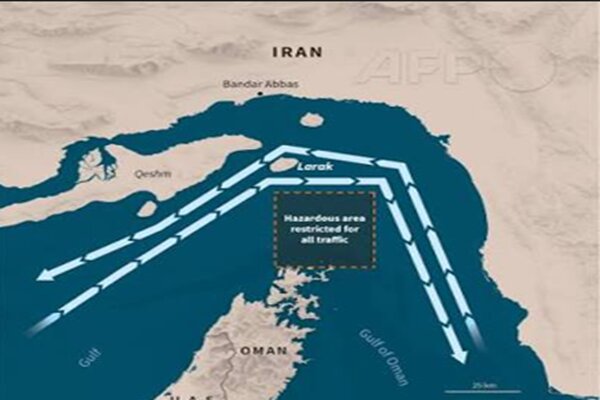
In recent months, the Strait of Hormuz has evolved from a strategic waterway into one of the principal theaters of conflict between Iran and the United States. The significance of this development lies in Washington initiating the conflict to undermine Iran’s strategic capabilities, only to find a substantial portion of its military and political efforts now focused on restoring passage through a strait that Iran considers a crucial leverage point against American aggression. Even American reports acknowledge that after six months, the war’s objectives have shifted, and Hormuz has become a primary concern for Washington.
Tehran’s position in this scenario has not been merely reactive. Iranian officials have emphasized that freedom of navigation in the Strait of Hormuz cannot be considered independently of a halt to aggression and the opposing party’s commitment to existing agreements. Iran’s armed forces have also declared control over the strait.
This stance has effectively created a different equation than Washington’s narrative, compelling the US to undertake mine-clearing operations, provide military escorts for shipping lanes, and even contemplate limited strikes on Iranian positions around the strait to ensure passage. The significance of Hormuz for Iran is not solely confined to its geographical location; in times of conflict, it has become leverage that escalates the cost of continued US operations while simultaneously impacting the global energy economy.
With nearly one-fifth of the world’s oil and gas passing through this route, any disruption in Hormuz directly translates into increased energy prices and economic insecurity for various nations, as evidenced by the surge in Brent crude oil prices above $90 per barrel following recent confrontations.
From this perspective, the issue of Hormuz cannot be reduced to a mere American effort to keep a waterway open; it represents a dynamic of power and cost in the continuation of the war. The more Washington engages to restore normal conditions in Hormuz, the more it validates the strait’s importance in the war’s equation. Furthermore, the greater the military operations required to ensure shipping security, the higher the cost and complexity of a conflict that was intended to be far shorter.
This inherent contradiction has transformed Hormuz into one of the most critical points of erosion for America’s strategy in its conflict with Iran.
East Asia Under the Shadow of Reduced US Presence and Increased Chinese Opportunity
The shift in US military focus from the Pacific to the Middle East is more than just a geographical redeployment of forces; it is an action occurring in a region where Washington has strived for years to maintain a balance in its favor through troop deployments, joint exercises, and security alliances.
The departure of the USS George Washington from Japan’s vicinity, coupled with the reduction in US-South Korean military exercises, now presents a different picture of Washington’s priorities, particularly as the conflict with Iran continues to consume American armament and operational resources.
The significance of this situation is further amplified when observing China’s posture. Beijing is actively monitoring these developing fissures. Recent reports about the depletion of US interceptor missile and long-range weapon stockpiles due to actions in Iran have sparked concerns within US security circles regarding deterrence capabilities against China. Some assessments have even warned that the erosion of US reserves could limit Washington’s capacity to respond simultaneously to potential crises in both East Asia and the Middle East.
In this context, the reduction in military exercises with South Korea carries a more profound political meaning. President Trump proposed this reduction at a time when Seoul refused to align with the US in the Iran conflict. Consequently, Washington, on one hand, is diminishing its military presence and training in East Asia to offset the pressures of the war, while on the other hand, it is expressing dissatisfaction with its Asian ally for not embracing the costs of President Trump’s ambitious warmongering in the Middle East.
In summary, the current situation for the US transcends the temporary loss of a carrier or the reduction of a few military drills. It concerns a gap that has emerged between Washington’s global commitments and its actual capacity to uphold these commitments simultaneously. The longer the war against Iran persists, the higher the cost of maintaining pressure in Hormuz will become, while conversely, greater space will be created for China to expand its presence, initiative, and influence within its surrounding environment.
Therefore, what is unfolding in the Pacific can be considered one of the strategic consequences of an unnecessary war that the US entered with miscalculations regarding its swift conclusion, but which has now led it to divert a portion of its capabilities and focus away from East Asia to manage its repercussions.


