Iraq’s Resistance Disarmament Faces Complex Political and Security Challenges
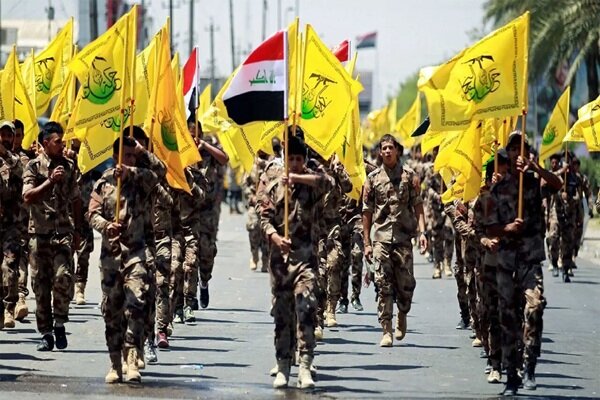
According to the International Desk of Webangah News Agency, Iraq finds itself at a critical juncture following the defeat of ISIS, facing a security and political challenge that extends beyond purely military considerations. The emergence of ISIS in 2014 and the subsequent collapse of segments of Iraq’s security apparatus underscored the necessity of forming and activating popular armed forces to combat terrorism. Consequently, the popular resistance forces, known as the Hashd al-Shaabi, became a significant component of Iraq’s security landscape.
With the conclusion of the primary phase of the war against ISIS, the terrorist threat in its previous form has diminished. However, the issue of armed groups operating outside the conventional structure of the army and security forces persists. Therefore, the “arms issue” in post-ISIS Iraq is not merely about which group possesses weapons; it delves into more fundamental questions regarding the relationship between the state, sovereignty, resistance forces, and the state’s monopoly on the use of force.
From this perspective, disarming the resistance cannot be solely viewed as a military or security measure, as some of these groups hold political representation and influence, playing a role in shaping Iraq’s power dynamics. Consequently, any attempt to alter the current situation could have ramifications beyond security, impacting internal political balances, the relationship between Shiite groups and the central government, and even Iraq’s relations with regional and international actors. In other words, the core issue is not simply “handing over weapons” but rather redefining the relationship between the resistance forces and the Iraqi government and determining the scope of their role in the country’s new political-security order.
This matter has entered a new phase in recent months, influenced by external pressures, particularly from the United States on Baghdad to curb the activities of armed groups. The Iraqi government, emphasizing the necessity of bringing weapons under state control, has sought to address this issue within the framework of national sovereignty and Iraq’s interests.
Under these circumstances, Iraq faces a sensitive dilemma: on one hand, the government must move towards a monopoly on the use of force and prevent armed activities outside the state’s purview to consolidate its sovereignty. On the other hand, a hasty and confrontational implementation of this policy could lead to confrontation with powerful political-security factions and create new instability within the country.
Disarmament at the Intersection of State, Resistance, and External Pressure
Following the defeat of ISIS, the primary concern in Iraq shifted from “combating the terrorist threat” to “redefining the post-ISIS security order.” Forces that had become a cornerstone of Iraqi security during the war against ISIS now face a different demand: placing all arms and military decision-making entirely under government control.
The Iraqi government views this as integral to consolidating sovereignty and its monopoly on the use of force. However, for a segment of the resistance groups, the issue is not merely the handover of weapons but also relates to their position within the country’s security structure, their experience in fighting ISIS, and their assessment of future threats. In recent months, this divergence of views has intensified under the influence of U.S. pressures and the new regional landscape. Washington increasingly desires an end to the activities of armed groups operating outside the direct control of the Iraqi government. Baghdad, under political, security, and economic pressures stemming from its relationship with the United States, has been compelled to pursue the issue of arms control more seriously.
In contrast, the reaction from resistance groups has not been uniform. Some groups have agreed in principle to place weapons under government control, while others, including Kata’ib Hezbollah and Harakat al-Nujaba, have opposed disarmament in its conventional sense. This lack of uniformity and disparity in stances among Iraqi resistance groups indicates that Iraq’s current issue is not confined to “handing over weapons.” Instead, it is predicated on the necessity of providing guarantees related to sovereignty, the presence of foreign forces, border control, and Iraq’s independence in political and economic decisions.
In recent weeks, the positions of groups opposing the handover of weapons to the government, such as Kata’ib Sayyid al-Shuhada, Kata’ib Hezbollah, and the Badr Organization, have been articulated by their leaders in public forums. These positions, in a way, represent important preconditions that these groups would require from the central government before handing over their weapons.
Within this framework, the recent statement by Kata’ib Sayyid al-Shuhada can be considered the clearest set of preconditions. Kata’ib Sayyid al-Shuhada has conditioned its cooperation with the arms monopoly process on the implementation of ten dependent conditions, the most significant of which are the complete withdrawal of American forces from Iraq’s land, air, and sea, a declaration of the end of their presence under any title, the prevention of using Iraqi territory and airspace for attacks on other countries, the transfer of control of the Kurdistan Region’s borders to the Iraqi army, and the ratification of Hashd al-Shaabi laws.
The stance of Kata’ib Hezbollah is analyzed within the same context. This group has previously affirmed that resistance groups will not hand over any weapons as long as “foreign occupation” continues on Iraqi land and in its airspace, and a full explanation of the status of weapons is contingent on the time of Iraq’s liberation. Furthermore, in its latest positions, they have added the complete withdrawal of coalition forces, Iraq’s independence in political and economic decisions, the exit of Turkish forces, and the resolution of the Peshmerga forces issue to their preconditions.
Hadi al-Amiri, the leader of the Badr Organization, in his recent speeches, while supporting the handover of weapons to the government under the title of “a national objective based on the Iraqi constitution,” deemed it achievable within the framework of realizing Iraqi national sovereignty. In addition to previous conditions, he has also added the disarmament of groups that threaten the security of Iraq’s neighbors or oppose the constitution to the proposed preconditions.
Overall, a common alignment exists among the three mentioned positions: they do not negate the arms monopoly but make it conditional upon the achievement of complete sovereignty and the removal of external threats.
The Tripartite Dimensions of the Resistance Disarmament Issue in Iraq
In Iraq’s political and security structure, weapons, beyond their military function, are intertwined with the issues of state sovereignty, political power balance, national security, and regional relations. Therefore, the disarmament of the resistance in Iraq is not merely a military matter. Any decision regarding the future of resistance group weapons could have implications extending beyond the military domain and even affect Iraq’s political stability. Examining this issue can be analyzed from at least three dimensions: political, security, and regional.
First Dimension: Political
Resistance groups are not solely military actors; a portion of them have political organizations, parliamentary representation, and a social base, playing a role in Iraq’s power dynamics. Consequently, sudden disarmament could be perceived by some factions as a reduction in their political power and bargaining leverage. Moreover, the resistance groups themselves do not hold a unified position; some have shown greater flexibility regarding placing weapons under government control, while others have opposed disarmament. Therefore, any realistic solution must differentiate between preserving the political and social standing of these factions and limiting armed activities outside the state’s framework.
Second: Security Dimension
The experience of 2014 and the emergence of ISIS demonstrated that the weakness of state security structures can pave the way for widespread threats. From this perspective, for a segment of the resistance forces, maintaining military capacity is still linked to the concept of deterrence and confronting potential threats. Therefore, the fundamental question is: if the military capacity of the resistance groups is reduced, what effective mechanism will be in place to ensure security and prevent the formation of a power vacuum? If the government cannot create a suitable alternative for existing security capacities, the disarmament process might increase Iraq’s security vulnerability instead of enhancing stability.
Third: Regional and External Dimension
The issue of weapons in Iraq is influenced by the competition and interaction of regional and international actors, particularly Iran and the United States. Washington’s pressure to limit the activities of armed groups, Baghdad’s emphasis on state control of weapons, coupled with the resistance’s concerns about external threats and regional developments, have elevated this issue beyond an internal matter. Consequently, Baghdad must, while consolidating its sovereignty, prevent Iraq from becoming a battleground for foreign actors.
In summary, the disarmament of the resistance in Iraq is a multi-layered issue that cannot be resolved by a purely military decision. The success of this process depends on the Iraqi government’s ability to strike a balance among four dependent necessities: consolidating sovereignty and legal monopoly of weapons, maintaining political stability, preventing the creation of a security vacuum, and managing regional and external pressures. Any solution that overlooks one of these four levels may, instead of resolving the issue, create new crises in Iraq.
Future Scenarios for Arms Control in Iraq
Given the current conditions in Iraq and the divergence of positions among Iraqi resistance groups regarding the surrender of their weapons to the government, three scenarios can be envisioned for the future of arms control:
A) Complete arms control by the set deadline (September 30): The operational likelihood of this scenario in the current circumstances appears very weak, as arms control requires the simultaneous agreement of all groups on the expulsion of foreign forces from Iraq, and the handover of weapons to the government itself would practically be implemented over a longer period.
B) Confrontational government response following explicit resistance group objections: This scenario, if it occurs, could increase the risk of internal conflicts. However, considering the opposition of Shiite leaders to any conflict and the disagreements among popular groups, its realization seems highly unlikely. It is worth noting that resistance groups emphasize arms control through dialogue and negotiation, which itself makes the realization of the second scenario unlikely.
C) Achievement of a joint agreement following the extension of negotiations: According to recent reports, the most probable option for the realization of these three scenarios is that the continuation of the negotiation period will lead to the gradual integration of forces and the achievement of phased agreements. Therefore, if negotiations are extended to reach a comprehensive agreement, further news on the arms control process should be followed in October and November. This is because, while the government’s deadline is fast approaching, Washington conditions its complete withdrawal on an agreement regarding armed groups, and on the other hand, resistance groups have stipulated the withdrawal of American forces as a condition for handing over their weapons!
Solutions for Exiting the Current Situation
- Transforming “Disarmament” from a Confrontational Demand to an Agreed-Upon Process
The first step to move beyond the current situation is to change the discourse and approach to the issue. Transforming disarmament into an urgent and confrontational demand, particularly when a segment of the resistance groups still considers itself to have a defensive mission, can lead to political and even security resistance. Therefore, instead of solely focusing on “handing over weapons,” the Iraqi government should emphasize a gradual process of transferring arms control to the state. This process should be based on direct dialogue, political agreement, and the establishment of a realistic timeline so that armed groups do not feel that the objective is their elimination from Iraq’s political and social structure.
- Strengthening the Government’s Real Capacity to Ensure Security
Resistance groups cannot be asked to reduce their military capacity without the government having established an alternative capacity to ensure security. The Iraqi army, police, intelligence agencies, and border guards must be strengthened in terms of training, equipment, intelligence, and command. The government can expect a monopoly on weapons only when it truly assumes the monopoly on security responsibilities. Otherwise, concerns about a security vacuum could become the most significant obstacle to the implementation of the disarmament policy.
- Reducing the Role of External Pressure and Emphasizing National Nationalism
Ultimately, the success of this process largely depends on disarmament being recognized as an Iraqi decision, not an externally imposed project. Direct pressure from the United States or any other foreign actor can strengthen the position of opponents of disarmament and shift the issue from “state sovereignty” to “resistance against foreign intervention.” Baghdad, while maintaining foreign relations, must manage the issue within the framework of national interests and internal dialogue.
Conclusion
In conclusion, Iraq’s way out of the current situation is not through immediate and forceful disarmament, but through the gradual readjustment of the relationship between the state and the resistance forces. The government must simultaneously consolidate its legal authority, strengthen its security capacity, and provide a clear path for resistance groups to transition from an independent military role to an official and political one. If these three trends proceed simultaneously, the arms issue can transform from a point of crisis into an opportunity to complete the state-building process in Iraq. However, if disarmament proceeds without agreement, without security guarantees, and under external pressure, it will likely not only fail to resolve the issue but will also deepen existing rifts.
By Mohammad Hossein Bagher Beik, International Affairs Analyst