
Russia Reiterates Opposition to Maritime Blockade of Iran, Cites International Law
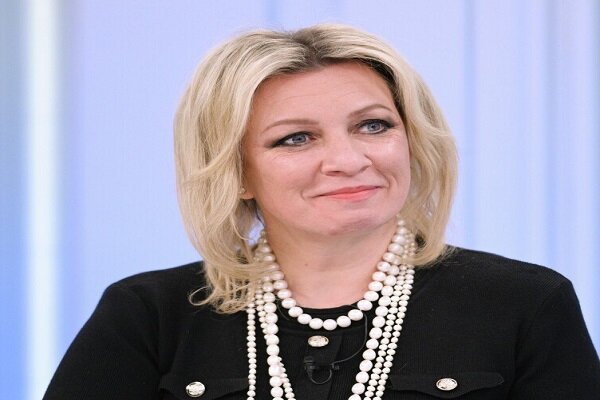
According to the International Desk of Webangah News Agency, Maria Zakharova, spokesperson for the Russian Ministry of Foreign Affairs, stated during her weekly press conference that Moscow views recent actions by the United States and Israel against Iran as direct and unprovoked aggression. She emphasized that Russia’s policy towards Tehran has not changed.
Responding to a question about Russia’s position on the management and control of the Strait of Hormuz and a potential maritime blockade of Iran, Zakharova explained that relations with Iran are governed by established agreements and arrangements that have been in development over a considerable period. She noted that while the implementation process within Iran was lengthy, these agreements are now in effect and guide bilateral relations.
Zakharova further elaborated on Russia’s historical relationship with Iran, describing it as rich, extensive, and far beyond current agreements, tested through various historical events and challenges.
Regarding the situation in the Strait of Hormuz, Zakharova reiterated Russia’s clear position. “We have explicitly stated – and this has been raised not just once or at just one level – that we are facing direct aggression without any prior provocation from the United States and Israel against Iran and the Iranian people,” she stated.
She stressed that Russia’s assessment is based on an objective analysis of all factual components and evidence, not on a temporary or circumstantial viewpoint, nor on personal feelings or the opinions of certain circles. “This position encompasses the complete set of existing realities and factors,” Zakharova added.
The Russian Foreign Ministry spokesperson confirmed that President Vladimir Vladimirovich Putin and Foreign Minister Sergey Viktorovich Lavrov have also addressed this issue, and the overall stance has remained consistent.
Zakharova also framed the Strait of Hormuz situation as part of a broader challenge threatening the legal framework governing the world’s seas and oceans. She expressed concern that the global ocean is transforming into an arena of disaster, piracy, and absolute lawlessness, marked by violations of all possible laws, traditions, and ethical standards. This, she indicated, extends beyond the Strait of Hormuz.
This approach, she contended, is tied to the attitude of a limited group of countries – referred to by Russia as a “global minority” – towards maritime rights, or more accurately, the destruction of maritime rights. Zakharova questioned the rationale behind this destruction, arguing that these countries, believing themselves exceptional, feel it is time to redivide this sphere of international life.
She explained that previously, this area operated under specific regulations and norms based on international law, specifically the United Nations Convention on the Law of the Sea, ensuring equal rights and responsibilities for all nations. However, she criticized the current approach where some nations believe matters at sea should not be governed by international law but by a “rules-based global order,” dictated and enforced solely by themselves. Zakharova described this as “completely unacceptable and very dangerous.”
Addressing the maritime blockade of Iran directly, Zakharova declared it fundamentally unacceptable from both a legal and humanitarian perspective. She stated, “A blockade, illegal sanctions, and any actions to prevent normal trade, communications, and logistical activities of an independent country by another independent country or a group of countries are unacceptable and completely illegal.”
Zakharova concluded by emphasizing that the only legal method for restricting a country’s activities is through sanctions imposed by the United Nations Security Council. She questioned whether the Security Council had sanctioned or authorized the events unfolding in the Strait of Hormuz, answering in the negative and stating that such an action would have been a blatant violation of the law.


