
Al-Mayadeen Analysis: Supreme Leader’s Statement Signals Shift in Global Power Balances
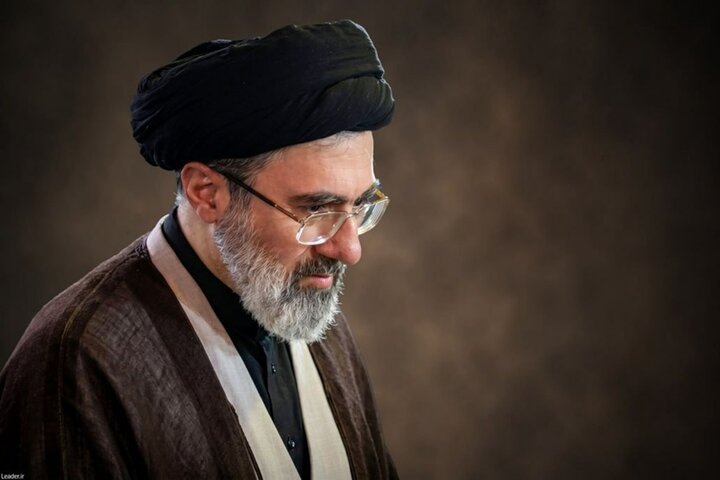
According to the International Desk of Webangah News Agency, Al-Mayadeen television network, in an analytical report, has examined the recent statement by Iran‘s Supreme Leader, Ayatollah Ali Khamenei, asserting that the declaration carries numerous messages for different parties involved.
The report notes one of the most significant pronouncements within the statement: the mention of the enemy’s retreat from positions it previously held in the southern waters of Iran. Al-Mayadeen states that the enemy has reached a point where it can no longer advance beyond the ‘Arabian Sea’ following setbacks sustained from Iran in the Strait of Hormuz. The Supreme Leader emphatically stressed that the Arabian Sea itself will be cleared of their presence in the coming days.
This assertion is identified as a crucial element for understanding the evolving ‘balance of power’ that the statement seeks to solidify. The narrative suggests that Iran, which the adversary could once approach along its coasts, has now pushed the enemy away from its vital areas and back to the Arabian Sea, with the Supreme Leader indicating this is not the end of the withdrawal.
Al-Mayadeen further elaborates on the significance of the Strait of Hormuz, describing it in the statement not merely as a waterway but as a cornerstone of Iran’s power equation. In this perspective, geographical factors transform into a deterrent element. Consequently, references to the Strait of Hormuz and the Arabian Sea in the statement carry implications beyond mere maritime geography, signifying the speaker’s authority to dictate the enemy’s movement limits and safeguard Iran’s strategic perimeter.
The statement’s assertion that ‘aggressors have reached a stage where the enemy pleads to end the war’ further elucidates this shift. The picture painted is not just about repelling an attack but about the ‘overturning of the pressure flow.’ Iran, which faced threats with limited resources during the Sacred Defense era, has, after decades of experience, reached a point where the opposing side itself seeks an end to the conflict. This is presented as one of the most important political messages of the statement, directly illustrating the transformation in the balance of power.
From this viewpoint, the statement’s reference to Iran as the ‘foremost global power based on divine calculations’ is contextualized. This does not refer to a technical ranking of nations or an abstract comparison of economies but to a composite concept of power rooted in independence, willpower, the ability to resist, respond, and protect national decisions. State power, in this conception, is measured not only by what it possesses but also by what it can prevent—such as preventing the imposition of foreign will and the return to an era where major powers dictated Iran’s actions and inactions.
The Supreme Leader explicitly states in the declaration that the enemy desires to return Iran to a period of dependency, foreign dictates, and weakness. However, Iran, rebuilt through war, pressures, and confrontations, is no longer the same. The reference to returning to the past is not solely political but signifies a return to a comprehensive system of dependency that the statement declares has ended and will not be repeated.
This connects the initial mention of the ‘Arabian Sea’ with the concluding remarks about ‘no return to the past.’ The enemy’s retreat from Iran’s maritime sphere is the military aspect of a larger transformation, while the rejection of a return to the former Iran represents the political and strategic dimension of that same shift. In the military realm, it concerns the enemy’s operational boundaries geographically, and in the strategic domain, it addresses the enemy’s power to determine Iran’s future.
Within this framework, Lebanon emerges as a significant facet of regional transformation. The Supreme Leader places the late Sayyed Hassan Nasrallah in a historic and exceptional position, linking his name to Lebanon’s transition from an arena of great power influence to a field where resistance can impact regional equations. The statement also emphasizes the continuation of this path under the leadership of Sheikh Naim Qassem, clarifying that plans built over years are not confined to a single individual.
Yemen also features in this broader regional panorama. Yemen is no longer merely a distant theater in regional calculations; its geographical position and connection to seas and international passageways have become integral to the regional security equation.
Al-Mayadeen concludes by highlighting that the statement’s most potent point is the linkage of ‘sea, battlefield, history, and future.’ It underscores the enemy retreating to the Arabian Sea, with intentions for that sea also to be cleared of their presence. The enemy initiates the war but later pleads for its end. The enemy seeks to return Iran to its past, but the response received is that those days are over and will not be repeated.


