
UK Prime Minister Claims Iran Involved in RAF Fairford Incident Amid Ongoing Investigation
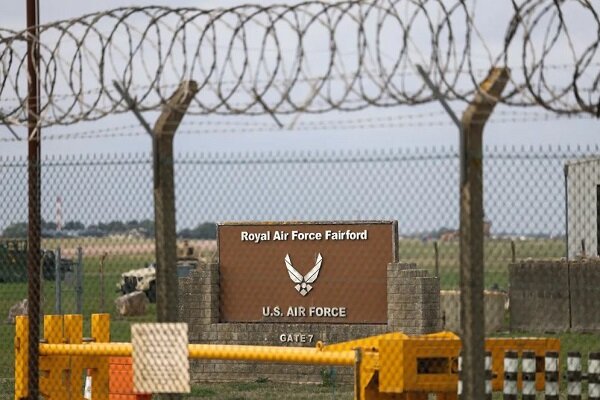
According to the International Desk of Webangah News Agency, the RAF Fairford case has recently become a prominent security news item in the United Kingdom, a nation still grappling with the repercussions of its military presence in West Asia and escalating tensions with Iran. The significance of this event extends beyond a mere incident near a military installation; Fairford has served as a key part of the military infrastructure utilized by the United States for its regional operations in recent years. Consequently, any security incident in its vicinity garners attention beyond local dimensions.
Simultaneously, the rapid development of media and political narratives surrounding this case, culminating in the British Prime Minister’s official claim of Iranian involvement, raises questions about how an event still under investigation has become a security issue linked to Iran. Answering these questions necessitates differentiating between confirmed facts, announced evidence, and evolving narratives.
[data:image/svg+xml,%3Csvg%20xmlns=’http://www.w3.org/2000/svg’%20viewBox=’0%200%20700%20464’%3E%3C/svg%3E]Security Ambiguities Mark Fairford Incident [//media.mehrnews.com/d/2026/09/30/3/6198757.jpg?ts=1790799403676]The Fairford case unfolded early on Sunday, September 27, 2026, when UK police arrested five British citizens near the Royal Air Force Fairford base. Initially, the matter was treated with suspicion related to explosives, later evolving into an investigation into preparations for a terrorist act, leading to the evacuation of dozens of families from the surrounding area.
[data:image/svg+xml,%3Csvg%20xmlns=’http://www.w3.org/2000/svg’%20viewBox=’0%200%20700%20466’%3E%3C/svg%3E]Fairford Mystery: From Ambiguous Incident to Security Game Against Iran [//media.mehrnews.com/d/2026/09/30/0/6198760.png?ts=1790799403960]Despite the heightened security atmosphere, the five individuals arrested were released the following day on bail, without formal charges. The UK’s Counter-Terrorism Police have stated that investigations are ongoing and that a definitive judgment on the nature of the event cannot be made at this stage. Reports also indicate that no explosives were discovered during searches of vehicles associated with the individuals, suggesting a significant divergence between the initial security operation’s scope and the judicial progress made so far.
The ambiguity deepens as British police acknowledge multiple lines of inquiry. Security officials have suggested that one possibility is that the arrested individuals, intentionally or unintentionally, acted on behalf of a foreign government or as its proxies. However, police have yet to name any country as a potential perpetrator or supporter, meaning foreign involvement remains one of several scenarios under consideration and cannot be equated with Iran’s role.
Nevertheless, Iran’s name quickly surfaced in the narrative surrounding the case, prompting a response from the Embassy of the Islamic Republic of Iran in London, which vehemently denied any Tehran connection to the incident. Subsequently, while British officials emphasized the continuation of investigations, Prime Minister Andy Burnham claimed on Wednesday that there were strong indications of Iran’s role in the incident. This assertion was made without providing details of the evidence cited, even as he underscored the ongoing police inquiry.
Consequently, at the current juncture, what is known about Fairford is not the established link between Iran and the incident, but rather the detention of five individuals, ongoing investigations, and the consideration of various possibilities. This gap between the legal reality of the case and the swift mention of Iran’s name prompts the question: why has an unresolved incident become linked to the narrative of an Iranian threat in Western media and political spheres?
Efforts to Fabricate Narratives Against Iran
Observers suggest that Iran’s name entering the Fairford case initially stemmed more from media coverage and statements by American officials than from any formal accusation in the UK. However, with the British Prime Minister’s remarks, this narrative has now gained official traction in London.
British police continue to discuss multiple scenarios and ongoing investigations, yet Burnham now claims strong evidence points to Iran’s involvement, a claim lacking specific details from the Prime Minister.
Prior to Burnham’s stance, the unsubstantiated accusations from American officials, notably U.S. Secretary of State Marco Rubio, dominated global headlines. Rubio claimed the incident clearly indicated the hand of a foreign actor but offered no evidence and did not name any specific country. Former President Donald Trump also raised the possibility of Iranian involvement.
[data:image/svg+xml,%3Csvg%20xmlns=’http://www.w3.org/2000/svg’%20viewBox=’0%200%20700%20444’%3E%3C/svg%3E]Fairford Enigma: From Vague Occurrence to Security Scheme Against Iran [//media.mehrnews.com/d/2026/09/30/0/6198756.png?ts=1790799403540]London’s shift in position is noteworthy. While responsible British agencies remain in the investigative phase, the Prime Minister is now speaking of Iran’s role without presenting concrete evidence.
This divergence in stances is significant. While Washington has more explicitly emphasized the hypothesis of foreign interference, responsible British bodies are still in the investigative stage. Even published reports on the case indicate that, alongside accusations against Iran, options involving Russia and non-state groups have been considered, and it remains unclear whether the incident was an act supported by any state at all. Nevertheless, the Prime Minister’s new claim has amplified the political weight of the alleged Iranian role compared to the early days of the case.
The Embassy of the Islamic Republic of Iran in London has firmly denied any connection between Tehran and the incident, dismissing the speculations as baseless and malicious. From this perspective, while the judicial proceedings for the five detainees have not yet led to formal charges and investigations are ongoing, attributing the incident to Iran now rests on the official claim of the British Prime Minister. However, the details of this evidence have not yet been made public, precluding an independent assessment of the basis for this claim.
The importance of this issue is amplified by the fact that Fairford itself has been a center for U.S. military operations against Iran. Therefore, before British investigations conclude, transforming an ambiguous security incident into a narrative of Iranian threat could divert public attention from the primary question—who was involved and with what motive—towards the narrative of Iran’s role, now officially presented by the British Prime Minister, but whose supporting evidence remains undisclosed.
Behind the Scenes of a New Western Security Game Against Iran
From an expert viewpoint, Fairford cannot be examined in isolation from its role in recent aggressive attacks on Iranian territory. In March 2026, the British government authorized the U.S. to use Fairford for operations against Iranian missile facilities, and in subsequent months, the base became a significant staging point for American bombers.
[data:image/svg+xml,%3Csvg%20xmlns=’http://www.w3.org/2000/svg’%20viewBox=’0%200%20700%20581’%3E%3C/svg%3E]The Fairford Puzzle: From a Vague Incident to the Footprint of a Security Game Against Iran [//media.mehrnews.com/d/2026/09/30/0/6198759.png?ts=1790799403962]Thus, the current incident occurred at a location that has effectively served as part of the military infrastructure for U.S. operations against Iran, lending the case geopolitical dimensions beyond a local security incident. In such circumstances, highlighting Iran’s name could shift the focus from the base’s role and its aggressive military mission to the perceived threat from Iran.
Although London has made accusations against Tehran and aligned itself with the White House, it has not provided details of the supporting evidence. This stance comes at a time when investigations into the incident are still underway, and aspects of the case, including the nature of the action and the foreign connections of the suspects, remain shrouded in ambiguity.
A second scenario involves an attempt to securitize the European environment against Iran. Such a case, even while investigations continue and details of London’s alleged evidence are undisclosed, could provide a pretext for enhanced protection of American bases, increased activity by intelligence and security agencies, tighter controls on Iran-related networks, and a redefinition of potential threats within the UK.
The significance of this from a European and American perspective is that security cases, unlike purely political disputes, can lead to practical actions and new restrictions, gradually solidifying the image of Iran as a continuous threat in public discourse and Western security policy.
Furthermore, a more significant scenario cannot be ignored: the transformation of the Fairford case into part of the pressure architecture against Iran in the post-war phase. Within this framework, any incident near U.S. or British facilities or interests could be coupled with issues such as cyber threats, proxy activities, and military base security, serving to bolster the rhetoric of hybrid warfare against Iran. This is occurring even as British media reports on the case acknowledge the prevailing ambiguity regarding the extent of the threat, the presence of usable explosives, and the foreign connections of the suspects.
From this viewpoint, the primary concern for Iran is not solely the final outcome of the Fairford investigation but the narrative concurrently being shaped during the ongoing inquiry. Now that the British Prime Minister has spoken of evidence regarding Iran’s role, the crucial question is the basis of this claim and whether its details will be disclosed as investigations progress. If specific evidence is released, an assessment of the claim should be made based on that evidence.
Therefore, Fairford has now become less of a purely local security incident and more of an arena for competition over security narratives in the tense post-aggression atmosphere against Iran. In this climate, the official assertion of Iran’s role by London, alongside continued Western political and security pressures, could lead to the formation of a new security framework for dealing with Tehran.


